What Is Shellac Nails? A Complete Guide to Shellac Manicures
Shellac nails are a professional gel-polish manicure system designed to provide natural nails with long-lasting color, shine, and a smudge-resistant finish. The polish is applied in layers and cured under an LED lamp, with the standard CND Shellac system designed to last 14+ days.
What Are Shellac Nails?
Shellac nails are natural nails coated with layers of CND SHELLAC gel polish and cured between layers using a compatible CND lamp. Unlike ordinary nail polish, which dries as solvents evaporate, Shellac is cured under a lamp, producing a hard, glossy finish with essentially no conventional drying wait after the manicure is complete.
A typical Shellac manicure includes:
- Preparing and shaping the natural nails.
- Applying a thin Shellac base coat and curing it.
- Applying two thin color coats, curing each separately.
- Applying the appropriate top coat and curing it.
- Completing the finishing steps required by the particular top-coat system.
CND’s instructions emphasize thin layers and separate curing. The company also says its standard preparation does not require filing or buffing the surface of the natural nail.
Shellac is therefore primarily a long-wear coating for natural nails, rather than an artificial nail extension. If you want dramatically longer nails or substantial structural enhancement, acrylic, hard gel, or another extension system serves a different purpose.
How Long Do Shellac Nails Last?
CND advertises 14+ days of wear for its Shellac gel polish system when properly applied. Some configurations of the current Shellac system are promoted for wear of up to 21 days, although results depend on the products used, the person’s nails, application, and lifestyle.
Your manicure may not last as long if your nails are particularly flexible, the product was applied incorrectly, or the coating is regularly exposed to conditions that encourage lifting or chipping.
Daily habits matter too. Someone who frequently works with their hands, uses cleaning products, or subjects their nails to repeated impacts may notice wear sooner than someone whose nails experience less stress.
One practical point is easy to overlook: longer wear is not automatically better. Once substantial growth appears around the cuticle or the coating starts lifting, keeping an old manicure simply to extend its lifespan can become counterproductive.
Shellac vs. Gel Nails vs. Regular Nail Polish
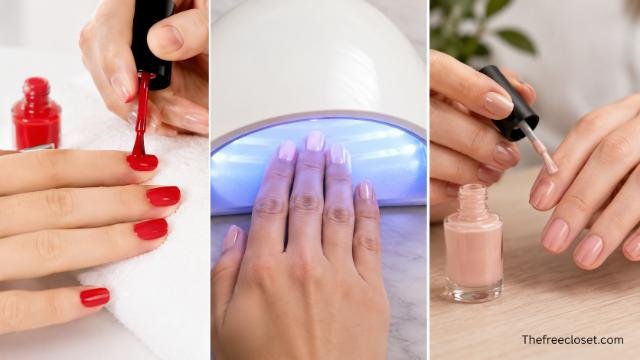
The biggest source of confusion around Shellac is terminology. Shellac is a specific branded gel-polish system, while “gel nails” can refer more broadly to several products and services.
| Feature | Shellac | Other gel polish | Regular nail polish |
| Application | Base, color and top-coat system | Usually base, color and top coat | Conventional polish layers |
| Curing | Lamp-cured | Usually lamp-cured | Air-dries |
| Wear | CND states 14+ days for its standard system | Varies by brand and application | Generally shorter-lasting |
| Finish | High shine | Usually high shine | Depends on polish/top coat |
| Removal | Acetone-based removal system | Often acetone soak-off | Conventional polish remover |
| Natural-nail filing | CND says surface filing/buffing isn’t required for its system | Depends on system | Normally unnecessary |
| Best suited to | Long-lasting color on natural nails | Long-wear manicures | Easy color changes and no curing lamp |
CND describes SHELLAC as a complete professional system rather than simply a bottle of colored polish. Its base coat, color coat, top coat, and curing process are intended to work together.
The distinction becomes even clearer with acrylic nails. Acrylics are artificial nail enhancements that can add length and significantly alter nail shape. Shellac primarily adds a durable colored coating to the existing natural nail.
What Does a Shellac Manicure Look and Feel Like?
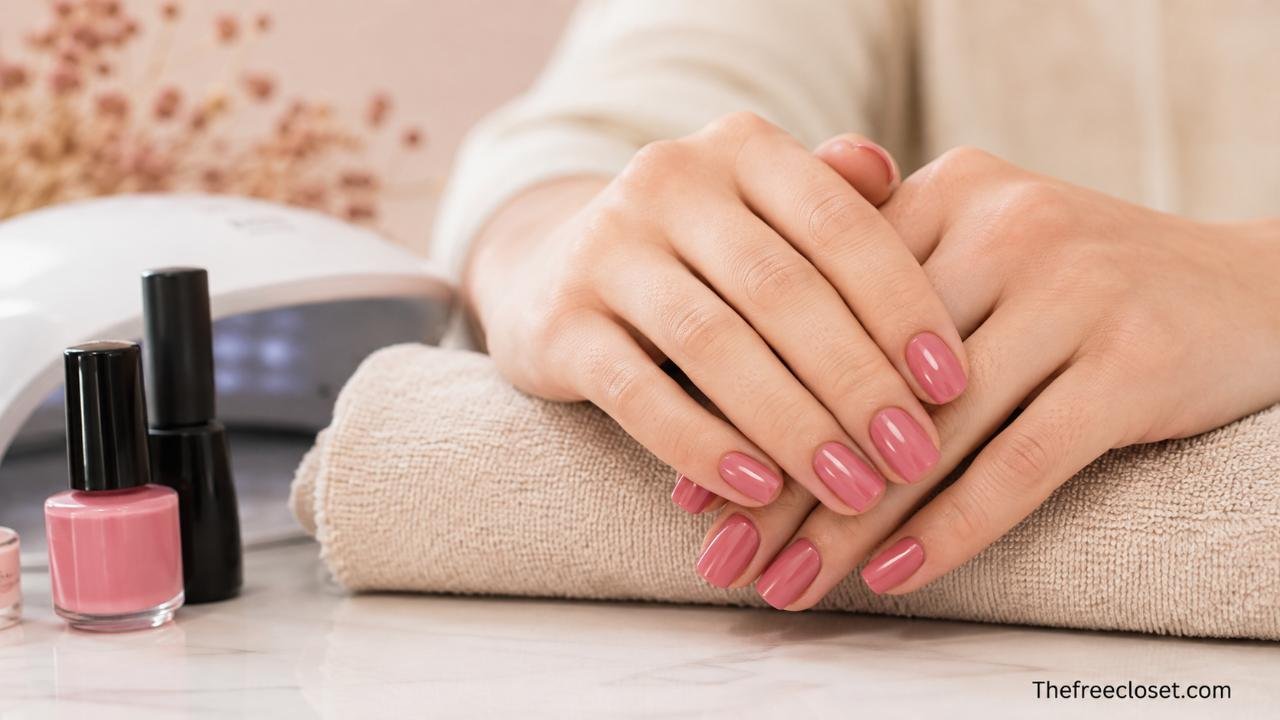
A finished Shellac manicure has the smooth, glossy appearance commonly associated with gel polish. CND offers opaque, sheer, metallic, glitter, and other finishes, so Shellac does not refer to one particular nail look or color.
Because the coating is applied relatively thinly, the result can look more like polished natural nails than a thick nail enhancement.
Another advantage is immediate resistance to ordinary smudging after proper curing. You do not have the same post-manicure drying period associated with conventional polish. CND describes the cured finish as instantly dry and resistant to smudging.
Benefits and Drawbacks of Shellac Nails
Shellac’s main appeal is the balance between the appearance of polished natural nails and the durability associated with a gel manicure.
Potential advantages include:
- Long-lasting color compared with conventional polish
- High-gloss finish
- No traditional drying wait once properly cured
- Resistance to ordinary smudging
- Many colors and finishes
- No need to build an artificial nail extension
- CND’s system does not require surface filing or buffing of the natural nail during standard preparation
There are drawbacks, however. Shellac still requires gel-polish removal, typically involving acetone. It also requires lamp curing, and repeated gel manicures can contribute to brittle, peeling, or cracked nails in some people.
The American Academy of Dermatology (AAD) advises moderation with gel manicures and recommends giving nails time without polish when necessary.
Shellac also does not provide the same length-building or structural capabilities as acrylic or some gel enhancement systems. That can be an advantage for people who prefer natural nails, but a limitation for someone seeking dramatic extensions.
Are Shellac Nails Safe?
Shellac and other gel manicures require a few sensible precautions, particularly because lamp curing exposes the hands to ultraviolet radiation.
The AAD recommends applying broad-spectrum, water-resistant SPF 30 or higher sunscreen to the hands before a gel manicure. Another option is wearing dark, opaque, fingertip-free protective gloves. The organization also notes that LED curing lamps emit lower levels of UV radiation and cure more quickly than traditional UV curing lamps, although LED nail lamps still involve UV exposure.
Good salon hygiene matters as well. Tools should be properly cleaned and disinfected between clients, and aggressive cuticle cutting should be avoided because cuticles help protect against infection.
People who repeatedly experience irritation, unusual nail changes, persistent peeling, or other nail problems should stop covering the problem with another manicure and consider seeing a dermatologist.
Does Shellac Damage Your Natural Nails?
Shellac does not automatically mean damaged nails, but application and especially removal technique matter.
CND states that its system is designed for removal without filing or buffing the natural nail when the products are used and removed as directed. Its base coat incorporates quick-release polymers intended to allow acetone-based removal.
That does not mean every gel manicure is risk-free. Dermatologists warn that gel manicures can contribute to brittleness, peeling, and cracking. Acetone can also dry the nail and surrounding skin.
One of the most avoidable sources of damage is peeling or picking off the coating. When gel polish starts lifting, pulling it away can remove material from the surface of the natural nail along with it. The AAD specifically advises against picking off gel polish.
How Are Shellac Nails Removed?
Shellac is designed as a soak-off system using an acetone-based remover. CND’s removal process allows remover to penetrate the coating and release it from the base layer, rather than requiring the natural nail surface to be filed down.
For gel polish more generally, the AAD recommends limiting acetone contact primarily to the nails rather than unnecessarily soaking the whole hand. It also advises against scraping, picking, or aggressively filing away gel polish.
After removal, moisturizing the nails and cuticles can help counteract dryness. If nails have become brittle or damaged, the AAD suggests taking a polish break so they have time to recover.
Who Should Choose Shellac Nails?
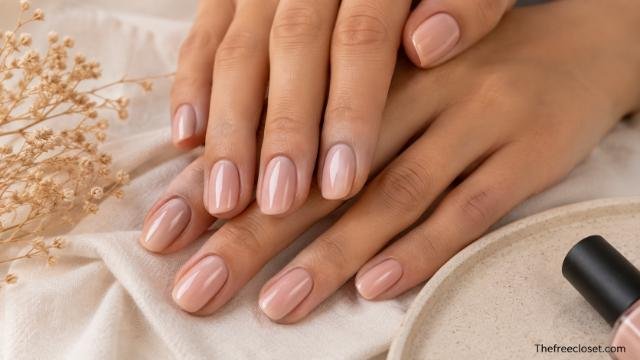
Shellac makes the most sense for someone who has natural nails and wants longer-lasting color without adding artificial extensions.
It can be particularly practical when you want a manicure to remain polished through a holiday, wedding, work trip, or busy period when frequent repainting would be inconvenient.
A simple decision guide is:
| Your priority | Better option to consider |
| Long-lasting color on natural nails | Shellac or another soak-off gel polish |
| Frequent, easy color changes | Regular polish |
| Added nail length | Acrylic or gel extensions |
| No curing-lamp exposure | Regular polish |
| Very low-maintenance removal | Regular polish |
| Glossy manicure with little drying wait | Shellac or gel polish |
If your natural nails are already damaged, thin, peeling, or persistently problematic, repeatedly covering them may not be the best approach. The AAD recommends considering traditional polish instead of gel for people who experience recurring nail problems.
How to Make a Shellac Manicure Last Longer
A long-lasting Shellac manicure starts with correct professional application rather than tricks used after the appointment. Proper preparation, thin coats, complete curing, and compatible products all affect performance.
Afterward, treat your nails as nails rather than tools. Avoid using them to pry open containers, scrape labels, or perform tasks that put pressure on the free edge. Gloves are also useful when your hands spend significant time in water or household cleaning tasks.
Do not ignore lifting polish. Picking at a lifted section may turn a small manicure problem into natural-nail damage. Have the coating properly removed instead.
Conclusion
So, what is Shellac nails? More naturally, “What are Shellac nails?” Shellac refers to CND’s professional, lamp-cured gel-polish system for natural nails. It combines a base coat, color layers, and top coat to produce a glossy, smudge-resistant manicure designed for extended wear.
Its biggest attractions are longevity, shine, and minimal drying wait. Its limitations include acetone-based removal, UV exposure during curing, and the possibility of nail brittleness or damage, particularly with repeated manicures or improper removal.
For someone who wants durable color while keeping their natural nail length, Shellac can be a practical middle ground between ordinary polish and artificial nail enhancements. Proper application, UV precautions, gentle removal, and occasional breaks when your nails need them are more important than simply trying to keep the manicure on for as long as possible.
Discover the latest fashion trends, home ideas, travel tips, and lifestyle inspiration at thefreecloset.com.
FAQ’s
Not exactly. CND SHELLAC is a specific branded gel-polish system. “Gel polish” is a broader category that includes products from numerous manufacturers.
Shellac primarily coats your natural nail. It is not intended to create substantial extensions in the way acrylic or dedicated gel-extension systems can.
CND states that its standard Shellac system provides 14+ days of wear when used as directed. Wear can vary depending on the person’s nails, lifestyle, application, and products used.
Shellac is an acetone-removable product, but proper technique is important. Avoid peeling or scraping the coating from the nail. The AAD identifies acetone as an effective method for removing gel polish and warns that picking or filing it off can damage nails.
Neither is universally better. Shellac is generally more appropriate when you want durable color on your existing natural nails. Acrylic is an enhancement system that can add significant length and change nail structure. The right choice depends on the result you want.
If your nails become brittle, peeling, cracked, or dehydrated, a break can be useful. The AAD recommends taking a nail-polish holiday for one to two weeks or longer between gel manicures when needed and moisturizing the nails and cuticles during that period.