Skin Fade Haircut: Styles, Fade Levels, Face Shapes, Maintenance, and Barber Tips
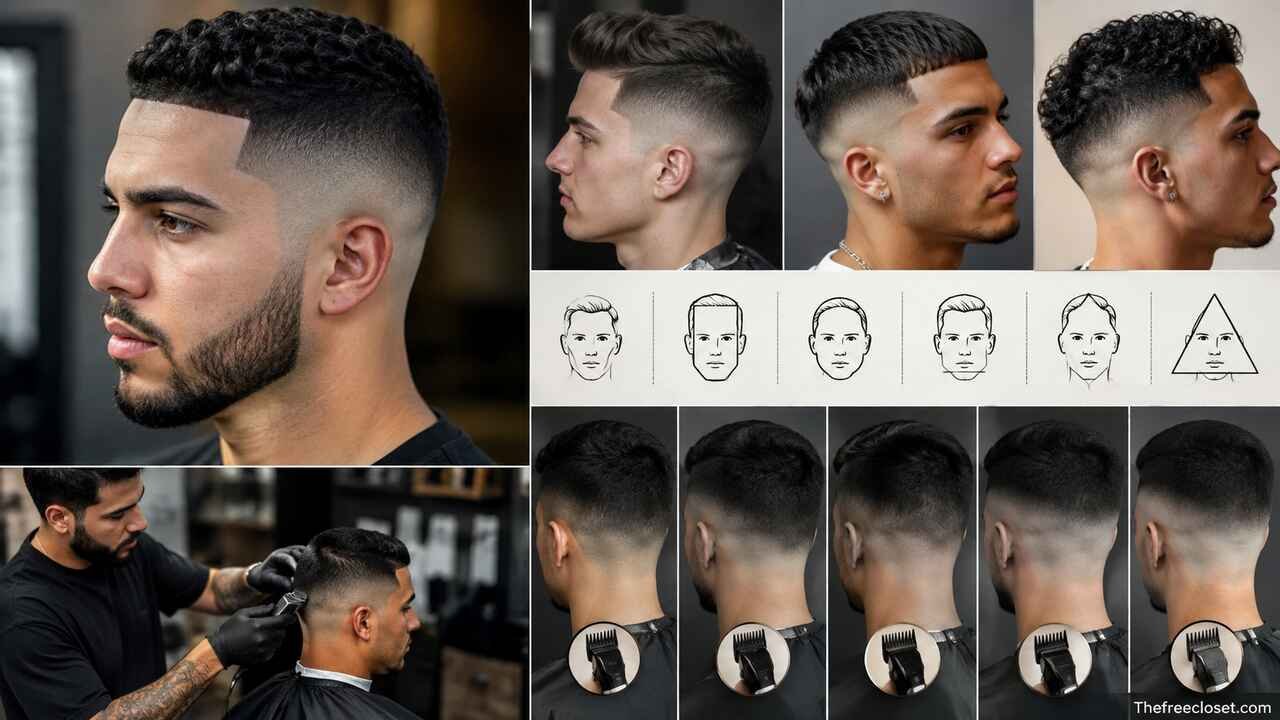
A skin fade haircut blends longer hair into progressively shorter lengths until the sides and back reach bare skin. Available as low, mid, or high fades, it creates a clean, modern look and works well with styles such as textured crops, quiffs, curls, pompadours, and crew cuts.
Choose the Right Skin Fade Height
Start by choosing a fade height that works with your hairstyle, head shape, hair density, and preferred level of contrast. A low skin fade begins close to the ears and neckline, a mid skin fade transitions around the middle of the sides, and a high skin fade removes more hair farther up the head. Each option creates a noticeably different silhouette even when the hair on top remains unchanged.
A low fade preserves more hair around the sides before the transition reaches the skin. This makes the change in length less aggressive and gives the barber more space to create a gradual blend. A mid fade removes additional weight and creates stronger separation between the top and sides. A high fade exposes the greatest amount of skin and produces the strongest contrast with longer hair on top.
The ideal starting point also depends on the structure of the haircut. Someone wearing a short textured crop may prefer a high or mid fade because the shorter sides emphasize the texture above. A longer quiff or pompadour can work with several fade heights, although the transition must remain proportional to the volume on top. Curly and coily hairstyles can also use different fade levels to control bulk while keeping natural texture as the visual focus.
| Skin Fade Type | Starting Area | Overall Appearance | Works Well With | Maintenance Visibility |
| Low skin fade | Near ears and neckline | Subtle and balanced | Side parts, crops, curls, quiffs | Moderate |
| Mid skin fade | Middle of the sides | Clean and defined | Textured tops, crew cuts, curls | High |
| High skin fade | Upper sides | Bold and high contrast | Crops, short tops, pompadours | Very high |
| Drop skin fade | Curves lower behind the ear | Contoured and modern | Curls, textured tops, longer crowns | High |
| Burst skin fade | Curves around the ear | Distinctive and concentrated | Mohawks, mullets, textured styles | High |
Match the Skin Fade to Your Face Shape
Select the fade according to the proportions you want the finished haircut to emphasize. Removing hair from the sides changes the apparent width of the head, while retaining height or texture on top can make the face appear longer. A barber can adjust both the fade height and top shape to create a more balanced overall profile.
Round faces often benefit from tighter sides combined with controlled height on top because this combination creates a more elongated silhouette. Square faces can support highly defined fades because prominent jawlines often pair naturally with sharp transitions. Longer faces generally require more care with excessive height. Keeping some width or choosing a lower fade can prevent the hairstyle from making the face appear unnecessarily elongated.
Oval faces are adaptable and can usually accommodate low, mid, or high fades. Heart-shaped and triangular faces may benefit from preserving appropriate volume around specific areas rather than automatically choosing the highest possible fade. Face shape should therefore guide the haircut rather than impose a rigid rule. Hairline, beard shape, head structure, and hair density can be equally important.
A beard can further change the visual proportions. A barber may connect a skin fade into the sideburn and gradually transition into facial hair. This creates continuity between the haircut and beard instead of leaving two unrelated blocks of hair.
Select a Top Hairstyle That Complements the Fade
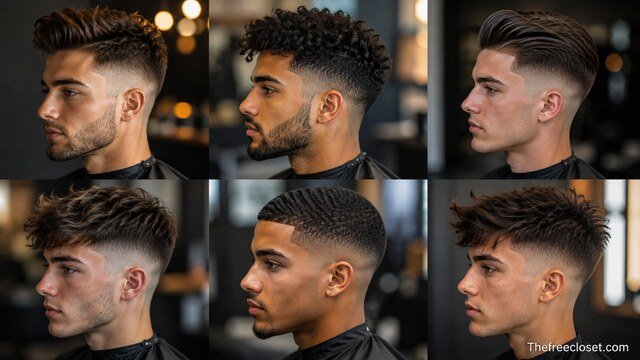
Pair the skin fade with a top style that provides the amount of contrast, texture, and styling flexibility you want. The fade controls the sides and back, while the hair on top determines much of the haircut’s overall personality. Short tops usually produce a practical, athletic appearance, whereas longer tops create greater styling versatility.
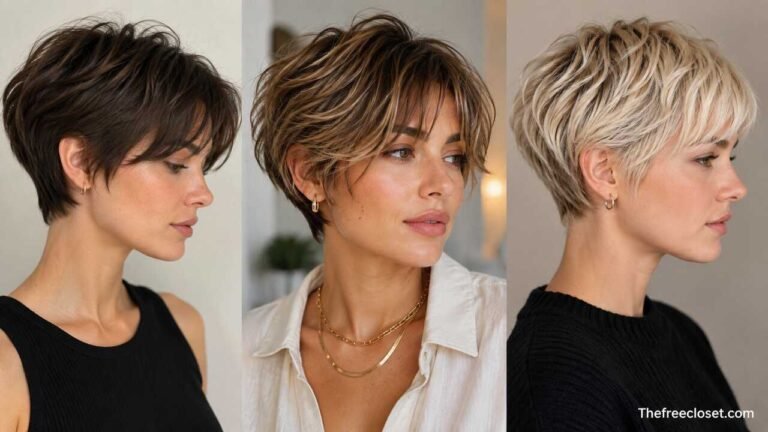
A textured crop with a skin fade combines closely faded sides with short, deliberately separated texture on top. A crew cut with a skin fade keeps the entire haircut relatively short while preserving enough length above to create shape. A quiff with a skin fade introduces additional height at the front, while a pompadour with a skin fade creates even greater volume and contrast.
Natural curls and coils offer another strong combination. Tight sides remove excess bulk and allow the texture on top to become more prominent. The barber should consider curl shrinkage and growth direction before deciding how much length to remove. Cutting curly hair too short without accounting for its natural pattern can alter the intended silhouette after the hair dries.
Longer styles require careful transitions. If substantial length remains on top, the barber must decide whether to disconnect the top from the faded sides or blend the sections together. A disconnected style creates stronger contrast, while a connected transition usually appears softer.
Decide Between a Low, Mid, and High Skin Fade
Compare the three main fade levels before the haircut begins because changing the height after significant hair has been removed may not be possible. The low, mid, and high skin fade all reach bare skin, but the location of the transition determines how much scalp is exposed and how dramatically the haircut changes.
The low skin fade concentrates the shortest section around the lower perimeter of the head. It can provide the clean finish of a skin fade without removing too much visual weight from the sides. This option works particularly well when the wearer wants a polished haircut that does not dominate the entire hairstyle.
The mid skin fade provides a middle ground. It exposes more skin than a low fade while retaining enough space above for a gradual transition. Because of this balance, it can accompany many top styles and hair textures.
The high skin fade moves the transition significantly upward. More of the sides become extremely short, so the remaining hair on top appears more prominent. This makes the high fade particularly suitable for people seeking strong contrast. However, scalp shape, scars, bumps, pigmentation differences, and hair-growth patterns may become more visible when a larger area is shaved closely.
Ask Your Barber for a Precise Skin Fade
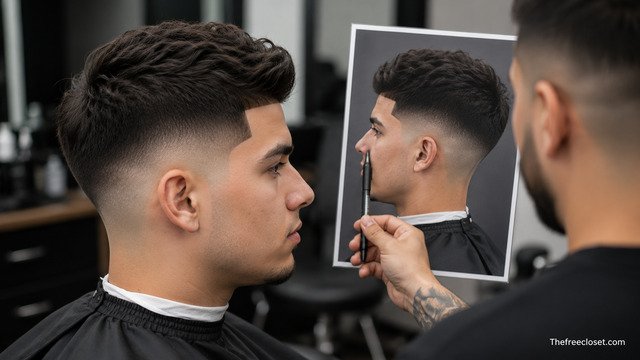
Tell your barber exactly where you want the fade to begin and show a reference image when possible. Asking only for a “skin fade” identifies the shortest finishing length but does not specify the fade height, top style, neckline treatment, fringe length, or desired amount of contrast. Clear instructions reduce uncertainty.
Specify whether you want a low, mid, high, drop, or burst skin fade. Then explain how much hair should remain on top. If you already like the current top length, tell the barber whether you want only the ends cleaned up or a measurable amount removed. Mention whether you normally style your hair forward, backward, upward, or to one side because the cutting pattern can support your everyday styling direction.
A useful consultation also covers the hairline. Some clients prefer a naturally cleaned edge, while others prefer a sharper lineup around the forehead and temples. Hairline shape and density differ from person to person, so forcing an unnaturally straight line can sometimes remove more hair than necessary.
Reference photographs are especially useful because terms such as “low” and “high” can be interpreted slightly differently. Choose a photo featuring hair texture and top length reasonably similar to yours. The barber can then adapt the reference to your head rather than attempting to reproduce a haircut that depends on completely different hair characteristics.
Choose a Drop or Burst Skin Fade for More Definition
Consider a drop or burst fade when you want the fade line to follow a more distinctive shape. These variations use the same basic principle of transitioning down to skin but alter the path of the fade around the sides and back.
A drop skin fade descends behind the ear instead of following a relatively straight horizontal path. The curved transition can preserve additional length around the back of the head and emphasize the natural contour of the skull. It works particularly well with textured hair, curls, crops, and styles that retain more length toward the crown.
A burst skin fade concentrates the fading effect around the ear. The transition forms a semicircular or “burst” pattern while more length may remain toward the back. This makes it a frequent companion to mohawk-inspired cuts, modern mullets, and other styles that deliberately preserve a longer strip of hair.
Neither variation is automatically better than a standard fade. The appropriate choice depends on the intended silhouette. A conventional low, mid, or high fade produces a more uniform transition, while drop and burst variations deliberately manipulate the outline.
Maintain the Skin Fade as It Grows Out
Schedule regular barber visits if you want the fade to remain extremely sharp. Because a skin fade begins at zero or near-zero length, even a small amount of new growth becomes visible quickly. The haircut does not suddenly become unattractive after a specific number of days, but its crisp contrast gradually softens.
Many people who prioritize a consistently fresh appearance return roughly every one to three weeks. Others allow the haircut to grow longer between appointments. Hair-growth rate, fade height, hair color, scalp contrast, and personal preference all affect how quickly regrowth becomes noticeable.
| Maintenance Area | Suggested Approach | Purpose |
| Fade | Barber refresh every 1–3 weeks if desired | Restores clean gradient |
| Neckline | Clean during barber visits | Maintains defined perimeter |
| Top hair | Trim according to hairstyle | Controls shape and proportion |
| Scalp | Wash gently and moisturize when needed | Supports scalp comfort |
| Styling | Use an appropriate product for hair type | Maintains texture and control |
| Beard connection | Blend during fade appointments | Keeps haircut and facial hair balanced |
A high skin fade often shows growth more prominently because a larger portion of the head starts extremely short. A low fade may grow into a softer taper-like appearance without changing the overall silhouette as dramatically.
Avoid attempting to repair the fade aggressively at home unless you are comfortable using clippers and understand guideline placement. Moving one line too high can force the entire fade upward to restore balance.
Style the Hair on Top for a Finished Look
Choose styling products according to hair length, texture, and desired finish rather than according to the fade itself. The sides of a skin fade generally require little styling, so most daily grooming focuses on the remaining hair above.
Matte clay or paste can add separation to short textured styles. Pomades can provide stronger definition and varying levels of shine depending on their formulation. Creams can offer softer control, while curl-focused products can help define naturally curly or coily hair. Product quantity matters because excessive application can weigh down the hair.
Styling direction should reinforce the haircut’s structure. A crop usually works forward or slightly across the forehead. A quiff needs controlled elevation toward the front. A side-part style requires directional separation, while curls generally benefit from preserving their natural formation rather than being forced into a completely different pattern.
The haircut and styling routine should therefore be planned together. A technically excellent fade can frame the hairstyle, but the top determines how versatile the finished cut is from day to day.
Compare a Skin Fade With Similar Haircuts
Distinguish a skin fade from a taper, shadow fade, and other short-sided cuts before selecting your service. The defining feature of the skin fade is that the shortest portion reaches bare or virtually bare skin. Other fades can retain visible hair at their shortest point.
A taper normally concentrates shortening around the sideburns and neckline rather than fading a large portion of the sides. This creates a more conservative transition and preserves more hair. A regular fade can begin at a longer clipper setting and never expose bare skin.
A shadow fade maintains a visible “shadow” of hair near the bottom instead of shaving down completely. This can be useful for someone who likes the shape of a fade but prefers less scalp exposure.
The distinction matters when communicating with a barber. Asking for a fade does not necessarily mean asking for a skin fade. Explicitly state whether you want the shortest section taken to the skin.
Personalize the Skin Fade to Your Hair Type
Adapt the fade to your natural hair characteristics rather than treating one reference photo as a universal template. Straight, wavy, curly, and coily hair each create different visual transitions because texture changes the way density and length appear.
Straight hair can make clipper guidelines especially noticeable, requiring careful blending between stages. Wavy hair introduces natural movement and can produce softer transitions into longer sections. Curly hair creates substantial texture and volume, making a tight fade useful for controlling the overall silhouette.
Coily hair can produce strong contrast between a skin-level base and a dense textured top. Precise lineups and shaped profiles can further define the haircut, although the natural hairline should still guide how much hair is removed.
Density also matters independently of texture. Two people with curly hair may require different fading techniques when one has very dense growth and the other has lower density. An experienced barber evaluates texture, density, growth direction, scalp visibility, and head shape together.
Conclusion
A skin fade haircut combines a skin-level finish around the sides and back with a carefully graduated transition into longer hair. Its versatility comes from the number of ways the fade can be positioned and combined with different hairstyles. Low, mid, high, drop, and burst skin fades each create a distinct outline, while crops, crew cuts, quiffs, curls, pompadours, and other top styles determine the finished character of the haircut.
The best result starts with choosing a fade height that suits your hair, head shape, face proportions, and preferred level of contrast. Clear communication with the barber is equally important. Specify the fade level, desired top length, hairline treatment, and styling direction, and use reference images when necessary.
Because the shortest section starts at or near bare skin, the cleanest appearance requires relatively frequent maintenance. Proper scalp care, suitable styling products, and periodic professional blending help preserve both the appearance and comfort of the haircut. With these elements aligned, a skin fade can provide a precise, adaptable foundation for a wide range of modern hairstyles.
Discover the latest fashion trends, home ideas, travel tips, and lifestyle inspiration at thefreecloset.com.
FAQ’s
A skin fade starts growing out immediately, and the sharp skin-to-hair contrast gradually becomes softer. People who want an consistently crisp finish often have the fade refreshed every one to three weeks, although individual hair-growth rates and preferences vary.
Not necessarily. A skin fade takes the shortest portion down to bare or virtually bare skin. A zero fade may leave extremely short hair depending on the barber’s terminology, tools, and technique. Tell your barber explicitly if you want the bottom completely skin-close.
Neither is universally better. A low skin fade provides a subtler transition and preserves more hair around the sides. A high skin fade removes more hair and creates stronger contrast with the top. Your hairstyle, head shape, hair density, and preferred appearance should determine the choice.
Yes. Curly and coily hair can work particularly well with a skin fade because closely faded sides emphasize natural texture and volume on top. The barber should account for curl pattern, shrinkage, density, and growth direction.
For a consistently sharp appearance, many people schedule a refresh approximately every one to three weeks. You can wait longer if you prefer a softer grown-out look or if your hair grows more slowly.
Specify whether you want a low, mid, high, drop, or burst skin fade, explain how much length you want left on top, and describe how you normally style your hair. A reference photo can help communicate the desired fade height, shape, texture, and overall finish.