Goth Hairstyles: Dark, Elegant Hair Ideas for Every Length, Texture, and Gothic Style
Goth hairstyles use dramatic cuts, dark colors, bold textures, and creative styling to complement gothic fashion. From sleek black layers and romantic curls to teased hair, undercuts, braids, and vibrant accents, these styles can suit different hair lengths, textures, and gothic aesthetics.
Choose a Goth Hairstyle That Matches Your Personal Aesthetic
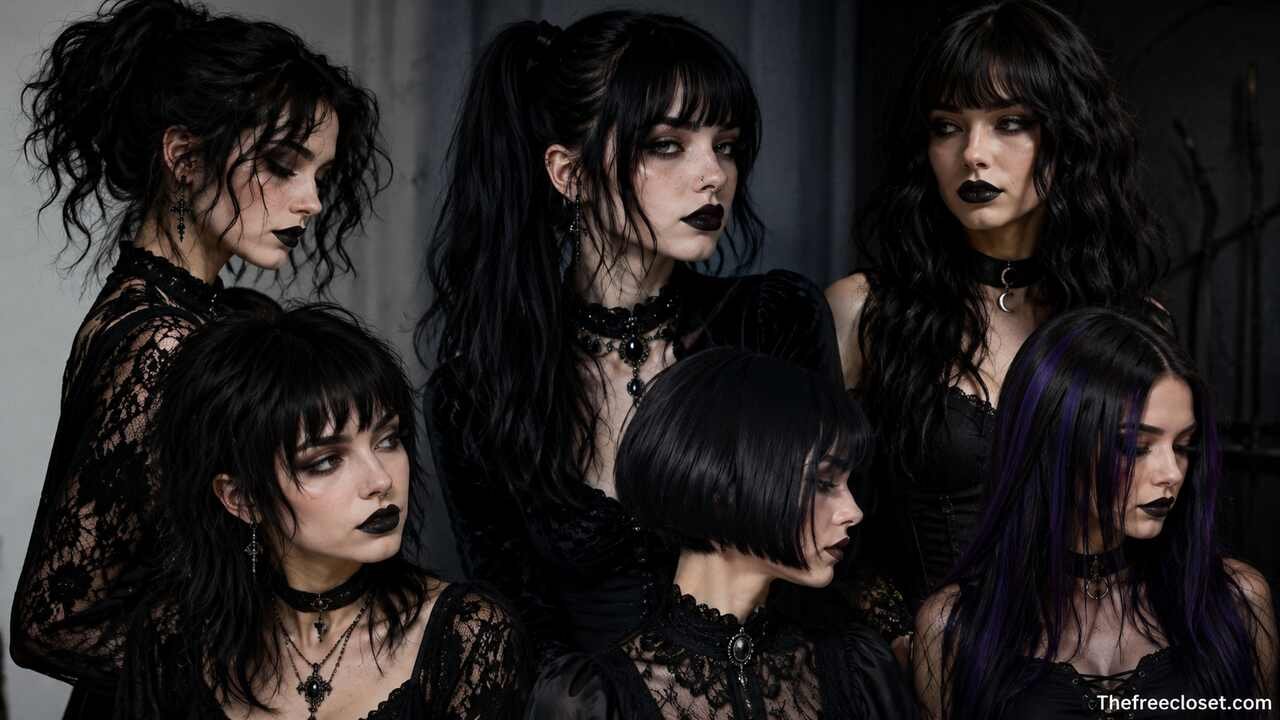
Start by identifying the gothic style you want your hair to support. Goth fashion includes several distinct visual directions, and each one tends to favor particular silhouettes, textures, and colors. Traditional goth hairstyles often feature black hair, strong volume, layered cuts, teased sections, and dramatic bangs. Romantic goth styles usually rely on long waves, curls, braids, or elegant updos, while punk-influenced goth hairstyles may incorporate shaved sides, spikes, asymmetrical cuts, or vivid accent colors.
Consider the clothing and makeup you wear most often. A person who frequently wears lace, velvet, corsets, long skirts, and antique-inspired jewelry may find that flowing curls or a structured Victorian updo creates a cohesive appearance. Someone who prefers leather jackets, fishnet clothing, heavy boots, and graphic eyeliner may prefer a shag, mullet, undercut, or teased layered haircut. Matching the hairstyle to the broader visual direction prevents individual elements from competing with one another.
You can also combine influences rather than committing to a single category. A shoulder-length wolf cut can work with traditional goth clothing one day and a softer romantic look the next. Similarly, long black hair can be worn sleek, curled, braided, teased, or pinned into elaborate shapes. Flexibility is especially useful if you enjoy several alternative styles or need a hairstyle that works in professional, academic, and social environments.
| Goth Style | Common Hair Shapes | Popular Colors | Typical Finish |
| Traditional Goth | Teased layers, long fringe, shag cuts | Black, blue-black | Voluminous, textured |
| Romantic Goth | Long curls, waves, braids, updos | Black, burgundy, dark brown | Soft, polished |
| Victorian Goth | Structured buns, ringlets, braided crowns | Black, brown, wine red | Elegant, controlled |
| Punk Goth | Undercuts, spikes, asymmetrical cuts | Black, red, purple | Rough, dramatic |
| Vampire Goth | Long straight hair, waves, widow’s peak styling | Black, crimson, deep violet | Sleek or flowing |
| Cyber Goth | Extensions, dread falls, high ponytails | Black with neon accents | Synthetic, exaggerated |
| Pastel Goth | Bobs, pigtails, soft layers | Lavender, pink, silver, black | Cute with dark contrast |
| Modern Goth | Wolf cuts, curtain bangs, sleek bobs | Black, espresso, silver | Wearable, refined |
Select a Hair Length That Supports the Shape You Want
Choose your hair length according to the amount of movement, volume, and styling flexibility you want. Long goth hairstyles provide the greatest range because long hair can be curled, braided, teased, straightened, pinned, or combined with extensions. Long black layers are particularly effective because the layers create movement while preserving the dramatic visual impact associated with gothic hair.
Medium-length hair works especially well for shags, wolf cuts, layered bobs, mullets, and shoulder-length waves. This length provides enough hair for texture and volume without requiring the maintenance associated with very long styles. Medium goth hairstyles can also transition easily between subtle everyday looks and more elaborate nighttime styling. Adding a strong fringe or contrasting color panel can make an otherwise simple cut appear significantly more alternative.
Short hair offers equally strong gothic possibilities. Pixie cuts, sharp bobs, undercuts, micro bangs, shaved sides, and asymmetrical crops create a bold silhouette with relatively little styling time. Short styles also place greater emphasis on facial features, eyeliner, eyebrows, piercings, and accessories. Because the cut itself becomes highly visible, precision matters more with short hair than with many long styles.
Add Layers to Create Gothic Movement and Volume
Ask for layers when you want a hairstyle that can hold texture, volume, or deliberate messiness. Layers remove weight from selected areas and allow sections of hair to move independently. This makes them particularly useful for teased traditional goth styles, modern wolf cuts, dramatic shags, and long hairstyles that would otherwise fall flat.
The placement of layers changes the visual result. Short crown layers increase height around the upper head, while face-framing layers emphasize the cheekbones and jawline. Long cascading layers preserve overall length while creating movement through the ends. Razor-cut layers can produce a sharper, more fragmented effect that works well for punk, deathrock, and contemporary alternative hairstyles.
Hair density should influence the layering technique. Thick hair often benefits from internal weight removal, while fine hair requires careful layering to avoid looking thin at the ends. Curly hair usually needs layers positioned according to curl pattern rather than straight-hair cutting rules. A stylist familiar with alternative cuts can help balance dramatic shape with practical manageability.
Cut Bangs to Create a Strong Gothic Frame
Use bangs when you want to change the expression of the face without dramatically altering overall hair length. Bangs are one of the most recognizable features in many goth hairstyles because they create a defined frame around the eyes. Straight blunt bangs produce a severe, graphic effect, while longer side-swept bangs create softer movement.
Micro bangs can create an especially striking appearance because they expose more of the forehead while drawing attention toward eyebrows and eye makeup. They work well with short bobs, mullets, shags, and long straight hair. Curtain bangs offer a less severe alternative and blend easily with layered styles. V-shaped or pointed bangs create a more theatrical effect and may complement vampire, witchy, or dramatic goth looks.
Maintenance should influence your choice. Blunt and micro bangs generally require regular trimming, while curtain and side-swept bangs can grow out more naturally. People with strong cowlicks or tightly curled hair may need additional styling to achieve a precise fringe. Before choosing a highly structured bang, consider how much daily heat styling or product application you are prepared to use.
Use Black Hair Color as a Classic Gothic Foundation
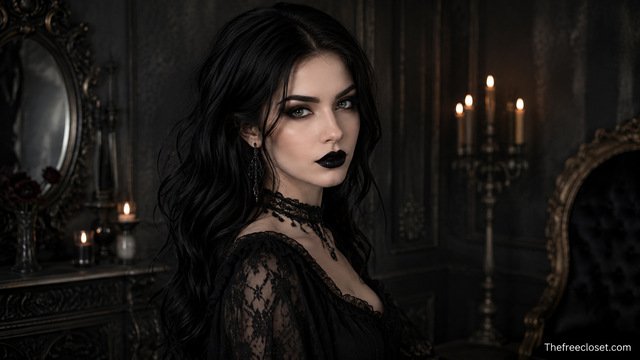
Choose black when you want the most recognizable gothic hair color. Jet black creates maximum visual contrast against pale makeup, silver jewelry, red lipstick, and dark clothing. Blue-black adds a cool reflective tone, while soft black offers a slightly less severe appearance. Natural dark brown can also support gothic styling without requiring the intensity of permanent black dye.
Hair color should complement skin undertones rather than follow a single rule. Blue-black and cool black shades often create a dramatic effect against cool or neutral complexions, while warmer black or espresso shades may blend more naturally with warm undertones. The goal does not need to be naturalism, however. Many gothic looks deliberately use extreme contrast to create a stylized appearance.
Permanent black dye deserves careful consideration because it can be difficult to remove. Anyone who frequently changes hair color may prefer demi-permanent formulas, temporary color, wigs, or extensions. Repeated attempts to lift permanent black dye can weaken the hair, especially if bleach is required. Planning future color changes before choosing a permanent formula can prevent unnecessary damage.
Introduce Red, Purple, Silver, or Blue Accent Colors
Add accent colors when you want dimension without abandoning a dark foundation. Burgundy, crimson, violet, navy, cobalt, silver, and white pair particularly well with black hair. Accent placement can range from subtle underlayers to dramatic split-dye patterns, money pieces, streaks, tips, or full sections.
Deep red creates a romantic or vampire-inspired appearance, while purple adds richness without producing extremely high contrast. Blue tones can make black hair appear colder and more futuristic. Silver and white sections create one of the strongest contrasts and work well with witchy, cyber, industrial, and modern gothic aesthetics. Bright neon shades are frequently associated with cyber goth and related alternative scenes.
Bleaching may be required for vivid or pale colors, especially on naturally dark or previously dyed hair. Because bleach removes pigment from the hair shaft, repeated lightening can increase dryness, breakage, and porosity. Concentrating lighter colors in smaller sections can create strong visual impact while reducing the amount of hair that requires intensive chemical processing.
Shape Medium Goth Hair Into Shags, Wolf Cuts, and Mullets
Choose a shag, wolf cut, or mullet when you want strong texture at a manageable length. These cuts use shorter layers around the crown and longer sections through the lower part of the hair, producing a fragmented silhouette. The result works particularly well with black, dark red, or two-tone color.
A shag usually distributes layers throughout the haircut, creating movement from top to bottom. A wolf cut exaggerates the contrast between crown volume and thinner ends. A mullet creates an even stronger difference between shorter front or side sections and greater length at the back. Each option can be softened or intensified depending on how dramatic you want the result to appear.
Styling products can significantly affect these cuts. Texture spray enhances separation, mousse increases volume, and lightweight wax can define individual pieces. A polished blowout makes the same haircut appear more modern, while rough drying and teasing produce a stronger deathrock or punk influence. This flexibility makes layered medium cuts some of the most adaptable goth hairstyles.
Build Short Goth Hairstyles With Sharp Shapes
Focus on silhouette when styling short goth hair. Because there is less length to manipulate, the outline of the haircut becomes especially important. A chin-length black bob creates a precise and controlled shape, while an asymmetrical crop introduces tension and visual movement.
Undercuts can remove hair from one or both sides while leaving greater length on top. The longer section can then be swept sideways, curled, spiked, or slicked back. Pixie cuts can incorporate extended sideburns, micro fringes, or sharply defined sections around the ears. Even a simple buzz cut can create a strong gothic appearance when combined with dark clothing, dramatic cosmetics, and jewelry.
Short hairstyles can also make color placement more visible. A white fringe against black hair, red tips, or a contrasting shaved section can become a focal point. Because short hair grows out quickly, however, structured cuts and precise color patterns may require frequent maintenance to preserve their intended shape.
Create Gothic Updos for Formal and Romantic Outfits
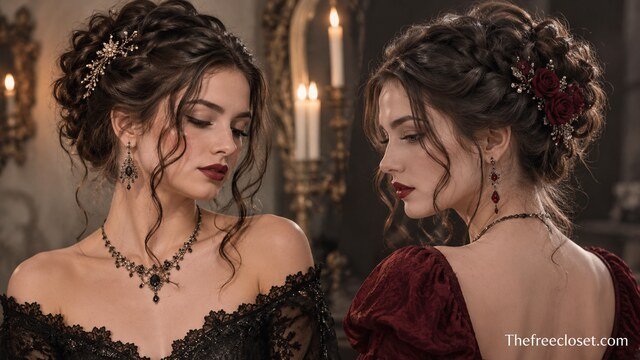
Pin the hair upward when you need a formal goth hairstyle. Gothic updos can range from messy high buns to elaborate Victorian-inspired arrangements with curls, braids, and decorative elements. They work particularly well for weddings, parties, concerts, themed events, or formal clothing.
Begin by establishing texture because completely smooth hair may be difficult to pin securely. Waves, curls, or light texturizing spray provide additional grip. Divide the hair into sections and build the primary shape first, then arrange smaller pieces around it. Face-framing tendrils can soften the style, while a tightly slicked front creates a more severe appearance.
Accessories can transform a basic updo into a strongly gothic hairstyle. Black roses, lace bows, cameo clips, jeweled combs, chains, miniature veils, and ornate pins introduce additional visual detail. Heavier accessories should be anchored with sufficient pins to prevent pulling or slipping.
Protect Hair From Damage During Gothic Styling
Use protective techniques whenever your goth hairstyle requires frequent heat, teasing, dyeing, or bleaching. Dramatic hair does not need to depend on constant damage. Heat protectant reduces exposure from flat irons, curling irons, and blow dryers, while conditioning treatments help maintain softness after chemical processing.
Avoid stacking several damaging processes within a short period. Bleaching, permanent coloring, repeated high-temperature styling, and aggressive backcombing can collectively weaken the hair shaft. Spacing these processes gives the hair more opportunity to retain strength. Professional color correction is often safer than repeatedly applying bleach at home when removing very dark dye.
Mechanical handling also matters. Tight elastics can place stress on the same area of hair, while rough brushing can increase breakage. Fabric-covered ties, smooth pins, satin or silk pillowcases, and careful detangling can reduce friction. The goal is to maintain enough strength that dramatic styling remains sustainable over time.
Adjust Goth Hairstyles for School, Work, and Everyday Wear
Create a toned-down version of your preferred hairstyle when you need versatility. Gothic hair does not always require extreme volume, bright color, or heavily structured styling. Many cuts can shift between subtle and dramatic forms depending on how they are finished.
A black wolf cut can be worn naturally during the day and heavily teased for an event. Long dark hair can be tied into a simple low ponytail for work and transformed into waves or a braided updo later. An undercut can remain hidden beneath longer sections when necessary. Temporary extensions and clip-in color panels also allow dramatic changes without altering the everyday hairstyle.
This adaptability can make long-term maintenance easier. Instead of forcing one extreme look to fit every environment, build a haircut with multiple styling possibilities. The underlying shape can remain gothic while the intensity changes according to the setting.
Maintain the Shape and Color of Your Goth Hairstyle
Schedule maintenance according to how structured your haircut and color are. Precision bangs, shaved sections, short bobs, and undercuts usually lose their intended shape faster than long layered styles. Regular trims help keep edges clean and prevent damaged ends from affecting the silhouette.
Dark hair color also requires maintenance, particularly when natural roots are significantly lighter. Color-safe shampoo and reduced washing frequency may help preserve artificial pigment. Red, blue, and purple tones can fade noticeably, making periodic refreshes necessary. Cool water and lower heat exposure may also help reduce rapid fading.
Hair condition should remain part of maintenance planning. A goth hairstyle looks strongest when the intended texture appears deliberate rather than damaged. Split ends, severe dryness, and uncontrolled breakage can distort layers and reduce shine. Regular conditioning and strategic trimming preserve the structural foundation required for dramatic styling.
Conclusion
Goth hairstyles offer far more variety than a single black haircut. Long waves, dramatic shags, wolf cuts, bobs, mullets, curls, braids, undercuts, teased styles, and formal updos can all support a gothic aesthetic when shape, color, texture, and accessories are coordinated thoughtfully.
The most effective approach is to choose a haircut that works with your natural hair type and everyday routine, then use styling techniques to adjust its intensity. Black remains the classic foundation, but burgundy, purple, blue, silver, white, and contrasting sections can create equally compelling results. Strategic layers, bangs, accessories, and texture provide additional ways to personalize the look.
Hair health should remain part of the styling process, especially when bleaching, permanent dye, high heat, or teasing is involved. With careful maintenance and a flexible styling routine, goth hairstyles can remain expressive, wearable, and distinctive across traditional, romantic, punk, vampire, cyber, Victorian, and modern gothic aesthetics.
Discover the latest fashion trends, home ideas, travel tips, and lifestyle inspiration at thefreecloset.com.
FAQ’s
Long layered cuts, loose waves, curls, straight black lengths, braids, teased styles, and elaborate updos work especially well for long goth hair. Layers add movement and prevent the hair from appearing overly heavy.
No. Black is strongly associated with gothic fashion, but goth hairstyles can also use burgundy, dark purple, blue, silver, white, dark brown, or contrasting color combinations. The shape and styling can communicate a gothic aesthetic even without black hair.
Long natural layers, shoulder-length shags, and simple bobs are relatively manageable when they suit the person’s natural texture. Highly teased styles, vivid color, precision bangs, and shaved designs generally require more frequent maintenance.
Yes. Curly and coily hair can create dramatic volume naturally. Curly shags, layered cuts, sculpted afros, braids, twists, locs, and gothic updos can all create strong alternative silhouettes without straightening the natural texture.
Use temporary styling techniques such as dark ribbons, gothic clips, braids, teased volume, dramatic waves, sleek styling, clip-in extensions, temporary color, or decorative chains. These changes can create a gothic effect without permanently changing the haircut.
Blunt bangs, micro bangs, curtain bangs, side-swept fringes, and pointed or V-shaped bangs can all work with goth hairstyles. Blunt and micro bangs create stronger graphic shapes, while curtain and side bangs produce a softer appearance.