Purple Vegetables: 18 Colorful Types, Benefits, Uses, and Cooking Tips
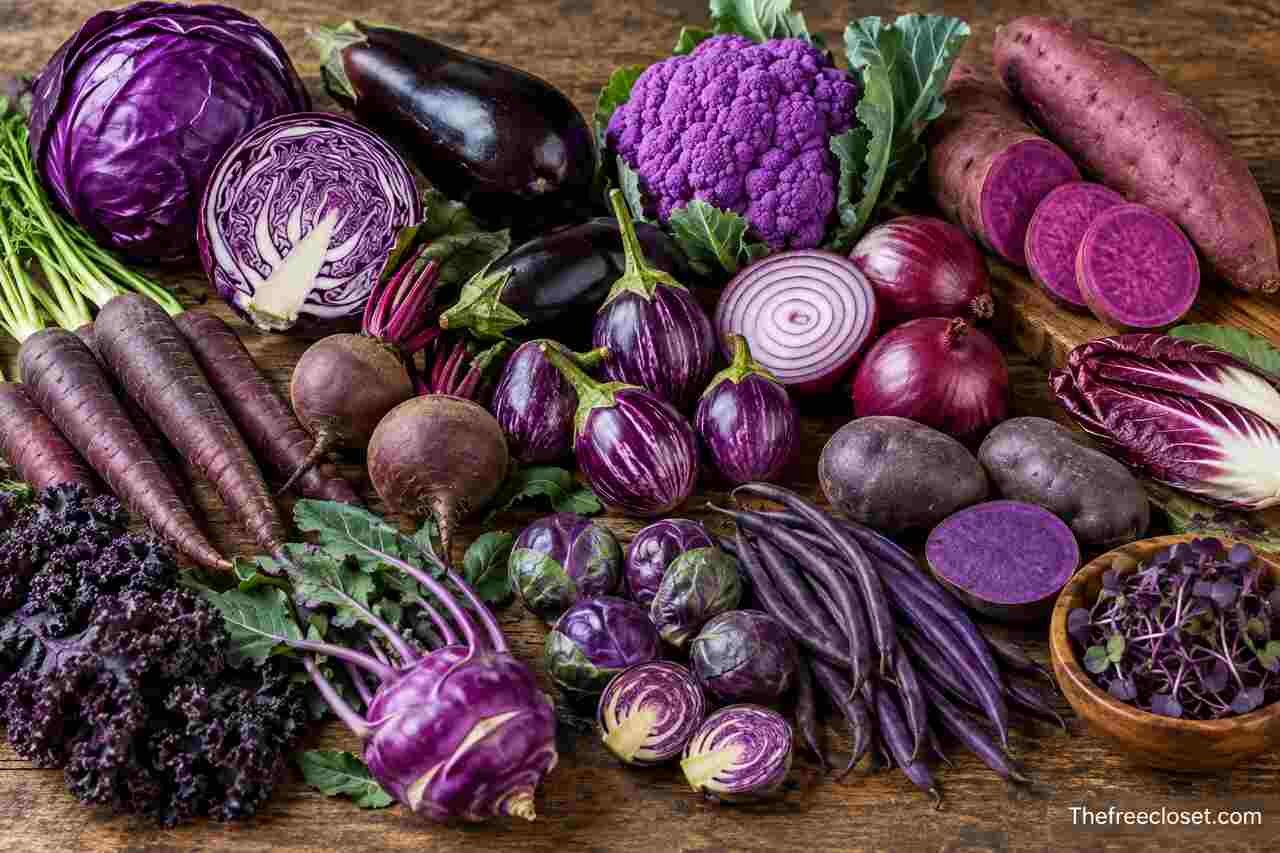
Purple vegetables include eggplant, purple cabbage, purple carrots, purple cauliflower, purple potatoes, and purple sweet potatoes. Many varieties get their red, blue, or purple coloring from anthocyanins, naturally occurring plant pigments, although their nutrient and pigment profiles vary by vegetable.
18 Purple Vegetables to Try
The term “purple vegetable” covers several botanical groups, including roots, tubers, leafy vegetables, brassicas, and fruit vegetables. Some varieties look almost black or deep red because pigment concentration and growing conditions affect their appearance.
| Purple vegetable | What it tastes like | Good ways to use it |
| Eggplant | Mild, slightly earthy | Roast, grill, bake, curry |
| Purple cabbage | Peppery, slightly sweet | Slaws, stir-fries, roasting |
| Purple cauliflower | Mild, slightly nutty | Roast, steam, mash |
| Purple carrots | Sweet and earthy | Raw, roasted, soups |
| Purple sweet potatoes | Sweet, earthy | Bake, mash, roast |
| Purple potatoes | Earthy and mildly nutty | Roast, boil, mash |
| Purple asparagus | Mild and slightly sweet | Grill, roast, sauté |
| Purple Brussels sprouts | Nutty, slightly bitter | Roast or sauté |
| Purple kale | Earthy and robust | Salads, soups, sautéing |
| Purple bell peppers | Crisp and mildly sweet | Raw, stuffed, stir-fried |
| Purple corn | Sweet to earthy, depending on variety | Boiled, roasted, flour-based dishes |
| Purple radishes | Crisp and peppery | Salads, pickles |
| Purple kohlrabi | Crisp, mildly sweet | Raw, roasted, slaws |
| Purple turnips | Mildly peppery | Roast, mash, stews |
| Purple beans | Similar to green beans | Steam, sauté, stir-fry |
| Purple onions | Sharp when raw, sweeter when cooked | Salads, roasting, pickling |
| Purple artichokes | Earthy, slightly nutty | Steam, boil, roast |
| Purple broccoli | Similar to broccoli | Steam, roast, stir-fry |
Availability depends heavily on cultivar, season, and location. A vegetable does not necessarily have a completely purple interior simply because its skin is purple. Some potatoes and carrots, for example, have purple skin but pale flesh, while other cultivars remain intensely colored inside.
What Makes a Vegetable Purple?
Many purple, blue, and reddish vegetables get their color from anthocyanins, water-soluble pigments belonging to the flavonoid family. These compounds occur naturally in numerous plants and can produce colors ranging from red to blue and deep purple.
Anthocyanins are found in vegetables such as red or purple cabbage, black and purple carrots, violet cauliflower, purple sweet potatoes, purple-fleshed potatoes, and eggplant. Different plants contain different anthocyanin compounds, so two equally purple vegetables do not necessarily have the same pigment profile.
Color can also change during cooking. Anthocyanins are sensitive to factors including pH, heat, oxygen, and light. Acidic conditions can make certain anthocyanin-rich foods appear more reddish, while changes in pH can shift their color toward blue.
This explains a kitchen phenomenon you may notice with purple cabbage. Adding an acidic ingredient such as lemon juice or vinegar can noticeably alter its color.
Popular Purple Vegetables and How to Eat Them
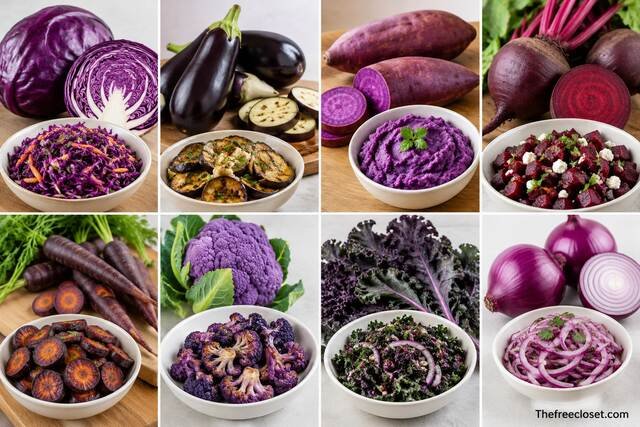
Eggplant
Eggplant is probably the purple vegetable most people recognize immediately. Its glossy skin can range from pale lavender to such a deep purple that it appears almost black.
The skin contains anthocyanin pigments, while the pale interior has a soft, absorbent texture after cooking. Because eggplant readily takes on seasonings and sauces, it works particularly well in curries, Mediterranean dishes, grilled preparations, casseroles, and stir-fries.
Roasting or grilling at high heat can create a browned exterior and creamy center. If you want the purple skin to remain visible, cutting the eggplant into thick slices or wedges works better than peeling it.
Purple Cabbage
Often called red cabbage, this cruciferous vegetable usually looks reddish-purple or violet rather than true red. It can be eaten raw or cooked, making it one of the easiest purple vegetables to incorporate into everyday meals.
Raw cabbage adds crunch to salads, tacos, sandwiches, and slaws. Cooking softens its texture and sweetness, making it suitable for braising, roasting, soups, and stir-fries.
Its anthocyanin pigments are particularly responsive to acidity. Vinegar or citrus can therefore influence the final color as well as the flavor.
Purple Cauliflower
Purple cauliflower is a colorful variation of cauliflower rather than an entirely different type of vegetable. It can generally be prepared in the same ways as white cauliflower.
Try roasting florets until their edges brown, steaming them lightly, adding them to curries, or blending cooked cauliflower into soups. It can also replace white cauliflower in cauliflower rice or mash.
Violet cauliflower is among the vegetables identified as a dietary source of anthocyanins.
Purple Carrots
Carrots were not always associated exclusively with orange. Modern purple cultivars range from vegetables that are dark purple throughout to varieties with a purple exterior and orange, yellow, or white center.
Their sweetness makes them particularly versatile. You can eat them raw with dips, shred them into salads, pickle them, roast them alongside other root vegetables, or add them to soups.
Black and purple carrots are also recognized dietary sources of anthocyanins.
Purple Sweet Potatoes
Purple sweet potatoes combine the familiar sweetness of a sweet potato with striking violet flesh. Depending on the variety, their texture may be relatively moist or notably dense and starchy.
Baking and roasting are straightforward preparation methods. They can also be mashed, turned into soup, or incorporated into both sweet and savory recipes.
Their intense color makes them particularly useful when presentation matters. Instead of relying on artificial coloring, purple sweet potato can naturally add violet tones to foods.
Purple Potatoes
Purple potatoes range considerably in appearance. Some have purple skin with pale flesh, whereas others remain blue-purple when cut open.
Use them much as you would other potatoes: boil, steam, roast, bake, or mash them. Leaving the skin intact can preserve visual contrast and reduce preparation.
Research reviews identify purple-fleshed potatoes as a source of anthocyanins, although the quantity and specific pigments vary among cultivars.
Purple Asparagus
Purple asparagus offers an unusual alternative to familiar green spears. Its flavor can be slightly sweeter and its appearance makes it useful for visually striking vegetable dishes.
It can be eaten raw when tender or cooked by grilling, roasting, steaming, or sautéing. Avoid unnecessarily long cooking if your goal is a crisp texture and attractive presentation.
Purple Brussels Sprouts
Purple Brussels sprouts combine the compact structure of conventional Brussels sprouts with red-purple leaves. Their flavor is similarly earthy and slightly bitter, becoming sweeter and nuttier after roasting.
Cut the sprouts in half, lightly coat them with oil, and roast until the cut surfaces caramelize. Acidic dressings, nuts, herbs, or a small amount of sweetness can balance their stronger cruciferous flavor.
Are Purple Vegetables Healthier?
Purple vegetables can be highly nutritious, but purple does not automatically mean healthier than green, red, yellow, orange, or white.
Their distinctive advantage is that many provide anthocyanins in addition to the nutrients normally associated with their particular vegetable family. Anthocyanins have been studied extensively for relationships with cardiovascular, metabolic, inflammatory, and other health outcomes. However, the strength of evidence differs depending on the compound, dose, food source, study design, and health outcome.
An umbrella review covering research on color-associated plant pigments found potential health benefits associated with consuming a variety of colorful fruits and vegetables. At the same time, the researchers noted that certainty for many outcomes was low or very low. That distinction matters: anthocyanin-rich foods can be part of a healthy diet, but they should not be marketed as treatments or guaranteed disease-prevention foods.
The practical takeaway is simpler. Eat purple vegetables alongside vegetables of other colors.
Anthocyanins Are Only Part of the Nutritional Picture
It is easy to focus on anthocyanins because they explain much of the distinctive color, but vegetables are whole foods rather than pigment supplements.
Depending on the vegetable, they can provide combinations of dietary fiber, carbohydrates, vitamins, minerals, and many other phytochemicals. A purple potato, cabbage, eggplant, and carrot therefore have substantially different nutritional profiles despite sharing a color.
Color is best used as a simple tool for increasing dietary diversity. Instead of asking which color is “best,” vary both the color and type of vegetable you eat. For example, a meal containing purple cabbage, leafy greens, orange carrots, tomatoes, and legumes provides much broader dietary variety than a plate consisting entirely of purple foods.
How Cooking Affects Purple Vegetables
Anthocyanins can be affected by heat, light, oxygen, enzymes, and pH, so preparation and storage may change both pigment concentration and appearance.
That does not mean purple vegetables need to be eaten raw. Cooking can improve texture, flavor, digestibility, and enjoyment, and the effect varies by food and cooking method.
For everyday cooking, match the technique to the vegetable:
| If you’re cooking… | Try… | Practical reason |
| Purple cabbage | Raw, quick sautéing, braising | Works both crisp and tender |
| Eggplant | Roasting or grilling | Develops a creamy center and browned surface |
| Purple cauliflower | Roasting or light steaming | Keeps the florets firm |
| Purple carrots | Roasting or steaming | Highlights their natural sweetness |
| Purple potatoes | Roasting, boiling, steaming | Fits most potato-based meals |
| Purple sweet potatoes | Baking or roasting | Works well with their dense, sweet flesh |
| Purple asparagus | Quick grilling or sautéing | Helps avoid an overly soft texture |
If maintaining vivid color is important, avoid unnecessarily prolonged cooking. For anthocyanin-rich vegetables such as cabbage, acidic ingredients can also alter or intensify reddish-purple tones because anthocyanin color changes with pH.
Easy Ways to Add More Purple Vegetables to Meals
You do not need special recipes to start eating them. In many cases, simply substitute a purple cultivar for a vegetable you already use.
Replace white potatoes with purple potatoes in a roasted vegetable tray. Swap white cauliflower for purple cauliflower. Add shredded purple cabbage to tacos instead of lettuce. Mix purple carrots with orange and yellow carrots, or roast purple sweet potatoes as a side dish.
A simple “color contrast” approach also makes meals more appealing. Purple cabbage stands out against green herbs, purple sweet potato contrasts with leafy greens, and purple cauliflower can add color to otherwise neutral grain bowls.
For children or hesitant vegetable eaters, unusual colors can also make familiar foods visually different without requiring a completely new recipe.
How to Choose and Store Purple Vegetables
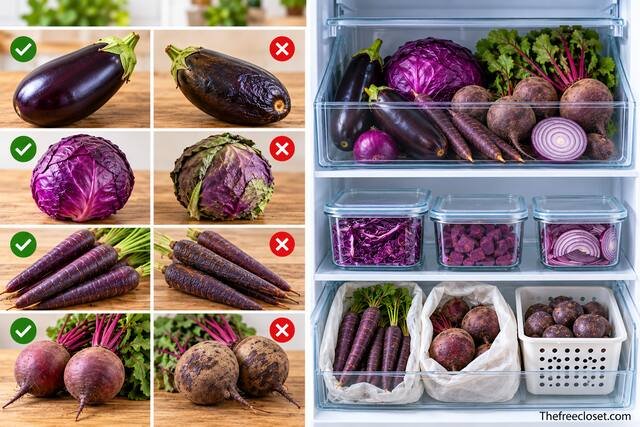
Look for vegetables with the characteristics you would expect from their conventional counterparts rather than judging them solely by color.
Eggplant should generally feel firm and have smooth skin. Cabbage and cauliflower should have compact heads without extensive soft or damaged areas. Root vegetables should feel firm rather than shriveled, while asparagus should have firm stalks and relatively tight tips.
Storage also depends on the vegetable. Leafy and cruciferous vegetables generally benefit from refrigeration, while potatoes and sweet potatoes usually prefer appropriate cool, dark storage conditions rather than prolonged exposure to light.
Because anthocyanin stability can be influenced by factors such as light, oxygen, and temperature, proper storage can also help protect food quality.
Purple Vegetables vs. Purple Fruits
Purple vegetables are only one dietary source of anthocyanins. Berries, grapes, plums, and other deeply colored fruits can also contain substantial amounts.
In fact, berries are particularly important dietary anthocyanin sources and may contain higher concentrations than many vegetables. Reviews of the research literature identify berries alongside purple vegetables, grains, roots, and tubers as major food sources.
There is therefore no nutritional reason to restrict yourself to vegetables when trying to increase the variety of naturally purple foods in your diet. Combining berries and other colorful fruits with purple cabbage, eggplant, carrots, potatoes, and cauliflower creates much greater food diversity.
Conclusion
Purple vegetables are an easy way to add more color, variety, and nutrients to everyday meals. Options such as eggplant, purple cabbage, purple carrots, cauliflower, potatoes, and sweet potatoes provide fiber, vitamins, minerals, and naturally occurring plant compounds. Many also contain anthocyanins, the pigments responsible for their distinctive purple, blue, and reddish colors.
Rather than treating purple vegetables as healthier than vegetables of other colors, use them as part of a varied diet. Try swapping familiar varieties for purple alternatives, such as roasting purple potatoes, adding shredded purple cabbage to salads, or using purple cauliflower in place of white cauliflower. Combining vegetables of different colors is a simple, practical way to enjoy a broader range of nutrients, flavors, and textures.
Discover the latest fashion trends, home ideas, travel tips, and lifestyle inspiration at thefreecloset.com.
FAQ’s
Eggplant and purple or red cabbage are among the most widely recognized purple vegetables. Availability varies by region, while specialty varieties such as purple cauliflower, carrots, potatoes, and asparagus may be more seasonal.
Naturally purple varieties include eggplant, purple cabbage, purple cauliflower, purple carrots, purple potatoes, purple sweet potatoes, purple asparagus, purple Brussels sprouts, purple kale, purple radishes, and several other vegetables. The color is produced naturally by plant pigments rather than requiring artificial coloring.
Many purple vegetables contain anthocyanins, water-soluble flavonoid pigments capable of producing red, blue, and purple colors. The final appearance depends on the plant, pigment composition, concentration, pH, and other factors.
Many contain anthocyanins and other plant compounds with antioxidant activity. However, antioxidant activity measured chemically or in laboratory research should not be interpreted as proof that eating a particular vegetable will prevent or treat a disease. Human health effects are more complex, and the evidence varies by outcome.
Some do. Anthocyanin pigments can be affected by temperature, pH, oxygen, and other conditions. As a result, cooking can make certain vegetables duller, redder, bluer, or otherwise different from their raw color.
Purple vegetables can regularly form part of a balanced diet. Rather than focusing exclusively on them, aim for a variety of vegetables and fruits with different colors and nutritional profiles. Dietary diversity provides a broader mixture of nutrients and plant compounds.