
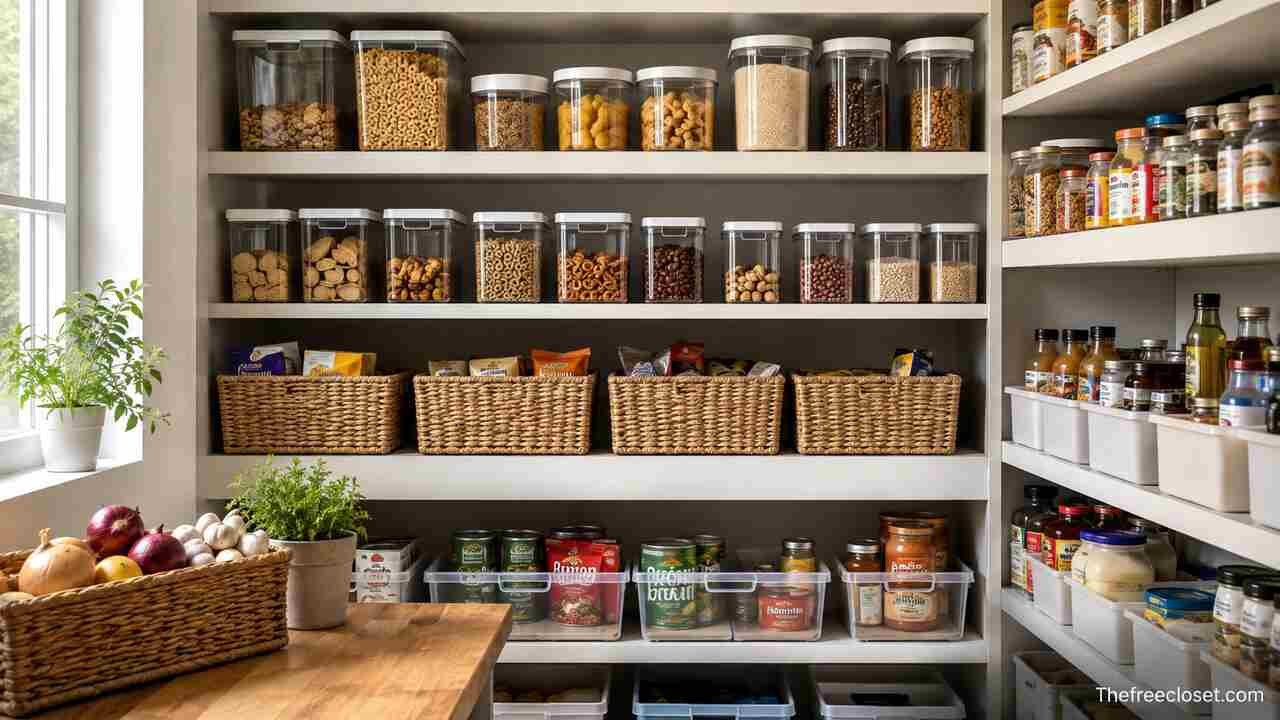
Pantry Organization: A Practical Step-by-Step System for Storage, Food Visibility, and Everyday Efficiency
Pantry organization creates a practical, efficient food-storage system that improves visibility and accessibility. It can reduce food waste and duplicate purchases, simplify meal preparation and grocery shopping, and make better use of pantry space through smart categories, containers, labels, and shelf layouts.
Empty the Pantry and Inspect Every Shelf
Start pantry organization by removing everything from the storage area. A completely empty pantry gives you an accurate picture of the available space and prevents existing clutter from influencing the new layout. Place all food, containers, baskets, small appliances, and miscellaneous items on a kitchen counter or table so you can evaluate them together.
As you empty the pantry, inspect shelves, corners, walls, and flooring. Wipe away crumbs and spills, remove old shelf liners when necessary, and check for moisture, damaged packaging, or signs of pantry pests. Pay particular attention to opened flour, grains, cereals, dried fruit, nuts, and pet food because poorly sealed dry goods can create storage problems.
Use the empty pantry to identify limitations before returning anything. Deep shelves may hide products behind one another, high shelves may require bins with handles, and narrow cabinets may benefit from shelf risers. If shelves are adjustable, repositioning them according to product height can create considerably more usable space without adding new storage furniture.
Measure the Available Pantry Storage Space
Measure the pantry before purchasing bins, jars, baskets, shelf risers, or turntables. Record the width, depth, and height of each shelf, including the usable clearance between shelves. Measurements prevent attractive storage products from becoming additional clutter because they are too wide, deep, or tall for the intended location.
Account for doors, hinges, shelf supports, pipes, electrical outlets, and other obstructions. A shelf may measure 40 inches across, for example, while its practical storage width is smaller because a door hinge blocks part of the opening. Deep shelves also require special attention because a container that technically fits may be difficult to remove when products are stored in front of it.
Map unusual spaces separately. The pantry door can hold lightweight packets or seasonings, while floor-level areas can accommodate heavier bulk goods. Upper shelves generally work better for lightweight, infrequently used products. Accurate measurements allow every storage solution to serve a specific purpose rather than forcing the pantry to fit a predetermined aesthetic.
| Pantry Area | Best Uses | Helpful Storage Solutions | Main Consideration |
| Eye-level shelves | Everyday foods, snacks, breakfast items | Clear bins, baskets | Fast visibility and access |
| Lower shelves | Canned foods, drinks, heavier packages | Sturdy bins, shelf risers | Weight and accessibility |
| Upper shelves | Backstock, occasional-use foods | Handled bins | Safe retrieval |
| Deep shelves | Packets, jars, grouped ingredients | Pull-out bins, turntables | Prevent hidden food |
| Pantry door | Lightweight items, small packets | Door racks, pocket organizers | Door clearance |
| Floor area | Bulk packages, beverages | Large baskets, rolling bins | Moisture and cleanliness |
Sort Food into Practical Pantry Categories
Group pantry items according to how they are used rather than simply according to package shape. Useful categories can include baking supplies, breakfast foods, pasta and grains, canned foods, sauces and condiments, snacks, beverages, meal components, spices, and backstock. Categories establish permanent homes for groceries and make the system easier to maintain.
Adjust those groups around household habits. A family that packs school lunches every morning may need a dedicated lunch zone containing snack bags, crackers, spreads, and shelf-stable drinks. Someone who bakes frequently may need flour, sugar, baking powder, chocolate, extracts, and decorating supplies together. A household that cooks rice and legumes regularly may need a larger grain-and-pulse section.
Avoid creating categories that are unnecessarily narrow. Five separate containers for nearly identical snack types can make the system cumbersome, while one oversized “food” basket provides too little structure. The most useful category is specific enough to tell you where something belongs but broad enough to remain practical after the next grocery trip.
Remove Expired, Unwanted, and Unusable Products
Review food before putting it back. Follow appropriate food-safety guidance and package information when determining whether a product should be kept or discarded. Also identify damaged packages, foods affected by moisture or pests, and products that are unlikely to be consumed.
Separate food you genuinely use from products that have remained untouched because nobody likes them. Suitable unopened food that is still acceptable for donation can be separated according to the requirements of local food charities. Removing unwanted items frees valuable storage capacity and provides a more realistic picture of household demand.
This process can also expose purchasing patterns. Several unopened packages of the same ingredient may indicate that poor pantry visibility is causing duplicate purchases. Large quantities of rarely used foods may show that bulk buying is not always saving money. Pantry organization works best when the storage system influences future shopping habits as well as current shelf arrangement.
Create Pantry Zones Around Daily Routines
Assign each major food category a physical zone. Frequently used ingredients should occupy the easiest-to-reach shelves, while occasional products can move higher or farther back. This approach connects storage location with frequency of use and reduces unnecessary searching during cooking.
Create zones that support complete activities whenever possible. A breakfast zone might hold cereal, oats, nut butter, pancake ingredients, and shelf-stable breakfast products. A baking zone can contain flour, sugar, leavening agents, chocolate, and decorating supplies. A quick-meal section could combine pasta, noodles, sauces, rice mixes, and other common meal starters.
Zones should remain flexible as household needs change. Children’s snacks may move to lower shelves as children become independent, seasonal baking supplies may need more room during holidays, and beverage storage may expand during summer. A pantry should function as an adaptable household system rather than a display that cannot change without disrupting its appearance.
Position Frequently Used Foods at Eye Level
Reserve prime shelf space for products used most often. Everyday cereals, grains, snacks, cooking staples, and frequently opened containers generally belong between waist and eye level. Products stored within this range can be identified and retrieved quickly.
Place heavier goods lower down whenever practical. Large drink containers, bulk packages, and substantial storage bins are safer and easier to handle when they do not need to be lifted from overhead. Higher shelves can hold lightweight backstock, specialty ingredients, serving supplies, or foods used only occasionally.
Consider who uses the pantry as well. Household members have different reach ranges, so an effective layout should reflect actual users. Child-accessible snacks can occupy an appropriate lower section, while products requiring adult supervision can be positioned higher. Accessibility is part of organization because a perfectly arranged pantry fails when people cannot comfortably use it.
Choose Storage Containers According to the Food
Use containers selectively instead of transferring every grocery item into a new vessel. Airtight containers can be useful for suitable dry staples such as flour, sugar, rice, pasta, oats, and certain cereals because they provide visibility and help protect contents when properly used. Bins are often more practical for packaged products because they group loose bags and boxes without requiring unnecessary decanting.
Match container capacity to normal purchasing quantities. A flour container should accommodate the amount you usually buy with enough space for practical handling. Containers that are too small leave partial packages elsewhere, creating two storage locations for the same ingredient. Oversized containers waste shelf capacity.
Clear storage offers visibility, while opaque baskets can visually simplify irregular packaging. Neither option is automatically superior. Clear bins work particularly well when knowing the remaining quantity matters. Baskets can work well for individually packaged snacks or backstock. The best pantry organization combines container types according to function.
| Storage Type | Ideal Contents | Main Benefit | Potential Limitation |
| Airtight container | Flour, sugar, rice, oats, pasta | Protected, visible storage | Requires cleaning and refilling |
| Clear open bin | Packets, snack bags, small boxes | Easy grouping and visibility | Contents may look less uniform |
| Basket | Bulk packages, miscellaneous packaged foods | Conceals visual clutter | Harder to see quantities |
| Turntable | Sauces, jars, small bottles | Improves access on deep shelves | Uses circular footprint |
| Shelf riser | Cans and short jars | Creates visible levels | Must fit shelf height |
| Pull-out bin | Deep-shelf products | Reaches items at the back | Requires clearance for removal |
Label Containers and Pantry Zones Clearly
Add labels where they make returning groceries easier. Category labels such as “Breakfast,” “Baking,” “Snacks,” “Pasta,” and “Backstock” tell household members where products belong. Labels are particularly useful on opaque baskets and high shelves where contents are difficult to identify.
Decanted foods may require more detailed information. Preserve relevant package information such as product identity, preparation instructions, allergen details, expiration or best-quality information when applicable, and other information needed for safe or correct use. Do not allow a decorative storage system to separate food from information your household needs.
Keep the labeling system easy to update. Removable labels or erasable markers can accommodate changing pantry contents better than highly specific permanent labels. Consistent typography can improve readability, but clarity matters more than decorative styling.
Arrange Cans, Jars, and Bottles for Better Visibility
Prevent short containers from disappearing behind taller products. Shelf risers can create multiple visible levels for canned foods, jars, and similar items. Instead of moving three products to reach one hidden can, users can scan several rows at once.
Turntables can improve access to suitable bottles, jars, oils, sauces, and condiments on deep shelves. Rotating the platform brings products from the back toward the front without requiring the entire shelf to be rearranged. Rectangular pull-out bins can perform a similar function when shelf geometry makes a turntable inefficient.
Avoid stacking unstable products simply to maximize capacity. Pantry organization should improve access and safety, not achieve the highest possible storage density. Leave enough clearance to remove items without knocking neighboring products over, especially when glass containers are involved.
Use Deep Shelves Without Losing Food at the Back
Treat a deep pantry shelf as several accessible storage lanes instead of one large surface. Long pull-out bins can contain related products from front to back. Pulling out one bin reveals its entire contents, preventing the back half of the shelf from becoming a forgotten-food zone.
Another method is to place frequently used products toward the front and duplicate or reserve supplies behind them. This arrangement works particularly well when the back items are true replacements for the products in front. For example, an unopened pasta package can sit behind the active supply rather than behind an unrelated jar.
Avoid filling every inch merely because space exists. A small amount of breathing room makes products easier to remove and return. Overfilled deep shelves tend to become disorganized quickly because accessing one product requires disturbing several others.
Organize Snacks for Fast Everyday Access
Group snacks according to household routines and accessibility needs. Individual snack packages can be removed from bulky outer cartons when appropriate and placed together in open bins. This makes quantities easier to see and reduces the amount of packaging occupying shelf space.
Separate snack categories only when doing so improves daily use. Crackers, bars, fruit snacks, nuts, or lunchbox items might warrant dedicated sections in a busy household. Smaller households may need only one or two snack baskets. Keep frequently selected products toward the front so older stock does not become buried.
For households with children, position appropriate self-serve foods at a reachable height while storing items requiring supervision elsewhere. The storage location can support household routines by reducing repeated searching and helping family members return items to their assigned places.
Build a Dedicated Baking and Cooking Zone
Keep commonly combined ingredients near one another. A baking section can include flour, sugars, cocoa, baking soda, baking powder, chocolate, extracts, and other shelf-stable supplies. Grouping these ingredients reduces movement around the kitchen when preparing recipes.
Cooking staples can be organized in a similar way. Rice, pasta, grains, dried beans, canned tomatoes, broths, sauces, and meal bases can occupy adjacent zones when they frequently appear in the same dishes. Place the most regularly used ingredients toward the front and specialty products farther back.
Consider storing small packets inside a larger labeled bin. Yeast packets, seasoning envelopes, baking decorations, and similar small products easily disappear when stored independently. A container creates a defined boundary while keeping related small items together.
Separate Everyday Supplies from Pantry Backstock
Create a dedicated location for unopened replacement products. Backstock includes items purchased before the current package has been finished, such as an additional jar of sauce, bag of rice, box of cereal, or package of coffee. Keeping replacements together prevents them from crowding everyday shelves.
Backstock should remain visible enough to influence shopping decisions. Before adding an item to a grocery list, check the reserve section. This simple habit can reduce unnecessary duplicates and reveal which staples actually need replenishment.
Set reasonable limits based on storage capacity and consumption. Buying six packages because they are discounted does not create savings if products expire, occupy space needed for other foods, or cause the pantry to become difficult to manage. Storage capacity should influence purchasing quantity.
Rotate Food Using Older Products First
Place older suitable products in front of newer replacements when restocking. This first-in, first-out approach encourages the household to use existing food before newly purchased stock and can reduce forgotten items.
Check dates and product condition during normal restocking rather than waiting for a major pantry cleanout. A quick scan when groceries arrive can identify products that should be used soon. Items approaching their intended use period can be moved to a visible “use first” location when appropriate.
Rotation is especially valuable for products purchased repeatedly. Canned goods, sauces, cereals, snacks, grains, and baking supplies can accumulate unnoticed when new groceries are continually placed in front of older packages. Consistent rotation turns pantry maintenance into a small routine instead of an occasional large project.
Use Vertical and Door Space Carefully
Increase usable capacity by taking advantage of empty vertical areas. Shelf risers can create a second level for short containers, while appropriately installed under-shelf solutions can use otherwise vacant space. Adjustable shelving can also reduce excessive gaps above short products.
Pantry doors can provide storage for lightweight goods when suitable organizers are securely installed and do not interfere with closing. Small packets, wraps, lightweight bottles, or frequently used accessories may fit well there depending on the door construction and organizer capacity.
Do not overload improvised storage areas. Door systems must accommodate movement, shelves must support their contents, and overhead items should remain safe to retrieve. Space optimization is valuable only when it preserves convenient and secure access.
Create a Simple Pantry Inventory Routine
Maintain awareness of staples without turning pantry management into an administrative chore. A basic inventory can be as simple as a grocery list where household members immediately add an item when the last package is opened. More detailed households may track staple quantities or maintain a short checklist inside the pantry.
Focus inventory tracking on products that matter. Recording every cracker may be unnecessary, while tracking flour, rice, coffee, canned tomatoes, pasta, cooking oils, and other frequently replenished staples can prevent inconvenient shortages.
Connect inventory management with meal planning. Checking the pantry before choosing meals can reveal ingredients that should be used soon, while reviewing the pantry before grocery shopping reduces duplicate purchases. Organization therefore becomes part of a larger food-management cycle rather than an isolated cleaning project.
Maintain Pantry Organization with Short Weekly Resets
Spend a few minutes each week returning misplaced items, removing empty packaging, checking produce or bread stored in the pantry, and bringing older products forward. Frequent small resets prevent gradual disorder from becoming a major reorganization project.
Combine maintenance with grocery day. Before shopping, check existing supplies. After shopping, rotate older items forward and place new replacements behind them. Flatten unnecessary cartons when appropriate, refill containers carefully, and return each category to its designated zone.
Reassess the layout when the same problem keeps returning. If snack bags continually overflow their basket, the category may need more space. If a container is always left on the counter, its assigned shelf may be inconvenient. A sustainable pantry system changes in response to real behavior instead of demanding perfect behavior from its users.
Adapt the Organization System to Pantry Size
For a small pantry, prioritize accessibility over elaborate categorization. Use a limited number of broad zones, exploit vertical space, and choose storage products that fit shelf dimensions precisely. Avoid filling small shelves with numerous containers whose walls consume valuable capacity.
Large walk-in pantries require a different strategy. Without clear zones, additional space can actually make products easier to lose. Divide large areas into cooking ingredients, breakfast, snacks, baking, beverages, backstock, and household-specific categories. Keep similar products together even when unused shelf space exists elsewhere.
Cabinet pantries benefit from pull-out solutions, risers, and front-to-back organization. Apartment kitchens may distribute pantry goods across several cabinets, in which case each cabinet can serve a defined purpose. The physical room matters less than establishing predictable locations for food.
Refine the Pantry Based on Household Habits
Evaluate the pantry after using the new arrangement for several weeks. Pay attention to which shelves stay organized, which bins overflow, and which products repeatedly end up in the wrong location. These patterns provide useful information about whether the system matches everyday behavior.
Adjust category size before purchasing more organizers. A snack section that continually exceeds its container may need a larger zone, while an almost-empty baking basket may be occupying valuable prime space. Changing shelf allocation can solve many organization problems without adding storage products.
Keep visual appearance secondary to functionality. Matching containers and coordinated labels can create a polished pantry, but a useful pantry must first make food visible, accessible, properly stored, and easy to rotate. The strongest organization system is the one household members can maintain naturally.
Conclusion
Effective pantry organization begins with removing everything, measuring the space, sorting food into useful categories, and assigning each category a logical storage zone. Frequently used products should remain accessible, deep shelves should use solutions that preserve visibility, and backstock should remain separate from active supplies. Appropriate containers, readable labels, food rotation, and simple inventory habits strengthen the system without making it complicated.
The goal is not to create a pantry that looks untouched. The goal is to create one that works every day. When storage locations reflect household routines and the system receives short, regular resets, an organized pantry can reduce food waste, simplify grocery shopping, improve meal preparation, and make better use of available kitchen space.
Discover the latest fashion trends, home ideas, travel tips, and lifestyle inspiration at thefreecloset.com.
FAQ’s
Use pull-out bins, shelf risers, or turntables to make products at the back accessible. Group similar foods together and avoid placing unrelated products in long rows where rear items become hidden.
Common categories include breakfast, snacks, baking, pasta and grains, canned foods, sauces, beverages, meal ingredients, and backstock. Adjust the categories according to what your household buys and uses regularly.
No. Containers should solve storage problems rather than simply create a uniform appearance. Airtight containers are useful for suitable dry staples, while open bins and baskets can work better for packaged foods.
Store heavier packages and containers on sturdy lower shelves whenever practical. This reduces the need to lift substantial items overhead and makes frequent handling easier.
A complete reorganization should not be necessary frequently when the system works well. Perform short weekly resets and review the overall layout periodically or whenever household shopping and eating habits change.
Check existing stock before shopping, rotate older products toward the front, place new replacements behind existing supplies, and return every purchase to its assigned category. Consistent restocking habits prevent clutter from rebuilding.