
Decluttering Your Home: A Practical Step-by-Step Guide to Creating a Cleaner, Calmer, and More Organized Space
Decluttering helps create a cleaner, more functional home by removing unnecessary items and organizing what remains. A successful approach involves working in manageable sections, making clear decisions about belongings, creating practical storage systems, and building simple habits that prevent clutter from returning.
Set Clear Decluttering Goals Before You Start
Begin your decluttering project by deciding exactly what you want to improve. Instead of setting a broad goal such as “declutter the house,” choose a measurable target such as clearing the bedroom floor, reducing a wardrobe by 25 percent, organizing the kitchen counters, or emptying one storage cabinet. A defined target gives the project a clear endpoint and makes progress easier to recognize.
Your goal should account for the space available, the amount of clutter present, and the time you can realistically dedicate to the task. A lightly cluttered bathroom drawer may require only 15 minutes, while a garage containing years of accumulated possessions could require several sessions. Matching the task to your available time prevents an unfinished sorting project from creating even more disorder.
Consider how you want the room to function after decluttering. A dining table might need to become available for meals rather than storage. A spare bedroom might need enough open space for guests. A home office may require a clear desk and an accessible filing system. Functional goals make decisions easier because every possession can be evaluated according to whether it supports the intended use of the space.
Write down larger goals when tackling several rooms. A simple sequence such as bedroom, bathroom, kitchen, living room, office, and storage area provides direction without requiring every decision to be made in advance. Completing one defined area before moving to another also creates a sense of progress.
Gather the Supplies Needed for Decluttering
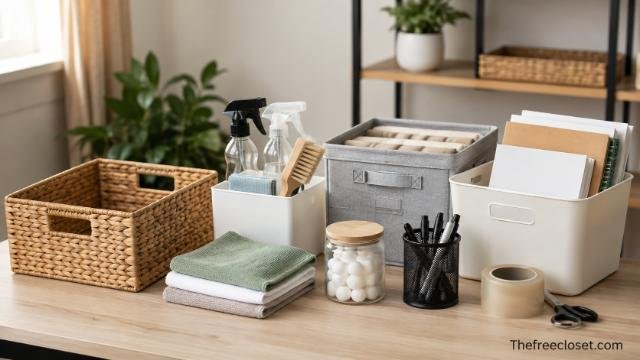
Prepare basic sorting and cleaning supplies before removing items from shelves, drawers, or cupboards. At minimum, create separate containers or designated areas for possessions you will keep, donate, sell, recycle, and discard. Clearly separating these destinations prevents unwanted belongings from being mixed back into items you have already reviewed.
Useful supplies can include sturdy boxes, trash bags, recycling containers, labels, a permanent marker, cleaning cloths, and a laundry basket for objects that belong elsewhere in the home. Storage containers should usually come later. Buying organizers before reducing possessions can lead to storing unnecessary items more efficiently instead of actually reducing clutter.
A temporary “decide later” container can help with genuinely difficult possessions, but it should remain small. If every uncertain object goes into this category, decision-making simply gets postponed. Give the container a review date so that temporary uncertainty does not become permanent storage.
Keep basic cleaning materials nearby as well. Empty shelves, drawers, and cupboards provide an ideal opportunity to remove dust and dirt before returning selected possessions. Combining light cleaning with decluttering means the finished area looks noticeably better, which can encourage you to continue.
| Sorting Category | Purpose | Recommended Action |
| Keep | Useful or valued possessions | Assign a permanent location |
| Donate | Usable items you no longer need | Deliver promptly to an appropriate organization |
| Sell | Items worth the effort of selling | List with a clear deadline |
| Recycle | Materials accepted locally | Separate according to local rules |
| Discard | Damaged or unusable items | Dispose of responsibly |
| Decide Later | Genuinely difficult decisions | Review on a specific date |
Start With a Small and Visible Area
Choose a small area where improvement will be immediately noticeable. A kitchen counter, bedside table, bathroom cabinet, desk surface, or single drawer provides an effective starting point. Completing a limited space builds momentum without creating the overwhelming mess that can occur when an entire room is emptied at once.
Remove everything from the selected area when practical, then examine each item individually. Group similar objects together so duplicates become visible. Five pairs of scissors scattered through different drawers may not seem excessive until they are placed together. The same principle applies to toiletries, cleaning supplies, clothing, stationery, kitchen utensils, and many other household goods.
Clean the empty area before replacing anything. Then return only the possessions that belong there and serve the intended purpose of the space. Objects belonging elsewhere should immediately go into a relocation basket or directly to their correct locations.
Visible areas are particularly valuable starting points because they influence how organized an entire room feels. Clearing a countertop or table creates usable space immediately, while organizing a hidden drawer may produce less noticeable improvement. Once visible clutter is reduced, you can progress to cabinets, drawers, closets, and storage areas.
Sort Every Item Using Consistent Decision Rules
Evaluate possessions according to usefulness, frequency of use, condition, duplication, personal value, and available space. Consistent criteria reduce decision fatigue because you are applying the same standards repeatedly rather than inventing a new reason for every object.
Ask whether you currently use the item, whether you would realistically use it again, whether you own something else that performs the same function, and whether keeping it is worth the space it occupies. An object can still be useful in general without being useful to you. That distinction is especially important when dealing with appliances, clothing, hobby equipment, books, and household supplies.
Avoid keeping possessions solely because they were expensive. Money already spent cannot usually be recovered by leaving an unused object in storage. Selling the item may recover some value, while donating it can allow someone else to use it. Keeping it indefinitely does not reverse the original purchase.
Be equally careful with hypothetical future use. An item needed for a realistic, scheduled activity is different from something retained because you “might need it someday.” Consider the probability of needing it, the cost of replacing it, and the amount of space required to store it.
Remove Unwanted Items From Your Home Promptly
Move donations, recycling, rubbish, and sale items out of the decluttered area as soon as possible. Sorting possessions is only part of the process. Bags sitting in hallways or boxes accumulating in a garage remain clutter until they reach their final destinations.
Donation items should be clean, usable, and appropriate for the organization receiving them. Check local acceptance policies before transporting large quantities because charities and community organizations may have restrictions on furniture, electronics, mattresses, damaged goods, or certain household products.
Selling can be worthwhile for possessions with meaningful resale value, but it can also become a source of delayed clutter. Set a deadline for listing and selling each item. If something has not sold within the chosen period, consider reducing the price, donating it, or choosing another disposal method.
Recycling and disposal require similar attention. Electronics, batteries, chemicals, paint, medications, and certain appliances may require specialized disposal rather than ordinary household waste. Follow the rules provided by your local waste or recycling authority.
Declutter Clothing and Organize Your Wardrobe

Review clothing by category so you can see how much you own. Gather shirts together, then trousers, dresses, outerwear, footwear, accessories, and other categories. Comparing similar garments makes duplicates, unused purchases, incorrect sizes, and worn-out pieces easier to identify.
Keep clothing that fits, feels comfortable, suits your current lifestyle, and receives realistic use. Items requiring repair should have a specific repair plan rather than remaining indefinitely in a wardrobe. Clothing that has not been worn because it does not fit properly, feels uncomfortable, or no longer suits your needs is a strong candidate for donation, sale, textile recycling, or disposal depending on its condition.
Seasonal garments require additional consideration. A winter coat may remain essential even if it has not been used for several months. Special-purpose clothing such as formal wear can also justify less frequent use. Frequency should therefore be considered alongside purpose rather than used as the only rule.
After reducing the wardrobe, organize remaining clothes according to how you use them. Frequently worn garments should be easiest to reach. Seasonal or occasional pieces can occupy less accessible shelves. Avoid packing wardrobes so tightly that putting clothes away becomes difficult because inconvenient storage encourages future clutter.
Clear Kitchen Counters, Cabinets, and Food Storage
Start kitchen decluttering with countertops because clear work surfaces immediately improve food preparation and cleaning. Keep frequently used appliances accessible while relocating rarely used equipment to cabinets or other suitable storage areas.
Review cupboards and drawers by category. Group cookware, food containers, utensils, dishes, glasses, baking equipment, and small appliances. Remove broken items and unnecessary duplicates. Match food-storage containers with their lids and recycle or dispose of damaged pieces according to local requirements.
Food storage requires careful inspection. Check expiration or use-by information where applicable, packaging condition, and signs of spoilage. Organize retained foods so older products are visible and likely to be used before newer purchases. Grouping similar foods also makes it easier to see existing supplies before shopping.
Use cabinet space according to frequency. Everyday plates and glasses should remain convenient, while equipment used a few times each year can occupy higher shelves. The goal is not simply to make cabinets look neat. Kitchen organization should reduce unnecessary movement and make routine tasks easier.
Simplify the Bedroom and Bedside Areas
Remove objects that interfere with the bedroom’s primary functions, particularly sleeping, dressing, and personal routines. Begin with the floor, bedside surfaces, dressers, and chairs where clothing and miscellaneous objects frequently accumulate.
Return clothing to wardrobes or laundry areas, relocate dishes and paperwork, and remove items belonging in other rooms. Bedside storage should contain only objects regularly needed around bedtime or waking. Excessive books, charging cables, cosmetics, receipts, and miscellaneous accessories can quickly make a small bedside area difficult to use.
Under-bed storage can be helpful when space is limited, but it should contain deliberately selected belongings rather than unsorted possessions. Suitable uses may include seasonal clothing, spare bedding, or occasional items stored in labeled containers. If the space becomes an invisible dumping area, it simply hides clutter instead of solving it.
Keep frequently used routines simple. A designated laundry hamper prevents clothing from collecting on chairs, while a small tray can contain everyday accessories. Easy systems are more sustainable because they require less effort to maintain.
Organize Paperwork and Important Documents
Gather paperwork from desks, drawers, bags, countertops, and other locations, then separate it according to purpose. Common categories include documents requiring action, records that must be retained, reference materials, receipts, financial paperwork, and papers ready for secure disposal or recycling.
Create a specific location for incoming paperwork so new documents do not spread throughout the home. Action items should remain visible enough to be completed, while long-term records can move into clearly labeled folders or appropriate digital storage after they are processed.
Retention requirements differ according to document type and jurisdiction. Important legal, financial, property, insurance, employment, identity, and tax documents may need to be retained for specific periods. Check applicable official requirements before destroying records that could have legal or financial significance.
Sensitive papers should be disposed of securely. Documents containing account details, identification information, financial information, or other confidential data may require shredding or another secure destruction method rather than ordinary recycling.
Reduce Digital Clutter Alongside Physical Clutter
Apply the same principles to phones, computers, cloud storage, email accounts, and other digital environments. Delete unnecessary downloads, duplicate photographs, outdated documents, unused applications, and files that no longer provide value.
Create a simple folder structure based on how information is retrieved. Excessive folders can make digital organization as complicated as having no system at all. Important files should have descriptive names, logical locations, and appropriate backups.
Email deserves separate attention because newsletters, promotional messages, automated notifications, and old conversations can accumulate continuously. Unsubscribe from messages you consistently ignore, delete unnecessary emails, and use folders or labels only when they make retrieval easier.
Digital decluttering should not involve deleting important information without safeguards. Maintain appropriate backups of essential photographs, documents, work files, and records. Organization should improve accessibility while preserving information that genuinely matters.
Handle Sentimental Items With Extra Care
Leave highly sentimental possessions until you have practiced making decisions with easier categories. Photographs, letters, inherited belongings, childhood objects, gifts, and family memorabilia often require more emotional consideration than ordinary household items.
Separate the memory associated with an object from the physical object itself. You may value the person, event, or period represented by an item without needing to keep every object connected with that memory. A carefully selected collection can often preserve meaning more effectively than several boxes that are rarely opened.
Establish reasonable physical boundaries for memorabilia. For example, choose a dedicated memory box, shelf, album, or cabinet. The available space provides a natural limit while still allowing meaningful possessions to remain protected and accessible.
Photographing an object before releasing it can be useful when the memory matters more than the item’s practical value. However, there is no requirement to discard meaningful possessions merely to achieve a minimalist appearance. The objective is intentional ownership rather than an arbitrary number of belongings.
Assign a Permanent Home to Everything You Keep
Every retained possession should have a logical storage location. When an object has no designated home, it is more likely to remain on countertops, floors, chairs, and other convenient surfaces.
Place belongings close to where they are used. Cooking utensils belong near food-preparation areas, everyday toiletries should remain accessible in the bathroom, and frequently used office supplies should be within easy reach of the desk. This reduces the effort required to retrieve and return items.
Containers, drawer dividers, shelving, hooks, and labels can improve organization after the amount of possessions has been reduced. Choose storage according to the objects you actually decided to keep rather than buying containers first and attempting to fill them.
Avoid filling storage spaces completely. Some unused capacity makes it easier to remove and replace belongings. A drawer that only closes after objects are compressed into it may technically contain everything, but it is unlikely to remain organized during everyday use.
| Area | Common Clutter | Practical Storage Approach | Maintenance Frequency |
| Kitchen | Utensils, appliances, food | Group by use and frequency | Weekly |
| Bedroom | Clothing, accessories | Wardrobe zones and hampers | Daily |
| Bathroom | Toiletries, cosmetics | Small categories in drawers or cabinets | Weekly |
| Office | Papers, cables, stationery | Filing system and cable storage | Weekly |
| Living room | Remotes, books, miscellaneous items | Baskets, shelves, designated zones | Daily |
| Storage areas | Seasonal and occasional items | Labeled containers by category | Every few months |
Build Daily Habits That Prevent Clutter From Returning
Maintain decluttered spaces through small, repeatable actions rather than occasional large cleanups. Returning possessions immediately after use, processing incoming mail, putting clothing into the wardrobe or laundry hamper, and clearing key surfaces each evening can prevent minor disorder from becoming a major project.
A short daily reset can be particularly effective. Spend five to fifteen minutes returning objects to their designated locations. Concentrate on high-traffic areas such as the kitchen, living room, entryway, and bedroom rather than trying to make the entire home perfect every day.
Control what enters the home as carefully as what leaves it. Before purchasing something, consider whether you need it, where it will be stored, whether you already own a substitute, and how frequently it will be used. Reducing unnecessary purchases decreases the amount of future decluttering required.
Household members should also understand shared storage systems. Labels, simple categories, accessible containers, and clearly assigned locations make it easier for everyone to participate. A system that only one person understands will usually become difficult to maintain.
Schedule Regular Decluttering Sessions
Treat decluttering as ongoing home maintenance rather than a one-time transformation. Possessions continuously enter homes through shopping, gifts, mail, school activities, work, hobbies, and changing family needs, so periodic review is necessary.
Schedule sessions according to the rate at which particular areas accumulate clutter. Kitchen counters and entryways may require daily attention, wardrobes may benefit from seasonal reviews, and garages or long-term storage areas might need only a few thorough sessions each year.
Seasonal transitions provide useful review points. When changing wardrobes for warmer or colder weather, evaluate items before storing them for another season. Moving, renovating, welcoming a new household member, or changing jobs can also provide natural opportunities to reassess possessions.
Track progress by completed areas rather than the number of hours spent working. A finished drawer, cabinet, wardrobe section, or room provides a concrete result. This approach encourages steady progress and makes larger projects feel manageable.
Conclusion
Decluttering works best when it combines thoughtful reduction, practical organization, responsible disposal, and simple maintenance habits. Start with a clearly defined area, sort possessions using consistent criteria, remove unwanted items promptly, and assign permanent locations to everything you decide to keep.
The goal does not have to be an empty or minimalist home. A successful decluttering system creates a home where possessions support everyday life instead of making spaces harder to use. By working through clothing, kitchens, bedrooms, paperwork, digital files, sentimental belongings, and storage areas systematically, you can create lasting order without trying to complete the entire project at once.
Most importantly, protect the progress you make. Regular resets, thoughtful purchasing, seasonal reviews, and accessible storage systems reduce the likelihood that clutter will rebuild. Decluttering then becomes less of a major event and more of a manageable part of maintaining a functional home.
Discover the latest fashion trends, home ideas, travel tips, and lifestyle inspiration at thefreecloset.com.
FAQ’s
Start with one small, visible area such as a countertop, drawer, bedside table, or bathroom shelf. Separate items into keep, donate, sell, recycle, and discard categories, then finish that area completely before starting another.
Reduce the size of the task. Choose one drawer or set a short session of 10 to 20 minutes. Avoid emptying an entire room at once because creating a large sorting pile can make the project harder to complete.
Prioritize broken items, unusable products, unnecessary duplicates, possessions that no longer fit your needs, and objects you realistically do not use. Consider usefulness, condition, replacement cost, available space, and personal value before deciding.
Frequently used surfaces may need quick daily or weekly resets, while wardrobes and storage areas can often be reviewed seasonally or several times a year. The best schedule depends on how quickly possessions accumulate.
Usually, no. Reduce and categorize your possessions first. Once you know exactly what you are keeping, you can select containers, shelves, dividers, or other storage solutions that fit the remaining belongings and available space.
Give every possession a permanent location, return items after using them, regularly remove unwanted belongings, and evaluate new purchases before bringing them home. A simple daily reset combined with periodic reviews can keep small amounts of clutter from becoming a larger problem.