What Is SNS Nails? How Dip Powder Nails Work, Pros, Cons, and Safety
SNS nails are a type of dip powder manicure that uses a bonding liquid and finely milled colored powder to create a smooth, durable coating over natural nails. SNS stands for Signature Nail Systems, the brand associated with this manicure method, although “SNS nails” is sometimes used as a general term for dip powder nails.
What Does SNS Mean in Nails?
SNS stands for Signature Nail Systems, the company behind the SNS dip powder system. The company was founded in 1990, and its dip powder products have become well known enough that some consumers and nail technicians use “SNS” as a general term for dip powder nails.
There is an important distinction, however. SNS is a brand, while dip powder is a manicure method. An SNS manicure uses products made by Signature Nail Systems. A dip powder manicure performed with another manufacturer’s products is technically not an SNS manicure, even if a salon casually describes it that way.
If you specifically want authentic SNS products, ask the salon which brand of powder, base, activator, and top coat it uses rather than assuming every “SNS manicure” uses Signature Nail Systems products.
How Do SNS Nails Work?
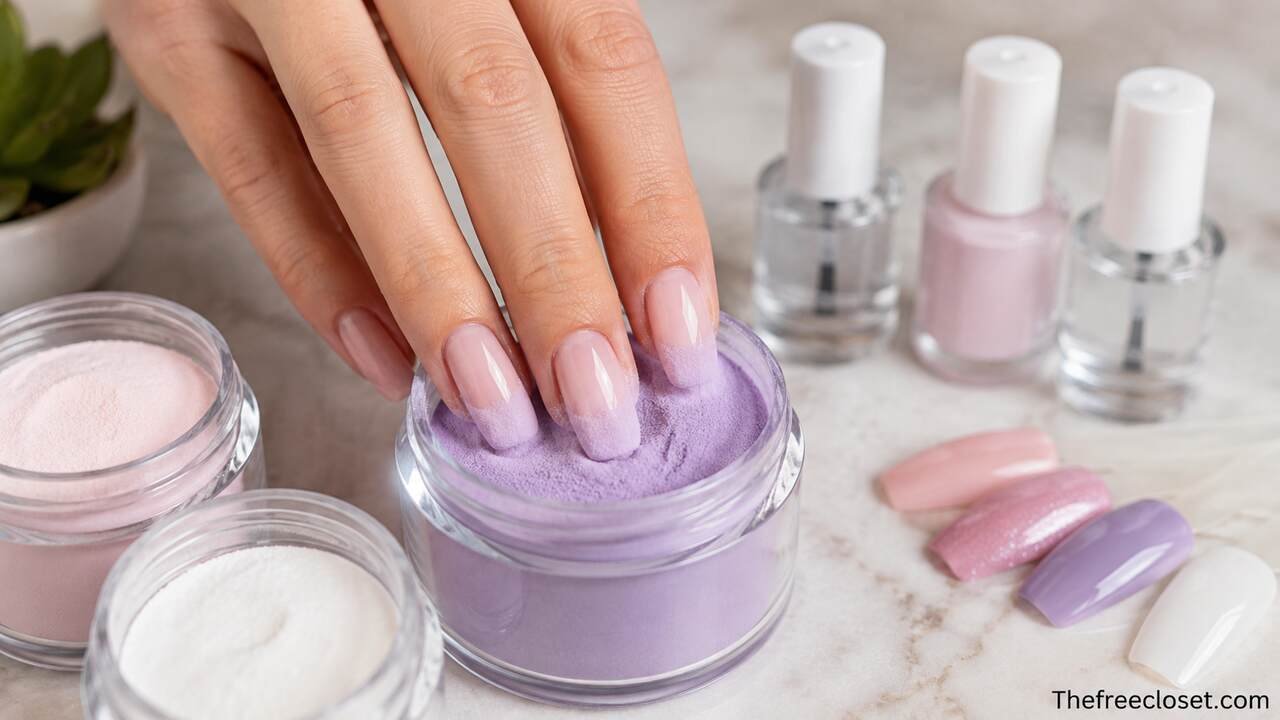
An SNS manicure creates color and strength by building several thin layers over the natural nail. Instead of painting on multiple coats of liquid color, the nail technician combines a bonding liquid with colored or foundation powder.
The exact process can vary according to the products and desired finish, but an SNS dip powder manicure generally involves:
- Preparing and shaping the natural nails.
- Applying a thin layer of dip base.
- Applying or dipping into foundation or colored powder.
- Brushing away excess powder.
- Repeating layers where necessary.
- Applying an activator that helps harden the coating.
- Shaping and buffing the surface.
- Applying the finishing top coat.
SNS’s instructions specify thin applications and include foundation powder, dip base, activator, shaping and buffing, and top coats as part of its system.
One noticeable difference from many gel manicures is the curing process. SNS states that its dip powder system does not require UV light.
How Long Do SNS Nails Last?
A well-applied dip powder manicure can remain chip-free for up to about four weeks, according to the American Academy of Dermatology (AAD). SNS’s own at-home application instructions describe its manicure as lasting 14 days or more.
Those figures are not guarantees. Actual wear time depends on nail growth, application quality, daily activities, product quality, and how much stress you put on your hands.
For example, someone whose nails grow quickly may notice a visible gap near the cuticle before the coating itself starts chipping. Frequent exposure to water, cleaning chemicals, picking, or using fingernails as tools can also shorten the manicure’s useful life.
SNS vs. Gel vs. Acrylic Nails
SNS, gel, and acrylic can all provide longer-lasting results than ordinary nail polish, but they achieve those results differently.
| Feature | SNS/Dip Powder | Gel Polish | Acrylic Nails |
| Main purpose | Durable color and added coating | Long-lasting polished color | Strength, structure, and extensions |
| Application | Adhesive/base with powder layers | Liquid gel painted onto nails | Acrylic material formed over natural nail or extension |
| UV/LED lamp | Typically not required | Usually required | Traditional acrylic does not rely on gel-style UV curing |
| Nail extensions | Possible with additional techniques | Usually used over natural nails, although gel extensions exist | Commonly used for extensions |
| Removal | Usually filed/buffed and soaked | Usually filed/buffed and soaked | Usually requires filing and soaking depending on system |
| Main attraction | Hard, durable finish without lamp curing | Thin, glossy finish | Strong structure and easy length customization |
The best choice therefore depends on what you want. Someone primarily interested in durable color without UV curing may prefer dip powder. Someone who likes a thinner, glossy manicure may prefer gel. Acrylic is often more appropriate when substantial length or structural enhancement is the priority.
None of these options is automatically harmless to natural nails. Application technique, frequency, removal methods, allergies, and aftercare can make a significant difference.
Are SNS Nails Good for Your Natural Nails?
SNS markets its system as containing vitamins and other ingredients and promotes it as an alternative to acrylic systems. However, consumers should distinguish manufacturer claims about a particular formula from independent medical guidance about dip powder manicures generally.
The AAD says most people can wear dip powder without experiencing a problem, but it also warns that dip manicures can be tough on nails. Removal commonly involves acetone, and repeated exposure can contribute to nail thinning and irritation of surrounding skin.
The manicure should therefore not be treated as a nail-strengthening medical treatment simply because a product contains vitamins or minerals.
If your natural nails are already damaged, discolored, lifting, unusually thick, painful, or showing another unexplained change, covering the problem with a manicure can make it harder to monitor. The AAD recommends paying attention to changes in the nail and surrounding skin between manicures.
Are SNS Nails Safe?
SNS and other dip powder manicures can generally be worn without problems by many people, but there are several risks worth understanding.
One is allergic contact dermatitis. The AAD notes that adhesives used in dip manicures can trigger allergic reactions in some people. Symptoms can include itching, swelling, discoloration, fluid-filled bumps, or lifting of the nail.
Nail products can also contain ingredients capable of causing reactions in susceptible people. The U.S. Food and Drug Administration advises consumers to follow nail-product directions and warnings and explains that certain nail-product ingredients, including some methacrylates, can cause allergic reactions.
Hygiene is another consideration. A communal powder container can become a contamination concern when multiple customers put their fingers directly into the same product.
Avoid “double dipping” at the salon
The AAD specifically advises against putting your fingers into a powder container that previous customers have used. Germs associated with an infection or wart could potentially be transferred through shared dipping practices.
A more hygienic salon can pour powder into a disposable container for each customer or sprinkle the powder onto the nail, rather than repeatedly dipping different customers’ fingers into the same container.
That is a useful question to ask before booking:
“Do you use individual powder portions or dip everyone into the same container?”
The answer tells you more about salon hygiene than the manicure’s marketing name does.
What Are the Benefits of SNS Nails?
The main reason people choose SNS or another dip powder system is the combination of durability, color, and no UV-lamp curing.
A properly applied manicure forms a hard coating that can resist ordinary chipping better than conventional nail polish. Dip powder can therefore suit people who want manicured nails for several weeks without repainting them frequently.
Other practical advantages include a large selection of colors, the ability to create French manicures and other finishes, and added thickness that can make the nail feel more substantial.
The lack of UV curing is particularly useful for people who prefer not to put their hands under a manicure lamp. However, “no UV lamp” should not be confused with “risk-free.” Allergies, hygiene problems, aggressive preparation, and damaging removal techniques remain possible.
What Are the Downsides of SNS Nails?
Durability comes with tradeoffs. Dip powder is designed to adhere strongly, which means removal takes more effort than wiping away ordinary polish.
Potential disadvantages include:
- Acetone exposure: Removal often requires acetone, which can dry or irritate the nails and surrounding skin.
- Nail thinning: Aggressive filing or repeated removal can damage layers of the natural nail.
- Allergic reactions: Some people react to adhesives or other nail-product ingredients.
- Hygiene concerns: Shared dipping containers can create unnecessary contamination risks.
- Grow-out: Because the manicure lasts a long time, new natural nail growth can become noticeable near the cuticle.
- More difficult removal: Peeling or forcibly lifting dip powder can damage the natural nail.
The AAD advises giving nails recovery time after removing durable manicures such as dip powder. Its dermatologists also recommend inspecting bare nails for changes before applying another manicure.
How Are SNS Nails Removed?
SNS nails should be soaked off rather than peeled or forcibly picked off.
Removal normally begins by reducing or buffing away the shiny top layer so the removal product can penetrate the coating. The nails are then exposed to an acetone-based removal process until the dip product softens enough to come away without excessive force. SNS provides dedicated removal instructions for its products, including buffing off the shine before the soak-off stage.
The temptation to peel off a lifting edge should be avoided. Dip powder can adhere strongly to the nail plate, so pulling the coating away can remove superficial layers of natural nail along with it.
After removal, moisturizing the nails and surrounding skin can help counteract dryness. If a nail becomes painful, swollen, discolored, lifts from the nail bed, or otherwise looks abnormal, leave it uncovered and consider seeking medical advice if the problem persists.
How to Choose a Salon for SNS Nails
The quality of an SNS manicure depends on more than the powder itself. Technique and hygiene can affect both appearance and nail health.
Look for a salon where tools and work surfaces are visibly clean, technicians follow appropriate sanitation practices, and dip powder is not shared through direct finger dipping. The AAD recommends asking salons how they clean their manicure tools rather than assuming tools have been properly disinfected.
Also ask which dip powder brand the technician uses. If the service is advertised specifically as SNS, confirming that the products actually come from Signature Nail Systems prevents confusion between genuine SNS and generic dip powder.
A good technician should also avoid unnecessarily aggressive filing. More filing does not automatically make a manicure better, especially when it removes healthy natural nail.
Who Should Think Twice About Dip Powder?
Dip powder may not be appropriate when your nails or surrounding skin are already showing signs of a problem.
For example, consider postponing the manicure if you have unexplained nail lifting, swelling, pain, significant discoloration, or signs of infection. Artificial coatings can hide changes that would otherwise be easy to monitor.
People who have previously reacted to nail adhesives or artificial-nail products should also be cautious. The AAD suggests that first-time dip users concerned about reactions can try the product on one nail and wait seven days before applying it to all nails.
Persistent reactions or abnormal nail changes should be evaluated by an appropriate healthcare professional rather than repeatedly covered with another manicure.
Conclusion
So, what is SNS nails? SNS is a branded dip powder nail system from Signature Nail Systems. The manicure combines bonding liquids and powder to form a hard, colored coating over the natural nail, generally without requiring a UV lamp.
Its biggest attractions are durability and long-lasting color, but those benefits should be balanced against acetone removal, possible allergic reactions, nail damage from improper filing or peeling, and hygiene concerns at salons. Choosing a technician who uses clean tools and avoids shared “double dipping,” then removing the product carefully, can make a significant difference to the overall experience.
Discover the latest fashion trends, home ideas, travel tips, and lifestyle inspiration at thefreecloset.com.
FAQ’s
SNS is a brand of dip powder nail products, while dip powder describes the broader manicure technique. Because SNS became closely associated with the method, some salons and consumers use “SNS” informally to describe dip manicures from other brands.
No UV lamp is required for the standard SNS dip powder system. The system uses base, powder, activator, and finishing products instead of curing each colored layer under a UV lamp.
Dip powder manicures can remain chip-free for up to about four weeks, according to the AAD, although actual wear varies. SNS’s own DIY instructions state that its manicure can last 14 days or longer.
It can, particularly if preparation or removal is too aggressive. Repeated acetone exposure and peeling or filing the product improperly can contribute to nail damage. Dip adhesives can also cause allergic reactions in some people.
Neither is universally better. SNS may appeal to someone who wants a durable manicure without UV-lamp curing, while gel can provide a thinner, glossy finish. Your nail condition, desired look, maintenance preferences, allergies, and removal habits should influence the choice.
Yes. Dip powder can be applied over short natural nails without adding extensions. If extra length is desired, a technician can discuss an appropriate extension method before applying the finished color.