


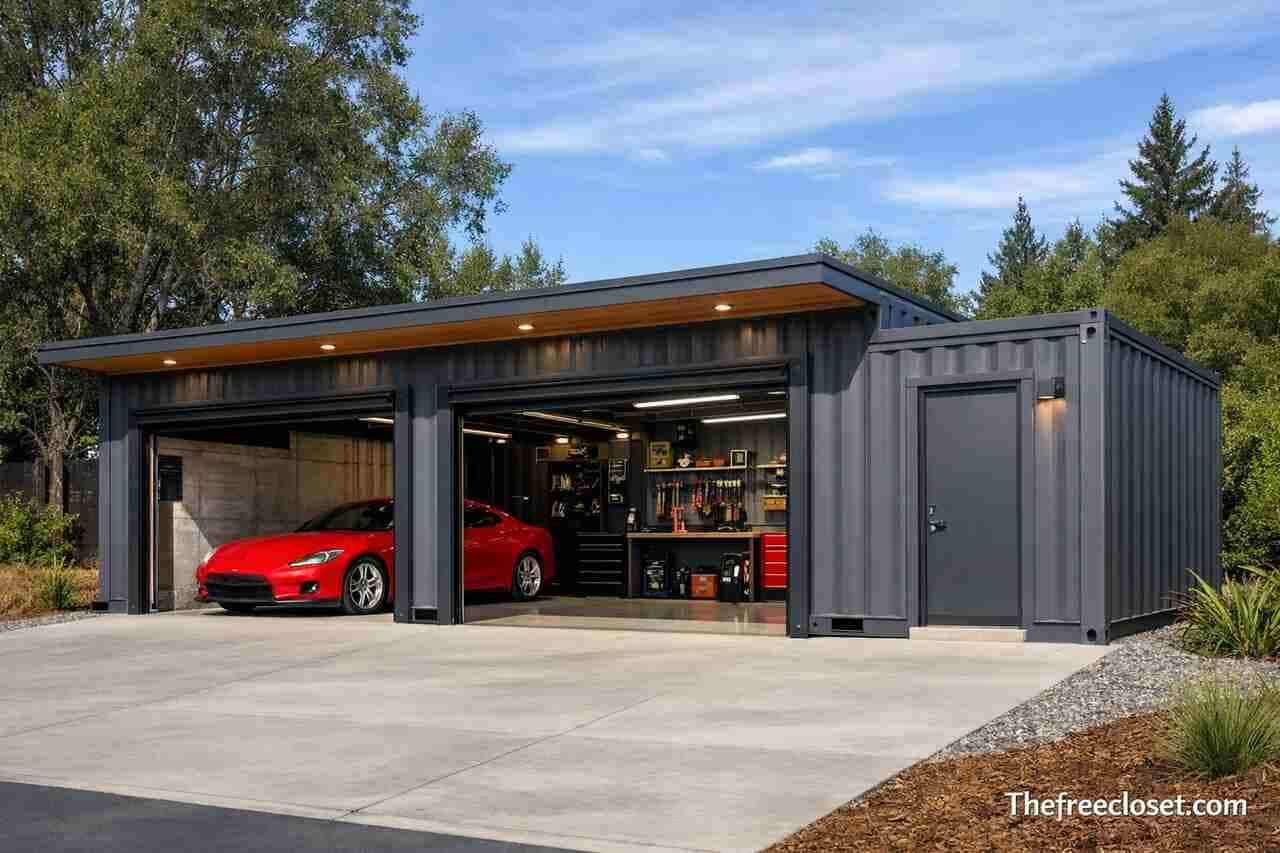
Highlights
- Shipping container garage provides a durable, steel-built solution for vehicle storage, workshops, and multifunctional use.
- Steel structure delivers high resistance against weather, pests, fire, and physical impact.
- Modular design allows single-unit or multi-unit expansion depending on space and storage needs.
- Construction timeline remains shorter than traditional wooden garage builds.
- Cost predictability helps property owners avoid unexpected construction expenses.
- Foundation options include concrete slab, gravel pad, or pier system based on budget and soil condition.
- Insulation and ventilation systems prevent condensation and regulate interior temperature.
- Legal compliance requires checking zoning laws, building permits, and local regulations.
- Customization options include roll-up doors, electrical wiring, shelving systems, and exterior cladding.
- Long-term value increases through low maintenance and structural longevity.
- Sustainable construction trend supports container reuse and eco-conscious building practices.
- Future demand is expected to grow due to modular architecture popularity.
Introduction
A shipping container garage is a secure, steel-structured garage built from repurposed or new cargo containers designed for vehicle storage, workshops, and multifunctional spaces. Shipping container garage solutions combine industrial-grade durability with customizable design, making them ideal for homeowners, contractors, small business owners, and property developers who want affordable, modular, and long-lasting garage structures.
Shipping container garage structures serve residential storage needs, commercial workshop requirements, agricultural equipment protection, and even hobbyist workspaces. Steel container construction delivers structural integrity, weather resistance, and transport flexibility. Property owners choose container-based garages because construction timelines remain short, costs remain predictable, and structural strength surpasses many traditional wooden garages.
What Is a Shipping Container Garage and How Does It Work?
A shipping container garage is a modified intermodal cargo container repurposed into a vehicle storage unit, workshop, or enclosed equipment space. Steel walls, corrugated structural panels, and reinforced corner castings provide load-bearing strength. Structural integrity allows stacking, cutting, and combining multiple containers for larger garage layouts.
Shipping container garages work by converting a closed cargo box into a functional storage space through door installation, ventilation systems, insulation layers, and electrical wiring. Container frames distribute weight evenly across the structure, which reduces foundation complexity. Structural steel composition resists pests, moisture, and fire more effectively than untreated wood framing.
I often explain to readers that the biggest advantage lies in structural readiness. A traditional garage begins as raw materials that require full assembly. A container garage begins as a fully formed steel shell. That difference reduces labor time, speeds project completion, and simplifies design planning.
Structural Composition
Structural composition includes corten steel walls, marine-grade flooring, reinforced corner posts, and roof panels designed for stacking weight. Steel thickness ranges between 14 to 16 gauge, which provides impact resistance and load stability. Corrugated wall design increases rigidity while minimizing material weight.
Steel composition supports heavy roof loads, including snow accumulation and mounted solar panels. Marine plywood flooring resists moisture and heavy vehicle weight. Reinforced steel doors originally designed for cargo shipping create a secure entry system before modification.
Functional Conversion Process
Functional conversion involves cutting large vehicle access doors, installing roll-up garage doors, adding ventilation vents, and integrating electrical conduits. Professional fabricators reinforce cut sections with welded steel frames to preserve structural strength.
Insulation panels, spray foam, or rigid board insulation regulate interior temperature. Electrical installations support lighting, outlets, and power tools. Drainage planning ensures water runoff flows away from the foundation area.
Why Choose a Shipping Container Garage Over a Traditional Garage?

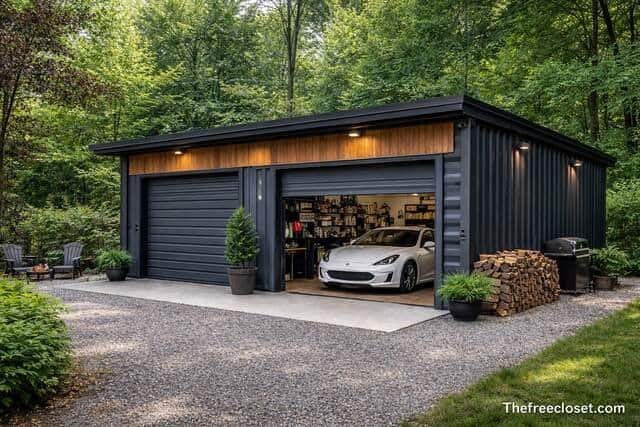
Shipping container garages provide faster construction timelines, lower upfront costs, and greater structural durability compared to many traditional garages. Steel structure resists termites, mold, and rot, which reduces long-term maintenance requirements.
Cost comparison highlights a major advantage. Traditional garages require lumber framing, roofing materials, siding, and extended labor hours. Container garages require modification rather than full construction, which shortens project timelines significantly. Property owners benefit from predictable budgeting because core structure pricing remains stable.
From my experience talking to homeowners who regret oversized construction loans, financial predictability matters. Container garages often eliminate unexpected structural cost overruns. That financial control empowers property owners to invest in interior upgrades instead of structural repairs.
| Feature | Shipping Container Garage | Traditional Wooden Garage |
| Construction Time | Short, modular setup | Longer, multi-phase build |
| Durability | Steel, weather-resistant | Wood, moisture-sensitive |
| Pest Resistance | High | Moderate to low |
| Portability | Relocatable | Fixed structure |
| Maintenance | Low | Moderate to high |
Cost Efficiency
Cost efficiency comes from reduced labor, minimal framing materials, and faster installation. Container purchase prices vary by size and condition, but structural shell cost remains lower than full lumber builds in many markets.
Foundation requirements often remain simpler, such as concrete piers or slabs. Reduced labor hours decrease contractor fees. Long-term maintenance savings further enhance financial value.
Durability and Security
Durability originates from weathering steel designed to survive ocean transport conditions. Steel resistance to impact, heavy winds, and moisture improves security for vehicles and tools.
Security benefits include lock box protection, reinforced doors, and optional steel shutters. Steel wall thickness deters forced entry more effectively than thin siding panels.
What Sizes and Design Options Are Available?
Shipping container garages come in standard 20-foot and 40-foot lengths, with high cube options providing additional interior height. Width remains approximately 8 feet, while height ranges from 8.5 to 9.5 feet depending on container type.
Design flexibility allows combining multiple containers side by side for wider garages. Fabricators remove adjoining walls and reinforce the structure with steel beams to create open interior space. Double-container layouts accommodate two or more vehicles comfortably.
Whenever I discuss size planning with readers, I recommend visualizing storage beyond vehicle parking. Future storage needs, workbenches, and tool cabinets require planning during design rather than after installation.
| Container Size | Interior Length | Suitable For |
| 20-foot | ~19 ft | Single vehicle, storage |
| 40-foot | ~39 ft | Multiple vehicles, workshop |
| High Cube | Extra 1 ft height | Taller vehicles, shelving |
Single-Container Garage
Single-container garages suit compact vehicles, motorcycles, lawn equipment, or tool storage. Interior space supports basic workshop layouts. Installation remains simple due to smaller footprint.
Single-unit design minimizes site preparation and fits smaller residential properties.
Multi-Container Garage Layout
Multi-container layouts create wide-span garage structures. Structural reinforcement ensures roof stability after wall removal. Custom front-facing garage doors replace original cargo doors for improved vehicle access.
Expanded layouts support commercial operations, fleet storage, and mechanic workshops.
How Do You Prepare the Site and Foundation?
Site preparation ensures structural stability and drainage control. Level ground reduces stress on corner posts. Proper drainage prevents water pooling near steel walls, which minimizes corrosion risk.
Foundation options include concrete slabs, pier foundations, gravel pads, and steel skid supports. Concrete slabs provide permanent stability for heavy vehicles. Gravel pads offer cost-effective solutions for temporary installations.
In conversations with rural property owners, I emphasize soil evaluation. Soft soil requires reinforced slab foundations. Proper site grading extends garage lifespan and preserves structural alignment.
Concrete Slab Foundation
Concrete slabs distribute weight evenly across the base. Reinforced rebar increases strength. Slab foundations support heavy trucks and mechanical equipment.
Permanent slab installation increases resale value and structural longevity.
Gravel or Pier Foundation
Gravel foundations reduce cost and improve drainage. Compacted stone layers create stable support. Pier foundations elevate containers above ground moisture.
Elevated designs reduce corrosion and improve airflow beneath the structure.
How Can You Insulate and Ventilate a Shipping Container Garage?
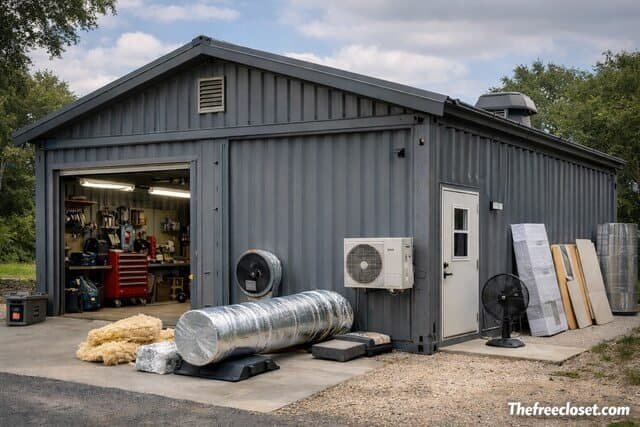
Insulation improves temperature regulation and prevents condensation. Steel walls conduct heat quickly, which makes insulation essential in extreme climates. Spray foam, rigid foam boards, and mineral wool represent common options.
Ventilation prevents moisture buildup. Roof vents, wall vents, and powered exhaust fans promote air circulation. Proper airflow reduces rust risk and protects stored equipment.
When I advise readers living in humid climates, I stress condensation management. Temperature differences between interior and exterior air cause moisture formation on steel surfaces. Insulation combined with ventilation solves that challenge effectively.
Spray Foam Insulation
Spray foam expands to fill wall cavities. Closed-cell foam provides moisture barrier properties. High R-value improves thermal efficiency.
Spray foam also reinforces structural rigidity by bonding to steel surfaces.
Passive and Active Ventilation
Passive vents allow natural airflow through wall openings. Active systems use electric exhaust fans to remove hot air. Ridge vents improve roof-level airflow.
Balanced ventilation preserves interior air quality and protects stored vehicles.
What Are the Legal and Zoning Considerations?
Legal compliance depends on local building codes, zoning regulations, and permit requirements. Residential zones may restrict detached accessory structures by size or height. Some municipalities classify container garages as temporary structures.
Permit approval often requires engineered drawings and foundation plans. Electrical installations require inspection. Property owners must verify setback requirements and fire safety regulations.
Through my discussions with property developers, permit research always appears as the most overlooked step. Early communication with local building authorities prevents costly redesigns or relocation orders.
Building Permits
Building permits ensure structural safety compliance. Application process includes site plans, structural modifications, and foundation design approval.
Permit approval timeline varies by municipality.
Zoning Restrictions
Zoning laws regulate placement, height limits, and aesthetic guidelines. Homeowner associations may impose additional appearance rules.
Understanding zoning guidelines prevents legal disputes and fines.
What Are the Pros, Cons, and Future Scope of Shipping Container Garages?
Shipping container garages offer strength, affordability, modular flexibility, and relocation capability. Steel construction extends lifespan and reduces pest-related damage. Customization options support diverse uses from vehicle storage to creative studios.
Limitations include insulation challenges, condensation risks, and potential zoning restrictions. Initial modification costs can rise depending on design complexity. Transportation fees also impact total budget.
From my perspective, future demand for container garages will grow alongside sustainable building trends. Recycled steel structures align with eco-conscious construction practices. Modular architecture continues gaining popularity due to rapid urban development and flexible land use.
Advantages
Advantages include durability, fire resistance, portability, and customization potential. Steel walls protect valuable tools and vehicles.
Low maintenance reduces long-term ownership costs.
Limitations
Limitations involve thermal conductivity and potential rust in coastal environments. Professional modification remains essential for structural safety.
Aesthetic integration may require exterior cladding for residential neighborhoods.
Conclusion
Shipping container garage solutions provide a modern, durable, and cost-efficient alternative to traditional garage construction. Steel structural strength ensures long-term performance. Modular flexibility supports customization for residential, agricultural, and commercial applications. Proper insulation, ventilation, and legal compliance enhance functionality and longevity. Financial predictability and fast installation timelines position container garages as a forward-thinking investment for property owners seeking reliable storage solutions.
FAQ’s
Steel shipping containers can last 25 years or more with proper maintenance. Rust prevention, ventilation, and protective coatings extend lifespan significantly.
Two cars require either a 40-foot container with interior modification or a double-container layout. Wall removal and structural reinforcement create wider interior space.
Insulation improves temperature control and prevents condensation. Climate conditions determine insulation type and thickness.
Steel structure provides strong security. Reinforced doors and lock boxes increase protection against theft.
Well-installed container garages with proper permits and aesthetic finishing can enhance property utility and market appeal.


