


Highlights
- Tiny home communities provide affordable housing solutions that reduce mortgage debt and lower monthly living expenses while increasing financial flexibility.
- Smaller homes decrease utility consumption, and reduced consumption supports sustainable living and environmental responsibility.
- Shared amenities such as gardens, courtyards, and coworking areas strengthen social bonds and encourage daily interaction.
- Flexible ownership models including cooperative land systems and rental lots increase accessibility for different income levels.
- Remote workers benefit from mobility options, especially when homes are built on trailers for relocation freedom.
- Minimalist living reduces clutter, and reduced clutter improves mental clarity and intentional consumption habits.
- Zoning reforms and policy innovation are expanding legal acceptance in both suburban and urban areas.
- Smart technology integration enhances energy efficiency and community coordination.
- Financial savings from lower maintenance and utility costs allow residents to invest, travel, or pursue entrepreneurship.
- Tiny home communities balance independence with belonging, offering privacy alongside shared social infrastructure.
Introduction
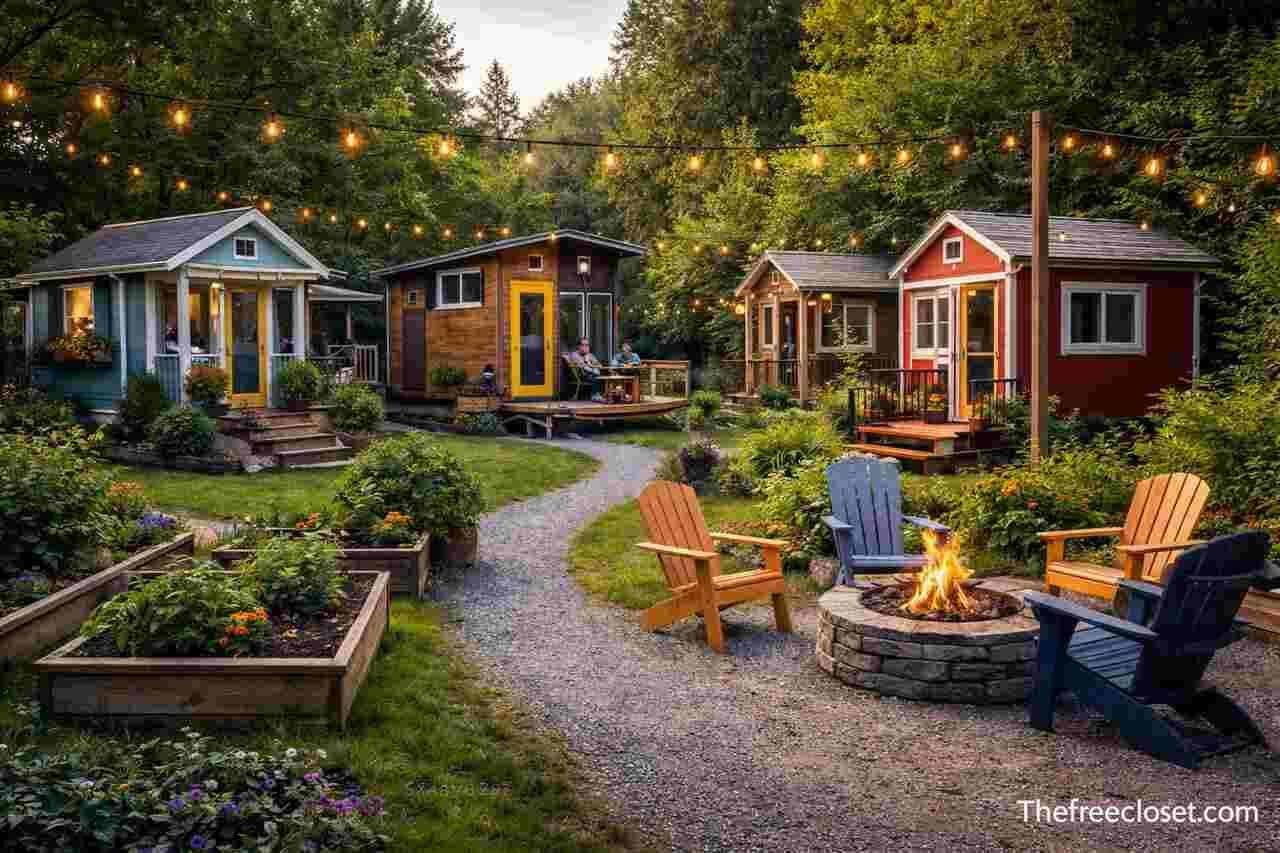
Tiny home communities provide affordable housing, shared infrastructure, and intentional social environments for people seeking financial freedom and simplified living. Tiny home communities combine small dwellings with collective amenities to create cost-efficient, eco-conscious, and community-driven neighborhoods.
Tiny home communities represent a response to rising housing prices, urban congestion, and environmental concerns. Housing markets in many cities have created barriers for first-time buyers, retirees, and remote workers. Rising mortgage rates increase financial pressure, and that pressure pushes many people to search for alternatives. Tiny home communities offer smaller footprints, lower construction costs, reduced utility consumption, and shared amenities that foster connection.
Why Are Tiny Home Communities Becoming Popular?
Tiny home communities are gaining popularity because housing affordability, environmental awareness, and lifestyle flexibility drive demand for alternative residential models. Rising rent increases financial strain, and financial strain encourages downsizing. Downsizing reduces expenses and increases mobility.
Housing affordability plays a major role in this growth. Median home prices in many regions exceed income growth, and that gap limits access to ownership. Tiny homes reduce square footage, and reduced square footage lowers construction materials, land usage, and utility consumption. Lower costs allow individuals to avoid large mortgages, and avoiding large mortgages reduces long-term debt exposure. When I speak with residents, many describe relief from monthly financial anxiety because smaller homes align with simpler budgets.
Environmental consciousness also shapes demand. Smaller homes consume fewer resources during construction, and lower energy use reduces carbon emissions. Solar panels, composting toilets, and rainwater harvesting systems support sustainable living. Sustainability reduces ecological impact, and reduced impact aligns with modern climate goals.
Affordability and Cost Efficiency
Affordability defines one of the strongest motivations for joining a tiny home community. Lower square footage reduces building materials, and fewer materials decrease upfront construction costs. Smaller interiors also reduce heating and cooling expenses, and lower utility bills improve long-term savings.
Shared amenities increase cost efficiency. Many communities provide communal laundry facilities, gardens, or coworking spaces. Shared infrastructure spreads maintenance expenses among residents, and distributed costs reduce individual financial burden.
Desire for Simplicity and Mobility
Desire for simplicity influences lifestyle choices. Minimal possessions reduce clutter, and reduced clutter improves mental clarity. Simpler spaces encourage mindful consumption, and mindful consumption promotes intentional living.
Mobility also attracts remote workers and digital entrepreneurs. Some tiny homes sit on wheels, and mobility allows relocation without selling property. Flexible housing supports career shifts, and career shifts align with modern gig economies.
How Do Tiny Home Communities Function Structurally?

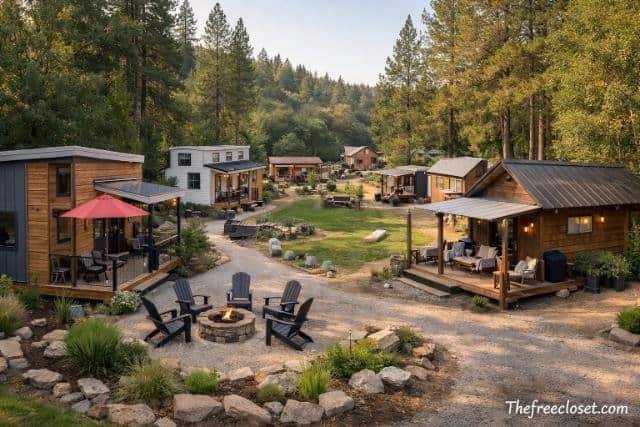
Tiny home communities function through shared land planning, zoning compliance, and coordinated infrastructure systems. Land ownership models determine governance, and governance structures influence long-term stability.
Zoning regulations shape development. Local governments define minimum dwelling sizes, and those requirements often challenge tiny home placement. Progressive municipalities update zoning codes to allow small dwellings, and updated codes enable legal community formation. Legal clarity protects residents from eviction risks.
Infrastructure planning ensures functionality. Water systems, sewage management, electricity distribution, and road access must meet local standards. Professional planning supports safety, and safety ensures sustainable operation.
Land Ownership Models
Land ownership influences resident rights. Some communities operate under cooperative ownership, where residents purchase shares. Cooperative structures promote democratic decision-making, and shared governance strengthens accountability.
Other communities use rental lot models. Property owners lease land to residents, and lease agreements provide flexibility. Rental systems reduce initial investment requirements, and reduced entry costs increase accessibility.
Shared Amenities and Layout
Community layout encourages interaction. Homes often surround a central courtyard, and courtyard design fosters spontaneous social gatherings. Walkable paths connect houses, and pedestrian orientation reduces car dependence.
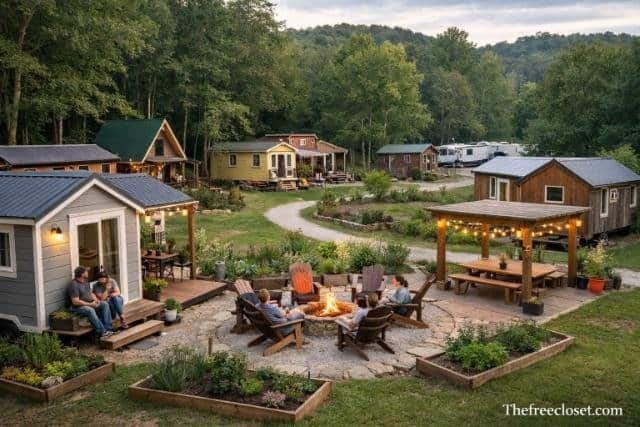
Shared amenities enhance daily living. Common kitchens, gardens, and recreation spaces support collaboration. Collaborative spaces build relationships, and strong relationships increase neighborhood resilience.
What Financial Benefits Do Tiny Home Communities Offer?
Tiny home communities provide lower upfront costs, reduced ongoing expenses, and greater financial predictability. Lower construction expenses result from smaller footprints, and smaller footprints minimize material use.
Mortgage-free living becomes achievable for many residents. Without large loans, individuals redirect income toward savings or investments. Increased savings improve financial security, and financial security reduces stress.
Below is a comparison between traditional housing and tiny home living:
| Aspect | Traditional Home | Tiny Home Community |
| Average Size | 1,800 to 2,500 sq ft | 100 to 400 sq ft |
| Utility Costs | High monthly bills | Significantly lower |
| Maintenance | Individual responsibility | Shared or minimal |
| Mortgage Debt | Long-term commitment | Often reduced or avoided |
| Social Interaction | Limited | Built-in neighborhood culture |
Reduced Utility and Maintenance Costs
Energy efficiency directly affects monthly budgets. Smaller spaces require less heating and cooling, and lower consumption reduces electricity bills. Efficient appliances further minimize usage.
Maintenance tasks also decline. Fewer rooms mean fewer repairs, and simplified plumbing reduces service calls. Reduced maintenance saves time and money.
Increased Investment Opportunities
Freed-up income enables investment. Without heavy mortgage payments, residents allocate funds toward retirement accounts or entrepreneurial ventures. Financial flexibility supports long-term wealth building.
Lower financial risk also increases mobility. Career transitions become less intimidating when housing costs remain modest.
How Do Tiny Home Communities Support Sustainability?
Tiny home communities reduce environmental footprints through compact design, renewable energy integration, and shared resource systems. Smaller homes require fewer raw materials, and reduced materials lower embodied carbon emissions.
Energy efficiency improves through insulation and solar integration. Solar panels generate renewable electricity, and renewable electricity decreases fossil fuel reliance. Rainwater harvesting systems conserve water, and conservation reduces municipal demand.
Community gardens promote local food production. Local production reduces transportation emissions, and reduced emissions align with climate goals.
| Sustainability Feature | Impact on Environment |
| Solar Panels | Lower carbon emissions |
| Composting Toilets | Reduced water usage |
| Rainwater Harvesting | Water conservation |
| Community Gardens | Reduced food transport impact |
| Shared Resources | Less material duplication |
Renewable Energy Adoption
Solar systems provide clean power. Clean power reduces greenhouse gas output. Battery storage enhances reliability, and reliability ensures consistent access.
Wind turbines and microgrids sometimes supplement energy needs. Diversified energy sources increase resilience during outages.
Minimal Resource Consumption
Compact living encourages intentional consumption. Limited storage restricts excess purchases, and restricted purchases reduce waste generation.
Shared tools eliminate duplication. One lawn mower serves multiple homes, and shared equipment lowers manufacturing demand.
What Social Benefits Exist Within Tiny Home Communities?
Tiny home communities foster strong interpersonal connections, mutual support systems, and collaborative culture. Proximity encourages interaction, and interaction builds trust.
Shared events strengthen bonds. Potluck dinners, gardening days, and workshops create engagement. Engagement nurtures belonging, and belonging enhances emotional well-being.
Personal conversations during my visits revealed deep friendships among neighbors. Residents describe feeling safer because neighbors recognize each other and communicate regularly.
Sense of Belonging
Design encourages connection. Front porches face common areas, and visible spaces increase casual conversations. Frequent interaction builds familiarity.
Familiarity strengthens support networks. During emergencies, neighbors assist quickly. Mutual support increases security.
Shared Governance and Participation
Community meetings guide decisions. Collective input ensures fairness. Transparent communication reduces conflict.
Participation builds ownership. Active involvement increases satisfaction and accountability.
What Challenges Do Tiny Home Communities Face?
Tiny home communities encounter zoning restrictions, financing limitations, and social misconceptions. Zoning laws sometimes prohibit small dwellings, and restrictive policies slow development.
Financing also presents obstacles. Traditional lenders hesitate to fund non-standard homes, and limited financing reduces accessibility. Alternative loans or cash purchases become common solutions.
Social misconceptions create skepticism. Some people associate small homes with instability, and that perception affects public opinion. Education shifts perception over time.
Legal and Zoning Barriers
Municipal codes define minimum lot sizes. Those rules restrict placement. Advocacy groups lobby for reform.
Policy changes gradually expand acceptance. Updated regulations increase development opportunities.
Financing and Insurance Issues
Insurance companies sometimes categorize tiny homes as recreational vehicles. Classification affects coverage. Specialized insurers fill gaps.
Creative financing methods emerge. Personal loans and cooperative funding models support purchases.
What Is the Future of Tiny Home Communities?
Tiny home communities show strong growth potential due to urban density challenges, remote work expansion, and sustainability priorities. Remote employment reduces dependence on urban centers, and location flexibility supports alternative housing.
Developers increasingly integrate mixed-use designs. Retail spaces and coworking hubs complement residential clusters. Integrated planning enhances livability.
My experience suggests growing mainstream acceptance. Conversations with city planners reveal increased openness to pilot projects. Cultural attitudes shift toward minimalism, and minimalism supports continued expansion.
Integration With Smart Technology
Smart home systems optimize energy use. Automated lighting and climate control reduce waste. Digital monitoring improves efficiency.
Community apps coordinate events and maintenance. Digital communication strengthens organization.
Expansion Into Urban Areas
Urban infill projects utilize underused land. Vacant lots transform into compact neighborhoods. Efficient land use addresses housing shortages.
Policy innovation accelerates growth. Incentives encourage developers to include small dwellings within larger projects.
Conclusion
Tiny home communities offer affordability, sustainability, and meaningful social connection within thoughtfully designed neighborhoods. Lower costs reduce financial stress, and reduced stress improves quality of life. Sustainable infrastructure decreases environmental impact, and decreased impact aligns with global climate priorities. Social design strengthens belonging, and belonging enhances mental well-being. Challenges remain in zoning and financing, yet policy evolution and cultural shifts indicate strong future potential. Tiny home communities provide practical solutions for modern housing demands while encouraging intentional, community-centered living.
FAQ’s
Tiny home communities can accommodate small families when design includes lofts or expandable layouts. Community amenities such as playgrounds and shared green spaces support child-friendly environments.
Ownership models vary. Some residents own shares in cooperative land arrangements, while others lease lots from developers. Legal structure determines property rights.
Costs vary by region and amenities. Many homes range from moderate five-figure amounts to low six-figure investments, depending on customization and land arrangements.
Tiny home communities reduce resource consumption through smaller spaces, renewable energy, and shared systems. Sustainable practices significantly lower environmental impact compared to conventional housing.
Urban integration is increasing as zoning laws evolve. Infill developments and pilot programs demonstrate feasibility within metropolitan areas.


