


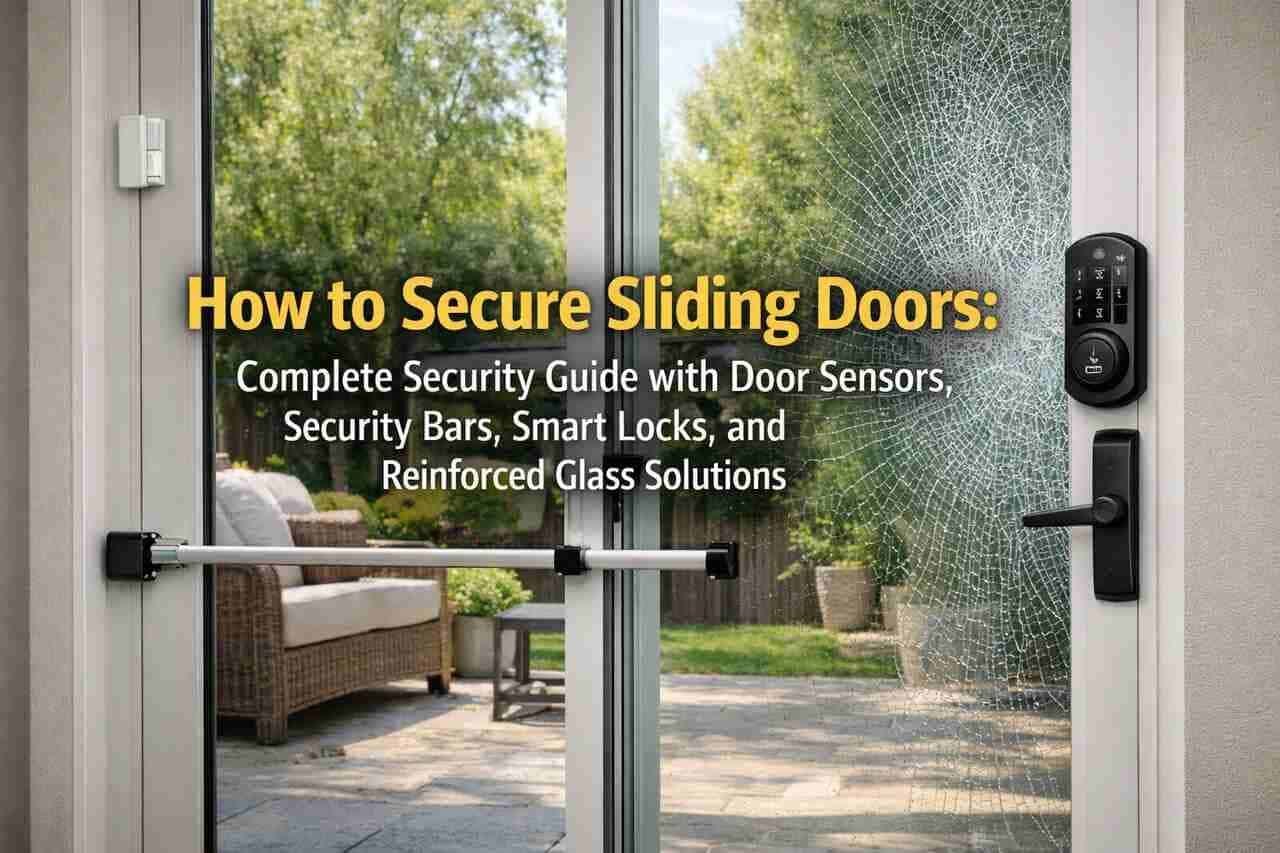
Sliding doors require layered physical reinforcement, intelligent locking mechanisms, and active monitoring systems to achieve real home security. Proper sliding door security combines structural upgrades such as reinforced glass and anti-lift devices with electronic solutions such as smart locks and door sensors. Homeowners who secure sliding doors reduce burglary risk, improve energy efficiency, and increase property value.
What Does Securing Sliding Doors Really Mean for Homeowners?
Securing sliding doors means eliminating forced-entry vulnerabilities such as latch manipulation, glass breakage, and panel lifting. Sliding doors function differently from hinged doors because horizontal tracks replace traditional hinges, and roller systems replace pivot joints. That structural difference creates unique weaknesses, including track tampering and lock bypassing.
Homeowners who understand sliding door mechanics can prevent unauthorized access more effectively. Burglars often target sliding patio doors because factory-installed latches lack reinforced strike plates. Weak glass panels and unsecured tracks also increase vulnerability. Security upgrades convert sliding doors from convenience-based designs into reinforced entry systems.
Security improvements also enhance lifestyle value. Stronger sliding doors improve thermal insulation, reduce outside noise, and increase property appraisal. Insurance providers often reward upgraded security systems with reduced premiums. Homeowners gain peace of mind alongside practical protection.
The following table outlines common sliding door vulnerabilities and corresponding security upgrades:
| Vulnerability | Risk Type | Recommended Upgrade | Security Impact |
|---|---|---|---|
| Weak latch lock | Forced entry | Security bar or smart lock | High |
| Liftable panel | Panel removal | Anti-lift device | High |
| Standard glass | Glass shattering | Laminated or tempered glass | High |
| Exposed track | Track tampering | Track blocker or reinforcement | Medium |
| No monitoring | Undetected entry | Door sensor or alarm integration | High |
Layered protection strategy strengthens each weak point rather than relying on a single solution.
How Do Sliding Door Locks Improve Physical Security?
Sliding door locks serve as the primary defense against unauthorized entry. Factory-installed latch locks provide minimal resistance. Upgraded locking systems increase forced-entry resistance through mechanical reinforcement and digital authentication.
Keyed Sliding Door Locks
Keyed locks replace simple latch mechanisms with cylinder-based locking systems. Cylinder locks use metal pins that align with a matching key, creating stronger resistance against prying. Professional installation ensures correct alignment with the strike plate.
Homeowners who prioritize traditional mechanical control often prefer keyed systems. Keyed systems require physical keys, which eliminate digital hacking risks but introduce key management challenges.
Double-Bolt Locks
Double-bolt locks secure both the sliding panel and the fixed frame. Dual anchoring prevents lateral movement and reduces the risk of prying. Double-bolt systems increase structural integrity by distributing force across multiple anchor points.
Burglars who attempt to force a panel face reinforced resistance because the panel locks at two positions rather than one.
Smart Sliding Door Locks
Smart locks integrate Wi-Fi or Bluetooth connectivity into sliding door systems. Smart locks connect with home automation platforms such as:
- Amazon Alexa ecosystem
- Google Home
- Apple HomeKit
Smart locks provide remote access control, activity logs, and temporary digital keys. Homeowners can monitor entry attempts in real time. Smart locks improve convenience but require secure network configuration to prevent cyber vulnerabilities.
Foot Locks
Foot locks mount at the base of the sliding panel and anchor into the lower track. Foot locks prevent horizontal movement even if the main latch fails. Additional ground-level locking discourages forced sliding attempts.
Security professionals recommend combining foot locks with upper-level locks for complete coverage.
How Do Security Bars and Physical Barriers Prevent Forced Entry?
Security bars create mechanical barriers that prevent sliding panel movement. Bars function independently of lock mechanisms, which creates redundancy in protection.
Adjustable Security Bars
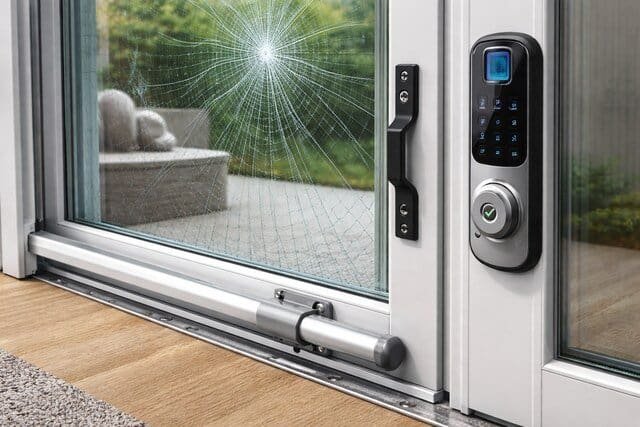
Adjustable security bars fit within the interior track. Adjustable design allows length customization for different door widths. Steel construction provides high resistance against bending or forced displacement.
Homeowners can install adjustable bars without drilling, which preserves door frame integrity.
Charley Bars
Charley bars attach to the sliding panel and pivot into a locked horizontal position. Pivoting mechanism allows quick engagement and disengagement. Charley bars secure the door at mid-height, increasing leverage resistance.
Charley bars provide visible deterrence, which discourages opportunistic burglars.
Track Blockers
Track blockers fill empty space within the sliding track. Wooden dowels or metal rods serve as cost-effective blockers. Blockers prevent horizontal motion even if the primary lock fails.
Homeowners often choose hardened metal rods for improved durability.
Anti-Lift Devices
Anti-lift devices secure the top track gap. Burglars sometimes lift sliding panels upward to disengage bottom rollers. Anti-lift screws or brackets reduce vertical clearance, preventing panel removal.
Physical barrier systems significantly reduce smash-and-grab entry methods.
How Does Reinforced Glass Increase Sliding Door Protection?
Glass represents the largest vulnerable surface area of sliding doors. Reinforced glass upgrades reduce breakage risk and delay forced entry attempts.
Tempered Glass
Tempered glass undergoes thermal treatment that increases surface strength. Heat processing changes internal stress patterns, causing glass to shatter into small fragments rather than sharp shards.
Tempered glass improves safety but does not fully prevent breakage.
Laminated Glass
Laminated glass combines multiple layers bonded with polyvinyl butyral (PVB). Interlayer film holds fragments together after impact. Laminated glass resists penetration and delays forced entry.
Burglars require extended effort to breach laminated panels, increasing detection likelihood.
Security Window Film
Security film applies adhesive polyester layers onto existing glass. Film strengthens glass surface and prevents shattering dispersion. Cost-effective installation makes film popular for retrofitting older doors.
Security film increases resistance but does not replace laminated glass strength.
Impact-Resistant Glass
Impact-resistant glass meets hurricane safety standards. Reinforced layers withstand heavy impact and pressure changes. Coastal homeowners often install impact-rated doors for storm protection and burglary resistance.
Glass upgrade comparison:
| Glass Type | Break Resistance | Cost Level | Ideal Use Case |
|---|---|---|---|
| Tempered | Medium | Moderate | Standard upgrades |
| Laminated | High | Higher | Security-focused homes |
| Security Film | Medium | Low | Budget retrofits |
| Impact-Resistant | Very High | Premium | Coastal or high-risk areas |
Reinforced glass delays entry and increases noise during breakage attempts, which improves deterrence.
How Do Smart Security Systems Enhance Sliding Door Monitoring?
Smart security systems integrate sliding doors into broader home security networks. Monitoring technology detects unauthorized entry attempts in real time.
Door Contact Sensors
Door contact sensors use magnetic components to detect separation between the door panel and frame. Sensor triggers alarm when panel moves unexpectedly.
Contact sensors integrate with security hubs such as Ring Alarm systems. Homeowners receive mobile alerts immediately after activation.
Glass Break Sensors
Glass break sensors detect acoustic frequencies associated with shattering. Acoustic analysis distinguishes between normal household sounds and glass fracture signatures.
Placement near sliding doors ensures rapid detection during forced entry attempts.
Surveillance Cameras
Surveillance cameras monitor patio areas and entry points. Modern cameras provide motion detection, infrared night vision, and cloud recording.
Brands such as Arlo Technologies and Nest offer integration with smart ecosystems. Visual monitoring increases evidence collection and real-time deterrence.
Smart Home Automation Integration
Smart home integration connects locks, sensors, and cameras under centralized control platforms. Homeowners can create automation rules such as:
- Lock sliding doors automatically at night
- Trigger lights when sensors detect movement
- Send emergency alerts during forced-entry attempts
Automation increases response speed and reduces human error.
How Can Track Maintenance and Structural Reinforcement Improve Long-Term Security?

Track maintenance strengthens security by eliminating mechanical weaknesses. Dirt accumulation increases roller misalignment, which creates gaps. Gaps allow lifting or prying.
Regular Cleaning
Regular cleaning removes debris and improves door alignment. Vacuuming tracks prevents obstruction that weakens locking points.
Roller Replacement
Worn rollers create uneven sliding motion. Replacing rollers restores proper track positioning and reduces vertical play.
Frame Reinforcement
Metal reinforcement plates strengthen door frames. Strike plate upgrades distribute force more evenly.
Proper Alignment
Professional alignment ensures full contact between locking bolt and strike plate. Misalignment reduces lock effectiveness.
Maintenance extends door lifespan and supports overall structural integrity.
What Are the Pros and Cons of Securing Sliding Doors?
Advantages
- Reduced burglary risk
- Increased property value
- Improved energy efficiency
- Lower insurance premiums
- Better noise insulation
Disadvantages
- Upfront installation costs
- Potential complexity with smart systems
- Ongoing maintenance requirements
Homeowners must balance cost with security benefits. Layered protection often provides the best return on investment.
What Role Does Sliding Door Security Play in Future Smart Homes?
Smart home ecosystems continue expanding through AI-driven monitoring, biometric access control, and predictive threat detection. Future sliding door systems may incorporate facial recognition, advanced motion analytics, and encrypted digital access credentials.
Manufacturers increasingly combine sustainability features with security design. Energy-efficient glass, recyclable aluminum frames, and integrated solar sensors represent evolving trends.
Security upgrades position homeowners for seamless smart home integration and higher resale value.
Conclusion
Securing sliding doors requires mechanical reinforcement, glass strengthening, and smart monitoring integration. Lock upgrades, security bars, anti-lift devices, and laminated glass reduce forced-entry risk. Smart sensors and automation systems increase real-time awareness. Maintenance ensures long-term performance.
Homeowners who implement layered security strategies gain physical protection, digital monitoring, and property value enhancement. Effective sliding door security blends traditional reinforcement with modern smart technology for comprehensive defense.
Frequently Asked Questions
How do burglars break into sliding doors?
Burglars often lift panels off tracks, pry weak latches, or break glass panels. Anti-lift devices, reinforced locks, and laminated glass reduce those risks.
Are security bars effective for sliding doors?
Security bars provide strong physical resistance and act as visible deterrents. Bars work best when combined with reinforced locks.
Is laminated glass worth the cost?
Laminated glass provides high resistance against penetration and holds fragments together after impact. Higher cost reflects improved security and durability.
Can smart locks be hacked?
Smart locks can face cyber risks if network security remains weak. Strong passwords, encrypted Wi-Fi, and firmware updates reduce vulnerability.
What is the most affordable way to secure a sliding door?
Track blockers, security film, and basic security bars offer cost-effective improvements. Budget upgrades still significantly improve protection when layered properly.


