


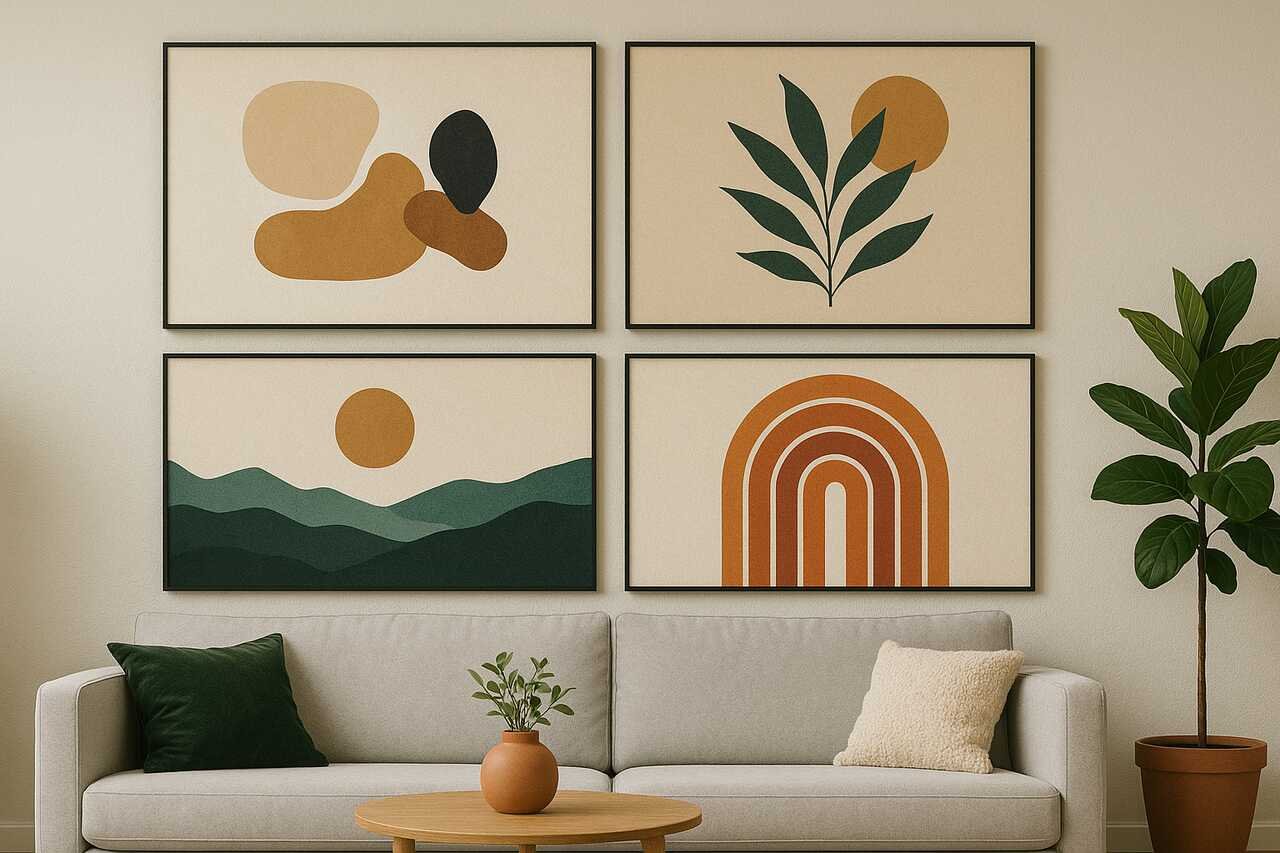
Modern wall art for the living room defines how homeowners experience and interact with their interior spaces. Through contemporary styles like textured canvases, abstract geometry, and personalized prints, wall art anchors the room’s tone, energizes visual engagement, and provides tactile and emotional layers. With the rise of ethical production, handcrafted pieces, and immersive colour strategies, modern wall art transcends decoration and becomes a vehicle for expression, wellness, and identity.
What Are the Defining Types of Modern Wall Art for Living Rooms?
Modern wall art types are defined by clean lines, textural innovation, emotional clarity, and the blending of art with design movements. From graphic abstractions to sculptural installations, these artworks function not only as aesthetic enhancements but also as cultural and spatial markers in the home.
Abstract Geometric Prints

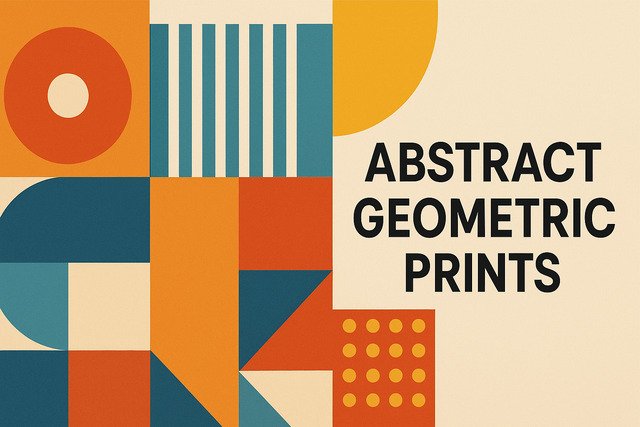
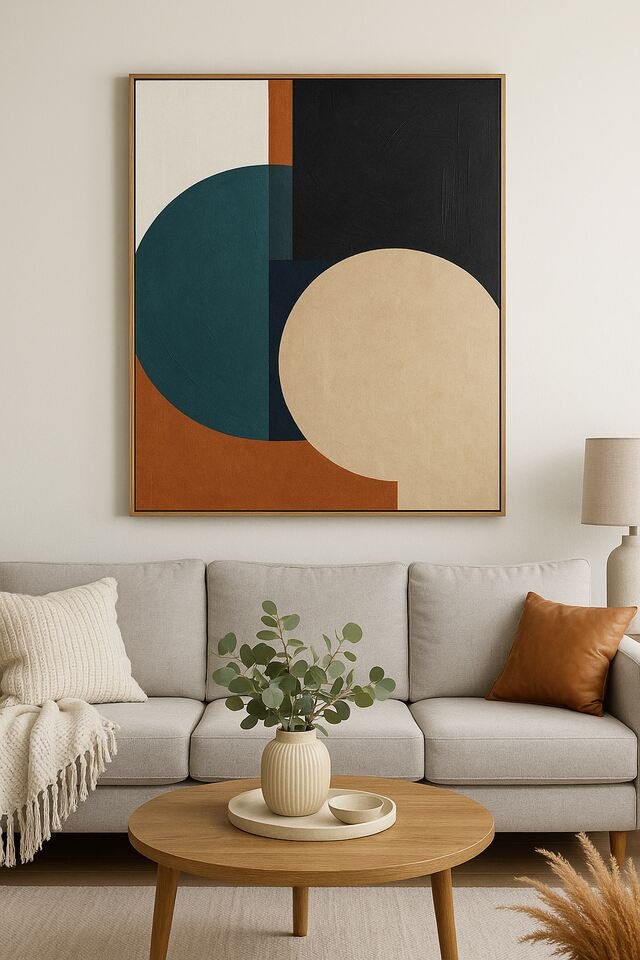
Abstract geometric prints use sharp shapes, repetition, and spatial rhythm to create balance and sophistication. These prints often feature circles, triangles, and layered grids rendered in high-contrast palettes or muted earth tones. Their visual logic brings structure to open-plan living rooms and complements minimalist or modern furniture. Large-scale geometric art establishes clear focal points and can be used to echo architectural features like windows or beams.
Textured and Mixed-Media Canvases
Textured canvases involve raised surfaces created through gesso, sand paste, or mixed-media layering (such as fabric, paper, or metal). These tactile artworks add visual depth and activate flat walls. Embossing techniques, relief effects, and materials like plaster or stucco allow light to interact with the surface, changing appearance throughout the day. Textural wall art is particularly effective in softening angular interiors and providing visual warmth in color-drenched spaces.
Sculptural Wall Art
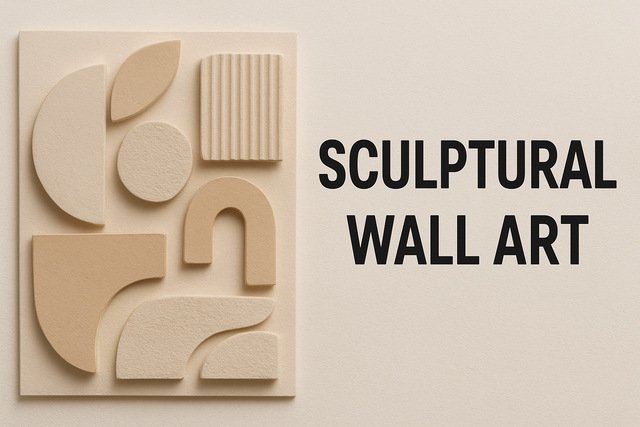
Sculptural wall art includes three-dimensional works such as wood carvings, ceramic plates, metal grids, or wall-mounted installations. Unlike flat prints, sculptural art extends into the space, creating shadow play and adding kinetic energy. Often used in layered modern design schemes, sculptural art suits high-ceilinged living rooms and can bridge traditional and futuristic styles through material selection and form.
Botanical and Nature-Inspired Motifs
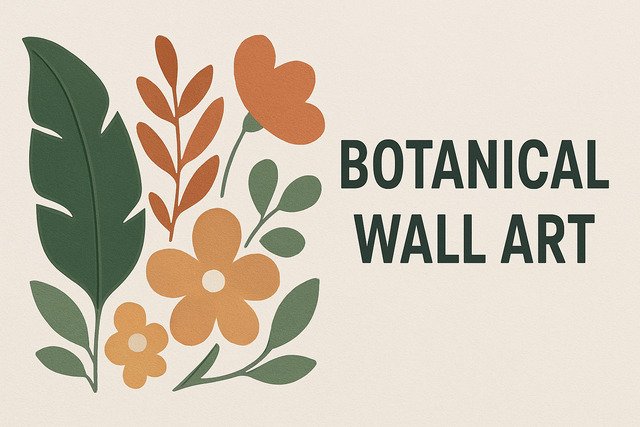
Botanical wall art presents leaves, flowers, branches, or organic patterns in abstract or photorealistic form. Nature-based prints promote calm and connect indoor spaces with outdoor inspiration, a core principle of biophilic design. Common motifs include banana leaves, eucalyptus, and desert succulents. Neutral palettes with green and terracotta accents are frequently used to balance color-heavy interiors and introduce softness into monochromatic or high-contrast rooms.
Personalized and Custom Wall Art
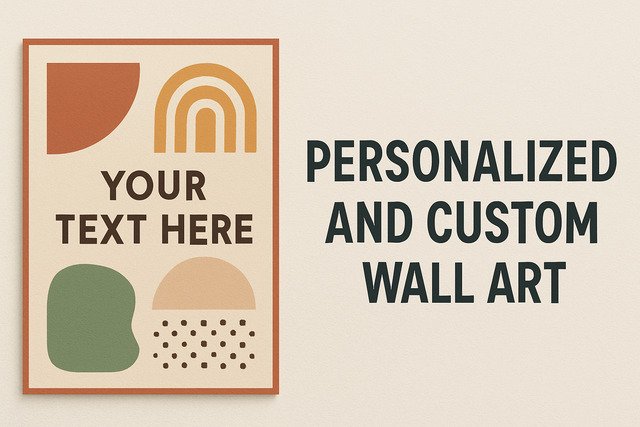
Personalized art reflects specific narratives through names, dates, handwritten messages, or family photography. These pieces add emotional grounding to a modern space and bridge function with sentiment. Modern personalization often takes graphic forms, minimal typographic posters, digital illustrations of homes or pets, or map-based coordinates rendered in stylized design. Customization options through platforms like Gelato and Decorilla allow seamless integration with existing interior themes.
How Do I Choose Modern Wall Art That Complements My Living Room Layout and Palette?
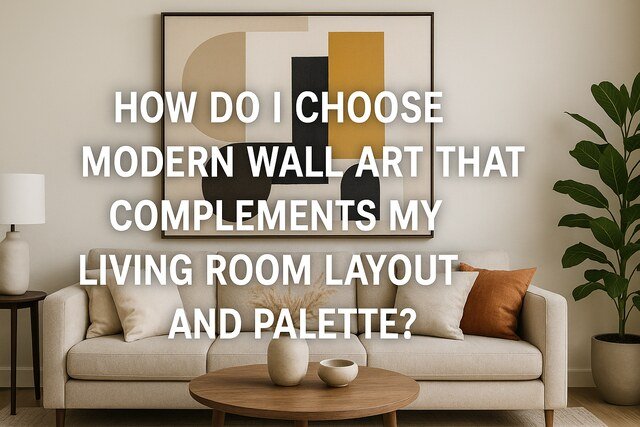
Choosing wall art for a modern living room requires harmony between the artwork’s proportions, colors, and themes and the room’s architectural and furniture framework. The selection process should consider wall space, furniture alignment, dominant hues, lighting, and focal zones.
Size and Placement Matching
The scale of artwork should follow the 60–75% rule: the width of the art should cover around two-thirds of the wall or furniture below it. For instance, a 90-inch couch pairs best with a 54–67 inch-wide piece. Vertical pieces suit narrow columns or door frames, while horizontal works anchor large sofas or console walls.
Color Drenching and Art Cohesion
In rooms using color drenching where one dominant color saturates walls, furniture, and décor wall art should either deepen the monochrome effect or introduce deliberate contrast. Matching art backgrounds to the wall tone creates a blended, immersive aesthetic. Conversely, high-contrast pieces (e.g., black-on-sage green) draw attention and can define conversation areas.
Visual Weight Distribution
Art placement should balance visual weight across the room. Heavy or dark-colored art draws attention, so it should be centered or evenly distributed. Pairing two medium-sized artworks side-by-side or using a triptych can spread visual weight horizontally, while vertical stacking elongates shorter walls.
Why Are Textured and Personalized Wall Artworks Trending for Living Spaces?
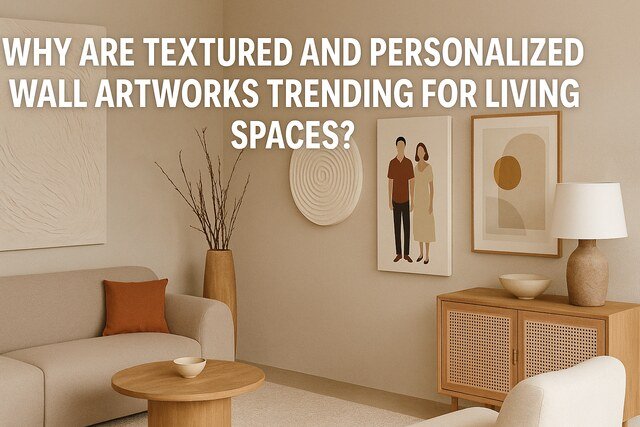
Textured and personalized art pieces have surged in popularity due to their sensory richness, tactile engagement, and emotional relevance. These artworks offer both aesthetic and psychological value, aligning with interior movements focused on wellbeing, identity, and authenticity.
How Does Texture (E.g., 3d or Embossed Art) Change Visual Perception?
Textured artworks alter how light interacts with surfaces, creating dimension, softness, or visual intrigue. Embossed lines, raised layers, or mixed-material elements invite physical and visual engagement. Texture also grounds minimalist or high-gloss interiors by adding raw, handcrafted energy. In sensory-focused designs, such as autism-friendly rooms, textures offer non-verbal stimulation and balance sensory overload.
What Added Charm Does Drawn‑on or Handcrafted Wall Art Bring to the Modern Home?
Hand-drawn wall art, often executed with charcoal, ink, or graphite, injects vulnerability and expressive motion. Unlike digital prints, drawn pieces exhibit personal imperfection and human energy. These works pair well with heritage maximalist interiors that blend old-world charm with modern aesthetics. Drawn art also enables homeowners to showcase creativity through DIY or commissioned pieces.
How Can Ecological Considerations Steer Wall Art Choices?
Eco-conscious wall art includes works created using natural or recycled materials, sustainable inks, low-impact production, or local sourcing. Consumers are increasingly seeking carbon-neutral platforms like Gelato, which reduce environmental impact through print-on-demand methods and localized distribution. Sustainable art choices align with broader home design trends like slow decorating and ethical consumption.
Where Can I Find High‑quality Modern Living Room Art?

High-quality modern art is available through direct-to-consumer platforms, curated online galleries, in-person exhibitions, and custom commission artists. The key to sourcing quality lies in material selection, artist reputation, and authenticity verification.
Online Art Platforms
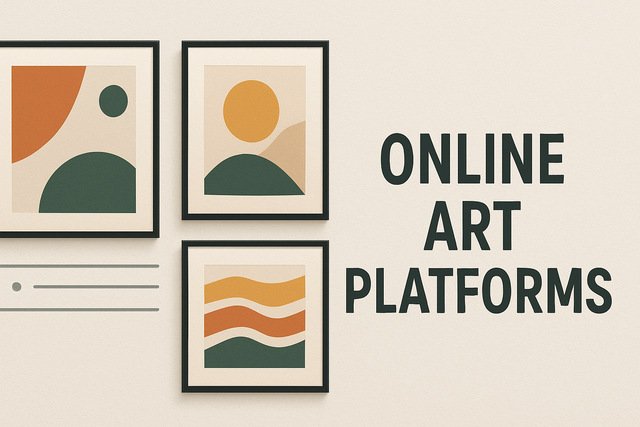
Platforms like iCanvas, NordicWallArt, and Ready2HangArt specialize in modern pieces spanning geometric, abstract, and textural styles. They offer size options, curated collections, and frame selection for easy integration. Many feature designer collections with licensing guarantees.
Artisan Marketplaces
Etsy and independent creator sites enable access to handmade, limited-edition, or custom art from small studios. Filtering by country or material helps buyers prioritize sustainability and exclusivity.
Interior Design Services
Services like Decorilla offer artwork sourcing as part of broader interior styling packages. These services pair professionals with homeowners to align color palettes, materials, and layout with curated wall art.
Retailers with In-House Brands
Stores like West Elm, CB2, and Urban Outfitters Home curate art collections from contemporary artists. These options combine trend alignment with affordability and wide availability.
What Are the Pros and Cons of Investing in Custom Versus Ready‑made Wall Art?
The choice between custom and ready-made art comes down to personalization, lead time, cost, and uniqueness. Custom art reflects personal narratives or spatial requirements, while ready-made art offers speed, predictability, and broad stylistic compatibility.
Custom Wall Art
Pros:
- One-of-a-kind pieces tailored to your story or space
- Freedom to dictate color palette, size, and materials
- Emotional significance and long-term satisfaction
Cons:
- Longer wait times (weeks to months)
- Higher cost, especially for original hand-painted or 3D work
- Fewer return/refund options
Ready-Made Wall Art
Pros:
- ○ Fast shipping and instant gratification
- ○ Predictable quality and appearance
- Affordable and easy to replace or rotate
Cons:
- Potential for mass-market repetition
- May not perfectly align with room’s personality
- Less storytelling potential
Conclusion
Modern wall art transforms living rooms into layered expressions of emotion, taste, and texture. Through styles such as geometric abstraction, botanical minimalism, personalized typography, and tactile 3D compositions, today’s art redefines how design speaks to the senses. Color drenching, ethical sourcing, and handcrafted authenticity drive 2025’s décor narrative. Whether you’re investing in sculptural installations, drawn-on statement pieces, or personalized commissions, modern wall art isn’t just décor: it’s dialogue, movement, and identity brought to your walls.
FAQ’s
Modern wall art emphasizes abstract shapes, clean lines, textural layers, and concept-driven aesthetics. Unlike traditional prints, modern pieces focus on minimalism, expressionism, or sensory elements that align with contemporary interior movements.
Use tone-on-tone art to extend the color drench or select high-contrast works for visual punctuation. Neutral black-and-white pieces or warm metallic accents like gold or brass also add contrast without clashing.
Yes, textured art adds dimension, visual warmth, and tactile engagement. Embossed surfaces change appearance throughout the day based on light conditions and help anchor otherwise flat modern spaces.
Look to platforms like Gelato for sustainable print-on-demand, or consult Decorilla for custom artist pairings. Local art fairs and online portfolios on Behance or Instagram also connect buyers with ethical and personalized creators.
Hand-drawn or sketch-style wall art brings emotional immediacy and visible craftsmanship. It adds character to clean modern interiors and often sparks emotional connection and storytelling.
Yes, layering modern prints with vintage textures or frames bridges past and present. This approach reflects “mindful maximalism”—a key design movement that values both contrast and cohesion.
Review the artist’s credentials, check for archival-quality materials, verify limited edition numbers (if applicable), and ensure proper framing or finishing. Platforms offering COAs (certificates of authenticity) are more trustworthy.
Use a level and center the art at eye level (57–60 inches). Add picture lights or track lighting at a 30-degree angle for shadow-free viewing. Backlighting adds drama to 3D or sculptural pieces.


