


Introduction
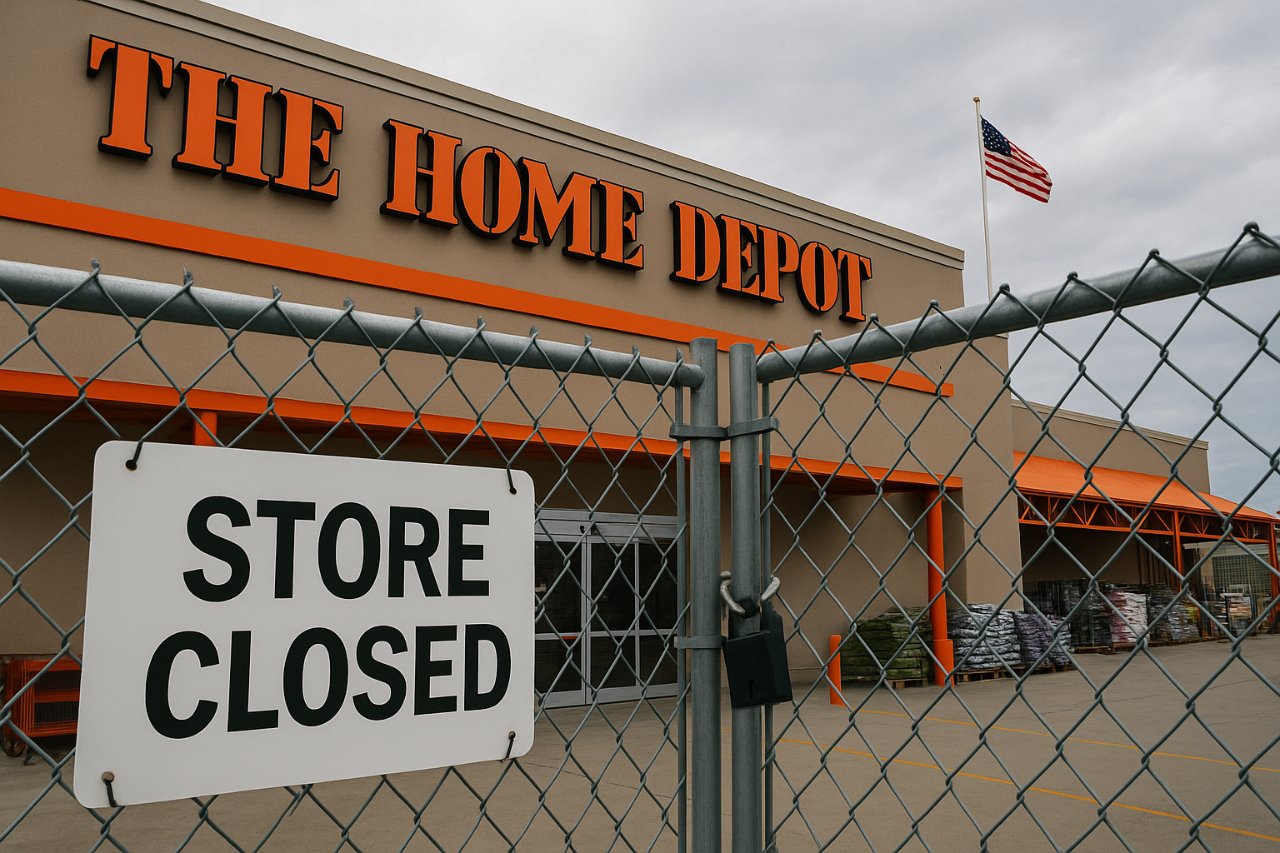
Home Depot’s recent wave of closures, including a 24‑hour nationwide shutdown and the permanent closure of a Missouri distribution center, has sparked widespread discussion in the retail and business community. These moves are not just about shutting doors they reflect a larger transformation in how the world’s largest home improvement retailer is optimizing its footprint, rebalancing supply chains, and investing in its digital and omnichannel future. Understanding why Home Depot is closing certain stores and facilities reveals key insights into the future of retail logistics, workforce strategy, and the evolving balance between online and in‑store operations.
Why Is Home Depot Closing Stores or Facilities?
Home Depot’s closure decisions stem from a strategic imperative to realign operations around efficiency, digital growth, and evolving customer behaviors. The temporary 24‑hour shutdown across U.S. locations, for example, was part of a system‑wide upgrade and safety inspection process allowing the company to recalibrate supply networks and deploy new technology systems without disrupting ongoing retail operations.
Strategically, these closures support Home Depot’s long‑term plan to streamline costs, modernize its infrastructure, and transition toward a more integrated omnichannel ecosystem. By consolidating distribution networks and closing underperforming or redundant facilities, Home Depot frees capital to invest in automation, data‑driven logistics, and click‑and‑mortar capabilities bridging the gap between online and physical retail.
Contextually, Home Depot’s move mirrors broader industry shifts as big‑box retailers optimize real estate portfolios. Similar initiatives by Target, Walmart, and Lowe’s show that strategic closures are increasingly part of retail modernization, not necessarily a sign of distress.
What Strategic Goals Drive Home Depot’s Closure Decisions?
Home Depot’s strategic goals behind these closures are rooted in three priorities: operational efficiency, digital expansion, and customer experience. The Missouri distribution center closure, for instance, aligns with the company’s effort to consolidate regional logistics into fewer, more technologically advanced hubs. This improves fulfillment speed while reducing overhead.
From an investment standpoint, Home Depot is reallocating resources toward supply chain automation, predictive inventory systems, and its growing e‑commerce platform. By rebalancing capital away from low‑yield locations, the company can enhance service delivery to both DIY consumers and professional contractors.
Finally, the closures enable Home Depot to improve sustainability metrics by cutting carbon emissions from redundant trucking routes and enhancing warehouse energy efficiency. This multi‑layered approach connects operational realignment with environmental responsibility and financial prudence.
Which Home Depot Locations Are Closing?
The recent closures involve both temporary and permanent actions. The most prominent event was the 24‑hour nationwide shutdown, during which approximately 2,000 stores paused operations for comprehensive system updates, security audits, and employee retraining. This temporary measure was not a financial retreat, but a proactive reset for technology and safety compliance.
The more permanent impact comes from the closure of a Missouri distribution center, a decision driven by network optimization. This facility, originally designed for older logistics models, became less efficient as Home Depot expanded its regional fulfillment network.
Several underperforming stores have also been identified for phased closures or repurposing. Some locations are being converted into local fulfillment hubs, serving as micro‑distribution nodes for same‑day or next‑day delivery within urban markets.
What Is the 24‑Hour Nationwide Store Shutdown About?
The 24‑hour shutdown impacting nearly all U.S. Home Depot locations was part of a large‑scale operations synchronization effort. This pause allowed the company to update IT systems, enhance point‑of‑sale security, and deploy unified inventory platforms that connect in‑store and online transactions.
While customers experienced temporary inconvenience, the move is expected to deliver long‑term benefits in checkout speed, order accuracy, and inventory transparency. It also served as a training opportunity for employees to align with new compliance and operational protocols.
This temporary closure model, increasingly adopted by global retailers, is part of a broader trend in digital retail transformation where periodic resets allow companies to maintain operational excellence while upgrading backend systems.
Are Any Permanent Store Closures Planned?
As of current reports, Home Depot has not announced large‑scale permanent store closures. However, select underperforming units are being evaluated for closure or conversion. The company’s approach is surgical closing or repurposing only where sales metrics, demographic shifts, or logistical inefficiencies warrant action.
Permanent closures primarily target older stores in overlapping markets, freeing up real estate for distribution or fulfillment purposes. Some shuttered locations have already been repurposed into customer service training centers or cross‑dock facilities.
These decisions are guided by a data‑driven model known as store rationalization strategy, where each unit’s long‑term value is assessed against profitability, accessibility, and contribution to regional fulfillment performance.
What Are the Effects for Employees, Customers & Partners?
Every closure, whether temporary or permanent, has ripple effects across Home Depot’s ecosystem of employees, customers, suppliers, and contractors. The company has emphasized its commitment to minimizing disruption through redeployment, retraining, and relocation programs.
For employees affected by facility closures such as those in Missouri Home Depot has offered internal transfer opportunities to nearby stores or fulfillment centers. Temporary workers and contractors are being given early notice and extended benefits coverage where applicable.
Customers have faced minimal long‑term disruption. During the 24‑hour shutdown, Home Depot’s online platform and app remained active, allowing orders to be placed and fulfilled after reopening. Partners such as SRS Distribution and GMS continue to receive priority updates as logistics networks are realigned.
How Will Affected Employees Be Supported or Relocated?
Home Depot has a structured workforce continuity plan designed for times of operational transition. Affected associates receive career transition assistance, internal job matching, and in some cases, relocation stipends. The company’s employee portal provides access to retraining modules aligned with new warehouse technologies and digital systems.
Home Depot’s approach reflects the broader retail industry’s shift toward employee‑centric transition planning. Rather than mass layoffs, it leverages internal redeployment and skill development to sustain talent retention.
Moreover, Home Depot partners with local employment agencies and technical colleges to support upskilling initiatives. This human‑centered strategy strengthens brand reputation while ensuring institutional knowledge remains within the company.
How Does This Fit Into Home Depot’s Future Strategy?
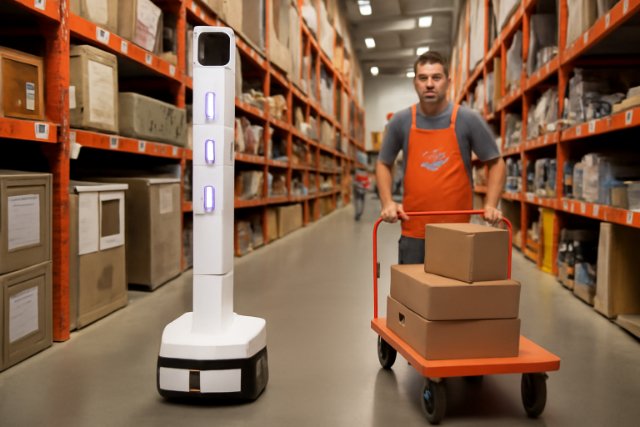
Home Depot’s closure and optimization moves form part of a larger pivot toward an omnichannel, data‑driven retail model. The company’s goal is to evolve from a traditional big‑box retailer to a click‑and‑mortar ecosystem where physical stores, fulfillment hubs, and digital platforms operate seamlessly together.
This evolution includes integrating advanced logistics systems powered by AI forecasting, predictive restocking, and real‑time order routing. The closures of outdated or redundant facilities allow resources to flow into next‑generation technologies and fulfillment capacity.
Home Depot is also exploring micro‑fulfillment centers near urban areas, improving delivery times and reducing carbon emissions. The company’s partnership with SRS Distribution strengthens its supply chain reach across residential and commercial sectors.
How Is Home Depot Reallocating Capital Post‑Closure?
Post‑closure, Home Depot is channeling capital into several strategic initiatives: automation upgrades, inventory digitization, and sustainability retrofits. The capital freed from closed facilities funds infrastructure for robotics in distribution, advanced data analytics, and enhanced e‑commerce logistics.
According to its corporate filings, Home Depot’s capital expenditure now prioritizes projects that improve customer proximity and delivery flexibility. This includes investment in new fulfillment hubs capable of processing thousands of orders daily.
This disciplined capital reallocation marks a shift from expansion to optimization where growth is measured not by store count, but by network efficiency and digital revenue share.
How Does Home Depot Compare with Competitors?
Home Depot’s footprint rationalization strategy stands out against competitors like Lowe’s and Amazon. While Lowe’s has taken a conservative closure approach, focusing mainly on underperforming Canadian stores, Amazon’s strategy involves expanding local micro‑fulfillment hubs while reducing large warehouse dependency.
Home Depot’s hybrid model blends the best of both maintaining large retail spaces for contractor engagement while investing in smaller, high‑efficiency logistics centers. This dual structure supports both professional and consumer segments simultaneously.
Comparatively, Home Depot’s measured approach has preserved brand equity and community relationships. Unlike aggressive closures seen in other retail sectors, Home Depot’s actions reflect modernization rather than retreat.
How Are Lowe’s or Amazon Approaching Store Closures Differently?
Lowe’s has pursued a store‑specific rationalization model, closing fewer stores but heavily investing in supply chain modernization. It focuses on regional distribution optimization and fewer last‑mile fulfillment experiments compared to Home Depot.
Amazon, on the other hand, emphasizes digital dominance converting certain warehouses into hybrid delivery and returns centers. Its model prioritizes automation over physical retail presence, contrasting sharply with Home Depot’s enduring focus on in‑store experience.’
This difference underscores Home Depot’s commitment to the omnichannel fulfillment hub model where physical stores play a central role in online order processing, returns management, and customer engagement.
What Should Stakeholders Watch Going Forward?
Stakeholders including investors, suppliers, and customers should monitor how Home Depot balances short‑term closures with long‑term digital reinvestment. Key indicators include fulfillment efficiency, e‑commerce growth, and employee satisfaction.
The company’s ability to convert traditional stores into hybrid fulfillment spaces will determine its competitiveness in the next retail cycle. Investors should also watch for further consolidation moves, as Home Depot streamlines its logistics network in alignment with sustainability targets.
From a consumer standpoint, temporary disruptions will likely yield enhanced service quality and faster delivery times once new systems are fully operational.
Will There Be Additional Shutdowns or Restructuring Moves?
While Home Depot has not announced major additional closures, further localized restructuring is possible. The company’s continuous improvement model involves assessing market performance quarterly, identifying redundancies, and adapting to supply chain evolution.
Industry analysts anticipate selective closures as Home Depot completes its transition to a more efficient retail ecosystem. The trend points to ongoing network consolidation logic, not contraction where fewer, smarter facilities handle higher throughput.
Future actions may also include repurposing older buildings into community training centers or sustainability labs, reinforcing Home Depot’s social and environmental commitments.
Table: Comparison of Closure and Optimization Strategies Among Major Retailers
| Company | Closure Focus | Optimization Strategy | Digital Investment Focus |
| Home Depot | Temporary shutdowns, selective facility closures | Supply chain consolidation, omnichannel fulfillment hubs | AI logistics, predictive restocking, customer data platforms |
| Lowe’s | Underperforming regional stores | Regional DC optimization | ERP modernization, digital customer tools |
| Amazon | Excess warehouse consolidation | Micro‑fulfillment and hybrid facilities | Automation, drone delivery, AI route optimization |
| Walmart | Low‑yield market exits | Store‑as‑fulfillment model | e‑commerce integration, inventory sync systems |
Conclusion
Home Depot’s closures signal not decline, but transformation. By temporarily shutting stores and reconfiguring facilities, the company is rewriting its operational DNA for a digital‑first era. The combination of efficiency, sustainability, and technological innovation positions Home Depot as a leader in the retail reinvention wave sweeping across North America.
As Home Depot continues its shift toward omnichannel excellence, its strategy serves as a blueprint for other big‑box retailers navigating similar transitions. The next few years will reveal how effectively the brand can balance digital acceleration with human‑centered continuity across its vast network.
FAQ’s
Only select underperforming stores or redundant facilities are closing. The closures are strategic, aimed at improving operational efficiency and repurposing real estate for logistics or fulfillment use.
The company has confirmed the closure of a Missouri distribution center as part of its network optimization initiative. The facility’s operations are being absorbed into newer, more efficient hubs.
Affected employees are offered relocation assistance, retraining, or reassignment to nearby facilities. Home Depot prioritizes internal redeployment to minimize job loss.
Yes. During temporary shutdowns, Home Depot’s online platform and mobile app remain operational, allowing customers to place orders and schedule deliveries for after reopening.
Contractors and suppliers will experience minimal disruption, as Home Depot has restructured delivery schedules and logistics flows to ensure continuous product availability.
Home Depot is optimizing not shrinking. The company is investing in smarter, more efficient infrastructure while maintaining its overall service reach.
Unlike some competitors that have reduced store counts dramatically, Home Depot focuses on selective realignment. Its strategy emphasizes modernization, supply chain efficiency, and omnichannel fulfillment over contraction.
