



Introduction
For decades, Canadian “snowbirds” retirees and seasonal travelers who migrate south each winter have been a defining presence in Florida. Their ownership of vacation condos, villas, and single-family homes not only shaped local real estate markets but also fueled tourism-driven economies across the Sunshine State. Yet in 2025, a striking trend is unfolding: Canadian snowbirds are selling their Florida homes in unprecedented numbers. The drivers of this exodus are multifaceted, ranging from economic pressures such as the weak Canadian dollar and spiraling insurance premiums to political, regulatory, and lifestyle considerations. Understanding why this sell-off is happening, how large it really is, and what it means for both sides of the border is essential for snowbirds, investors, and policymakers alike.
Why Are Canadian Snowbirds Selling Florida Homes Now?
The primary reason snowbirds are liquidating Florida properties is cost. The economics of owning a U.S. property as a Canadian have shifted dramatically in recent years. What once felt like a bargain sunshine real estate supported by favorable exchange rates now feels like a financial strain.
One of the biggest pain points is the weak Canadian dollar. At exchange rates hovering around 73–75 cents USD per CAD, every Florida expense feels inflated. A $10,000 annual insurance premium effectively costs Canadians nearly $14,000 in Canadian dollars. The same applies to utilities, HOA fees, and property taxes. The depreciation of the Canadian dollar directly erodes affordability.
Compounding this are Florida’s skyrocketing insurance costs. Reinsurance pressures, climate change, and repeated hurricane seasons have made coastal coverage nearly prohibitive. Many snowbirds report premiums doubling or tripling in just five years, especially in Miami-Dade, Broward, and Gulf Coast counties. FEMA’s flood insurance reforms further increase rates in high-risk zones, leaving some Canadian owners facing five-figure annual insurance bills that rival their property taxes.
Beyond economics, political and regulatory friction adds pressure. The U.S. has tightened foreign ownership reporting requirements, while FIRPTA (Foreign Investment in Real Property Tax Act) imposes mandatory withholdings on Canadian sellers. At the same time, Canadian retirees face evolving healthcare and residency considerations. Selling Florida homes often feels like simplifying a complicated binational life.
What Role Does the Weak Canadian Dollar Play in This Decision?
Currency fluctuations are one of the most decisive factors in snowbirds’ decisions. Every U.S. dollar spent translates into higher Canadian outflows. For retirees living on fixed pensions or RRSP withdrawals, the weaker loonie magnifies Florida’s cost of living.
Some Canadian sellers view 2025 as an opportunity to capture equity while the U.S. housing market remains strong. Selling a Florida property for $500,000 USD effectively converts to over $680,000 CAD an appealing windfall back home. Currency arbitrage turns the weak loonie from a liability into an advantage upon sale.
Financial planners caution, however, that currency markets are cyclical. Should the Canadian dollar rebound to parity, future buyers might regret divesting too early. This introduces a speculative element, where timing becomes as much about forex markets as about real estate cycles.
How Have Insurance Costs, Property Taxes, and Hurricane Risks Influenced Sellers?
Insurance is the single most cited frustration among Canadian snowbirds. Once manageable, premiums in hurricane-prone regions now rival mortgage payments. For some, insurers have pulled out entirely, forcing snowbirds into Florida’s state-backed “Citizens Property Insurance” program, which comes with surcharges and assessments.
Property taxes, especially in non-homesteaded properties owned by non-residents, add further strain. Canadians do not benefit from Florida’s “Save Our Homes” tax cap, meaning assessments can rise freely with market value. For long-time owners, tax bills have ballooned alongside insurance.
The climate risk dimension is harder to quantify but psychologically important. Successive hurricane seasons Ian (2022), Idalia (2023), Milton (2024) reinforced the vulnerability of Florida’s coasts. Aging Canadians increasingly weigh whether the stress of storm preparation and recovery is worth maintaining a U.S. home.
How Big Is the Sell-Off Among Canadian Snowbirds?

The scale of the Canadian exodus is measurable in listing data and Realtor surveys. According to the National Association of Realtors (NAR), Canadians represented nearly 25% of foreign sellers in Florida between April 2023 and March 2024. Early 2025 reports suggest that share is climbing.
Market indicators point to snowbird-heavy communities seeing disproportionate listing increases. Coastal condo markets in Naples, Fort Myers, and Sarasota show above-average foreign seller presence. Realtors in Broward County report entire condo boards where Canadian owners are simultaneously listing units.
How Has Listing Inventory and Time on Market Changed?
Inventory levels in snowbird-dominated neighborhoods are rising faster than the state average. Properties that once sold in weeks now linger for months, especially condos with high HOA fees. The surge of Canadian sellers adds localized supply shocks, softening prices in certain micro-markets even while broader Florida averages remain firm.
Time on market is lengthening. Realtors note Canadian sellers often list ambitiously, pricing in U.S. dollars without accounting for buyers’ sensitivity to insurance premiums. Price reductions are increasingly common before deals close.
Which Florida Regions Are Most Affected?
The most affected regions align with historic Canadian snowbird clusters:
- Southwest Florida (Naples, Fort Myers, Cape Coral): Traditionally popular with Ontarians, now seeing above-average listing activity.
- Southeast Florida (Fort Lauderdale, Palm Beach): Quebec buyers historically strong here; many now cashing out due to condo insurance hikes.
- Central Florida (Orlando, Kissimmee): Snowbirds who purchased vacation rentals face both higher costs and declining Airbnb profitability.
- Panhandle & Gulf Coast: Insurance volatility especially acute; Canadians selling single-family homes along the water.
| Region | Canadian Ownership Share (Est.) | Current Market Impact |
| Naples & Fort Myers | 18–20% of foreign buyers historically | High sell-off, insurance-driven |
| Broward & Palm Beach | 15% | Condo-heavy exodus |
| Orlando/Kissimmee | 12% | Rental-market softening |
| Gulf Coast Panhandle | 8–10% | Hurricane risk pushing exits |
What Financial and Logistical Challenges Do Canadian Sellers Face?
Selling as a foreign owner introduces unique complications. The U.S. tax regime, particularly FIRPTA, requires withholding up to 15% of sale proceeds unless exemptions are applied. Many Canadian snowbirds are caught off guard by this liquidity lock-up.
Capital gains tax adds further complexity. U.S. rules tax gains on property sales, and Canadians must also report the disposition in Canada, often leading to double-taxation risks. Skilled cross-border accountants help apply foreign tax credits to minimize this, but it remains a major pain point.
Currency conversion introduces another layer. Repatriating $500,000 USD into Canadian dollars can swing tens of thousands depending on forex rates and fees. Banks often offer poor spreads; specialized FX providers or forward contracts can materially improve outcomes.
How Do Capital Gains, U.S. Estate Tax, and Cross-Border Tax Rules Apply?
Capital gains tax applies at federal and sometimes state levels. Florida has no state income tax, but FIRPTA rules force foreign sellers into compliance. Canadians selling for a profit may owe up to 20% in U.S. federal capital gains, with credits back home.
Estate tax is an under-discussed risk. U.S. estate tax applies to non-residents with U.S. assets exceeding $60,000. Canadians with million-dollar Florida homes may inadvertently create estate exposure for heirs, unless they use trusts, LLCs, or structured ownership vehicles.
Cross-border tax treaties offer relief, but navigation is complex. Many snowbirds now consult CPAs specializing in Canada–U.S. taxation before listing.
What Currency Conversion or Repatriation Issues Arise?
For Canadians selling now, currency markets can either punish or reward. A weak loonie means strong CAD proceeds, but exchange rate volatility creates uncertainty. Without hedging, sellers risk transferring at the worst possible time.
Some snowbirds stagger conversions, using forward contracts or multi-currency accounts. Others keep U.S. funds invested locally to hedge against Canadian inflation. Professional forex strategy, once niche, is becoming mainstream in snowbird circles.
Which Alternatives Are Snowbirds Considering Instead of Florida?
The snowbird lifestyle is not disappearing it’s evolving. Many Canadians are simply shifting their winter destinations to regions with lower costs, simpler residency rules, and more predictable ownership expenses.
Mexico has emerged as the top alternative, with Puerto Vallarta, Lake Chapala, and Playa del Carmen hosting thriving Canadian expat communities. Property prices are lower, healthcare is affordable, and residency visas are more flexible than U.S. restrictions.
Other snowbirds consider Arizona, Texas, or California, though rising U.S. healthcare costs and visa limitations still apply. A growing minority explore Europe Portugal and Spain in particular where residency-by-investment visas and medical care appeal to retirees.
Are Canadian Snowbirds Shifting to Mexico, Central America, or Other U.S. States?
Mexico, particularly regions like Puerto Vallarta, Cancun, and Lake Chapala, has become the leading alternative. Lower costs, lenient residency visas, and thriving Canadian expat communities make the transition smooth.
Other snowbirds prefer Arizona, Texas, or California, where property insurance is less volatile, though political and tax regimes vary. Some explore Portugal or Spain, leveraging EU residency visas for long stays abroad.
What Factors (Cost, Safety, Visa Ease) Drive That Relocation?
Cost remains paramount. Mexico offers property ownership at fractions of Florida prices, with medical tourism benefits as a bonus. Safety perceptions vary, but many expats report feeling secure in well-established communities.
Visa policy is another differentiator. Mexico’s six-month tourist visa and pathways to residency are far simpler than U.S. immigration’s 180-day rule. For Canadians seeking flexibility, this matters.
What Impact Does This Trend Have on Florida’s Real Estate and Local Economy?
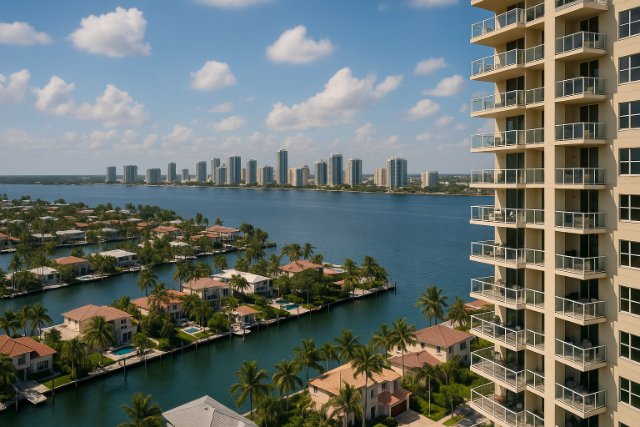
The exodus of Canadian snowbirds reverberates beyond real estate listings. Snowbirds spend billions annually in Florida, supporting restaurants, medical providers, golf courses, and retail. A shrinking Canadian presence threatens local economies that rely on seasonal inflows.
Realtors and property managers also feel the pinch. A flood of Canadian listings increases competition, lengthens sales cycles, and puts downward pressure on commissions.
Florida policymakers are watching closely, as the combined effects of insurance crises, climate risk, and foreign divestment could strain housing stability in certain regions.
Will Inventory Oversupply Lead to Price Softening?
Localized oversupply is already softening condo markets. While Florida’s broader demand remains robust driven by domestic U.S. migration Canadian-heavy segments are buckling. Buyers wary of insurance costs compound this effect, producing price stagnation in once-hot markets.
How Will Seasonal Economies Be Affected?
Tourism-reliant economies feel the pinch. Restaurants, golf courses, and local service providers dependent on Canadian seasonal residents face demand gaps. Rental markets also soften as snowbirds pull out, altering occupancy dynamics in winter months.
What Strategies Can Canadian Snowbirds Use If They Want to Sell Optimally?
A strategic approach can help Canadian snowbirds exit profitably while minimizing financial leakage. The three pillars of success are timing, tax planning, and currency management.
Engaging a Realtor experienced in cross-border transactions is essential. Equally important is consulting both a U.S. tax advisor and a Canadian accountant before listing, to pre-arrange FIRPTA exemptions and credit claims. Sellers who approach it holistically can preserve significantly more equity.
When Is the Best Timing to List Given Market Softness?
Listing ahead of peak snowbird season (December–March) maximizes exposure. However, waiting risks further insurance-driven depreciation. The timing decision balances urgency against seasonal buyer flows.
How to Mitigate Tax and Currency Risks?
Mitigation strategies include applying for FIRPTA exemptions, using cross-border accountants, and deploying currency hedging tools. Sellers with proactive planning often save five figures in taxes and forex leakage.
What Myths or Misconceptions Exist About This Sell-Off?
The narrative of Canadian snowbirds selling off Florida homes often gets oversimplified. Headlines frame it as a dramatic exodus, suggesting Canadians are abandoning the Sunshine State in droves. In reality, the situation is more complex. While the trend is significant, it is not uniform across demographics, property types, or regions of Florida. Understanding what’s true versus what’s exaggerated helps both sellers and market analysts evaluate the real implications.
One of the biggest misconceptions is that all Canadian snowbirds are selling at once. In truth, many continue to hold onto their properties, particularly wealthier households with diversified income sources. Those with dual citizenship or green cards often have deeper U.S. ties, making them less vulnerable to exchange-rate shocks or insurance hikes. The wave of sellers is largely concentrated among middle-class retirees who bought condos or modest vacation homes during the 1990s and 2000s and now find the carrying costs unsustainable.
Another myth is that this sell-off means Florida’s housing market is collapsing. The broader Florida market remains buoyed by strong domestic migration from northern U.S. states. Canadian divestment is creating localized softening in certain snowbird-heavy communities for example, Gulf Coast condos with high HOA and insurance fees but statewide demand and pricing remain robust. In other words, the sell-off is a micro-market correction, not a macro crash.
Is This a Total Exodus or a Cyclical Phenomenon?
The sell-off is significant but not absolute. Many snowbirds remain committed to Florida, particularly those with U.S.-citizen family ties or multi-decade ownership. This is best viewed as a cyclical correction rather than abandonment.
Are All Canadian Snowbirds Affected Equally?
No. Wealthier snowbirds, especially those with dual citizenship or higher U.S. ties, often retain properties. The most impacted are middle-class retirees reliant on fixed incomes, most vulnerable to insurance hikes and currency strain.
Conclusion
Canadian snowbirds selling Florida homes in 2025 is a trend born of economic pressures, regulatory friction, and lifestyle reevaluations. While not a total exodus, it represents a structural adjustment in the cross-border real estate landscape. Understanding insurance costs, currency risks, tax implications, and alternative destinations empowers snowbirds to make informed decisions. For Florida, the trend underscores vulnerabilities in overreliance on foreign seasonal residents. For Canadians, it is a reminder that migration economics evolve and strategic planning is essential.
FAQ’s
This is a trend, not an inevitability. Many snowbirds still keep properties, but economic pressures are pushing more to sell in 2025.
Naples, Fort Myers, Sarasota, and Broward County show the most visible sell-off patterns due to high insurance and condo fees.
FIRPTA requires up to 15% withholding on sales by foreign owners, refundable in part through tax filings.
Yes, some structures offer deferral or mitigation, but cross-border legal advice is essential.
Mexico, Arizona, and Portugal are leading destinations, each with cost and visa advantages.
Not statewide. The impact is localized to snowbird-heavy communities, but Florida’s overall demand remains strong.
List before peak snowbird season, and use forex strategies (forward contracts, multi-currency accounts) to optimize conversion.
Yes. A stronger Canadian dollar or stabilized insurance costs could bring buyers back into Florida, shifting the dynamic again.
