


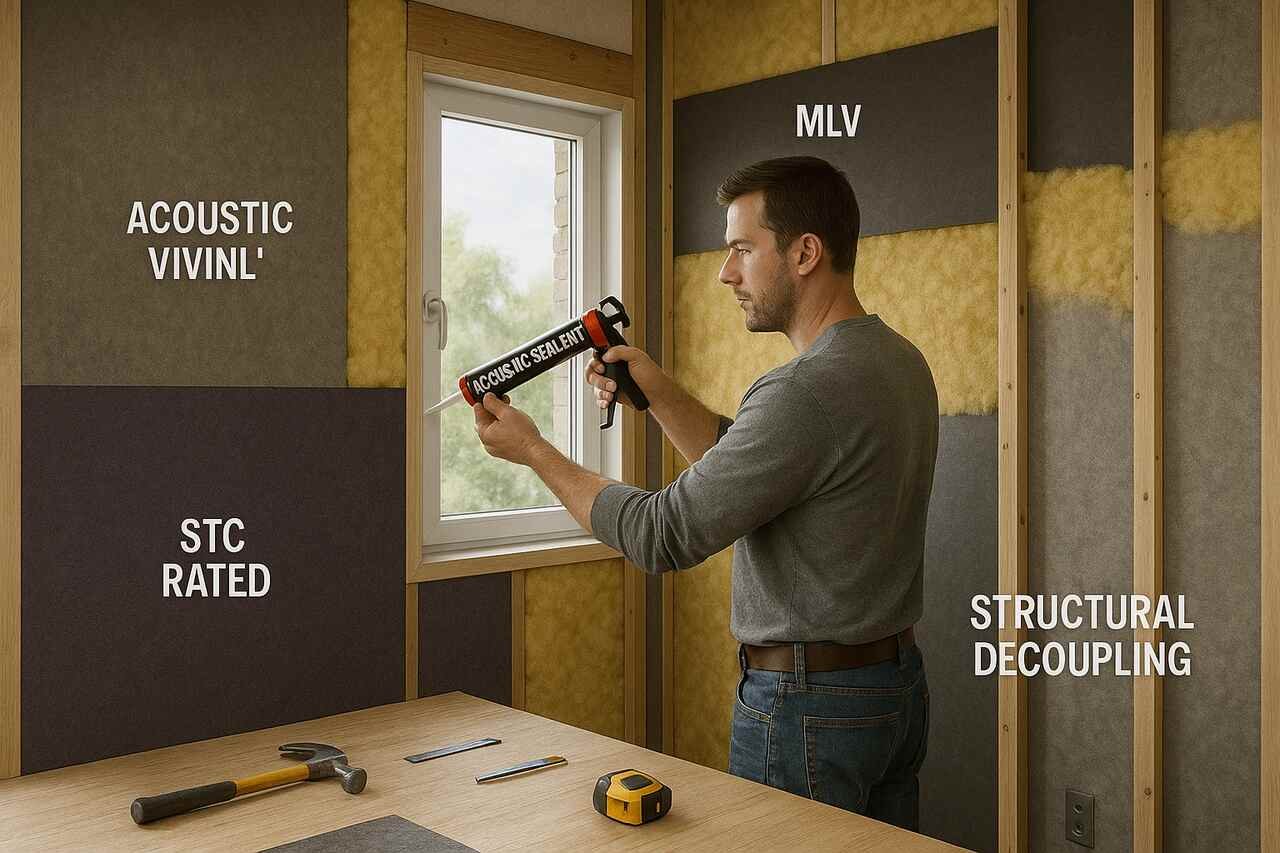
Soundproofing a room from outside noise is a technical yet achievable goal that involves blocking, damping, and sealing all potential transmission paths for sound waves. Urban noise pollution affects sleep quality, productivity, and long-term mental health. By understanding acoustic principles and applying the right materials like Mass-Loaded Vinyl (MLV), acoustic sealants, and decoupling systems, any living or working space can be transformed into a quieter, healthier environment. This guide explores all proven soundproofing methods permanent and temporary using a framework grounded in physics, construction methods, and real-world acoustical engineering.
What Are the Most Effective Ways to Soundproof a Room From Outside Noise?
The most effective way to soundproof a room includes sealing air gaps, adding density to structural surfaces, decoupling vibration pathways, and enhancing window and door performance. Soundproofing is about blocking transmission, not just absorbing sound inside the room.
How Does Sealing Gaps Prevent Noise Leaks?
Noise enters through gaps around doors, windows, outlets, and baseboards. Acoustic sealantunlike traditional caulkremains flexible and forms airtight seals that prevent airborne noise from flanking into the room. Door sweeps, weather stripping, and foam gaskets also address these weak points, converting hollow frames into sealed boundaries.
What Role Does Mass and Density Play in Soundproofing?
Heavier and denser materials resist vibration transmission. Materials like Mass-Loaded Vinyl (MLV), double-layered drywall, and concrete add significant mass to walls and ceilings. More mass equals higher Sound Transmission Class (STC), which quantifies a material’s ability to block sound.
How Can You Decouple Structural Elements to Block Vibrations?
Decoupling techniques like resilient channels, isolation clips, or staggered stud walls reduce the transfer of structure-borne noise. These methods break the path between outer and inner layers of the wall, forcing vibrations to dissipate before reaching interior space.
Which Soundproofing Materials Work Best for Blocking Outdoor Noise?
Materials that block airborne sound must be dense, airtight, and often multi-layered. Each product has a different role: blocking, damping, decoupling, or sealing.
Should You Use Mass Loaded Vinyl, Soundproof Drywall, or Acoustic Panels?
● Mass-Loaded Vinyl (MLV): Flexible, high-mass barrier that reduces mid to high-frequency noise. Ideal behind drywall or under floors.
● Soundproof Drywall (e.g., QuietRock): Multi-layer panels with damping compounds inside. Used where adding MLV isn’t feasible.
● Acoustic Panels: Primarily absorb internal echo, not effective for blocking external noise.
| Material | Primary Function | STC Impact | Best Location |
| MLV | Blocking | High (adds 26+) | Walls, floors, ceilings |
| Soundproof Drywall | Blocking & damping | Moderate-high | Interior & shared walls |
| Acoustic Panels | Absorbing (not blocking) | Low | Interior noise control only |
How Effective Are Heavy Curtains and Acoustic Blinds?
Heavy curtains made of multi-layered, dense fabrics can dampen sound but cannot fully block it. Acoustic blinds add another passive barrier. While not substitutes for construction materials, they reduce reverberation and offer some reduction of street noise.
How Can You Soundproof a Room Without Renovation?
For renters or temporary setups, non-invasive techniques like removable sealants, heavy furnishings, and flexible barriers provide practical noise reduction without construction.
What Are Budget-Friendly Temporary Soundproofing Hacks?
● Door sweeps and draft stoppers: Block air gaps under doors
● Removable acoustic sealant tape: Closes window and vent edges
● Bookcases on exterior walls: Add passive mass to soundproof
● MLV curtains with tension rods: Hang mass barriers without drilling
● Foam weather stripping: Seal perimeter gaps discreetly
Using these techniques can reduce noise levels by 5–10 decibels without permanent changes.
What Are the Best Soundproof Windows, Doors, and Accessories in 2025?
Soundproofing performance relies on the weakest structural linkoften windows and doors. Upgrading or modifying these points of entry delivers significant sound-blocking gains.
Which Door Sweeps, Window Inserts, and Sealants Are Most Effective?
● Door Sweeps (e.g., Suptikes): Seal large under-door gaps
● Acoustic Sealants (e.g., Green Glue): Dampen vibration, fill cracks
● Window Inserts (e.g., Indow): Add an acrylic secondary pane inside frame
● Double-Glazed Windows: Trap sound between glass layers
● Compression gaskets: Ensure tight seals around frames
These tools improve STC ratings of openings by up to 20 points when installed correctly.
Why Does External Noise Disrupt Sleep and Focus?
Noise activates the amygdala, interrupting deep sleep and reducing attention span. Chronic exposure to environmental noise above 40 dB can result in irritability, anxiety, and long-term cardiovascular effects.
How Can Sound Masking Improve Your Perceived Quiet?
Sound masking doesn’t block noiseit makes existing noise less perceptible. Devices emit broadband frequencies (white, pink, or brown noise) that drown out inconsistent sounds. Smart sound machines can auto-activate when ambient noise crosses a certain threshold.
Conclusion
Soundproofing a room requires a layered approach: seal gaps, add mass, use decoupling, and upgrade openings. Material choice depends on noise source, construction type, and budget. From Green Glue to MLV curtains, every tool has a specific acoustic role. For urban dwellers, effective soundproofing is not only about silence but about mental health and quality of life. Whether permanent or temporary, every reduction in outside noise improves focus, rest, and peace.
Frequently Asked Questions (FAQs)
Use weather stripping, door sweeps, and thick curtains combined with heavy furniture against noise-facing walls.
Yes, with temporary tools like acoustic sealant tape, tension-rod MLV curtains, and furniture placement.
MLV and drywall block noise; foam panels and rugs absorb sound inside.
STC (Sound Transmission Class) rates a structure’s ability to block sound. Bedrooms need STC 50+ for comfort.
They reduce noise partially, especially mid and high frequencies, but don’t fully block external sounds.
Seal all window and door gaps, use window inserts, and add MLV-backed curtains or panels.
Yes, if combining blocking materials with absorptive elements like rugs and acoustic panels.
Yes, music rooms require isolation for bass and vibration; external noise usually targets mid/high frequencies.


