


Highlights
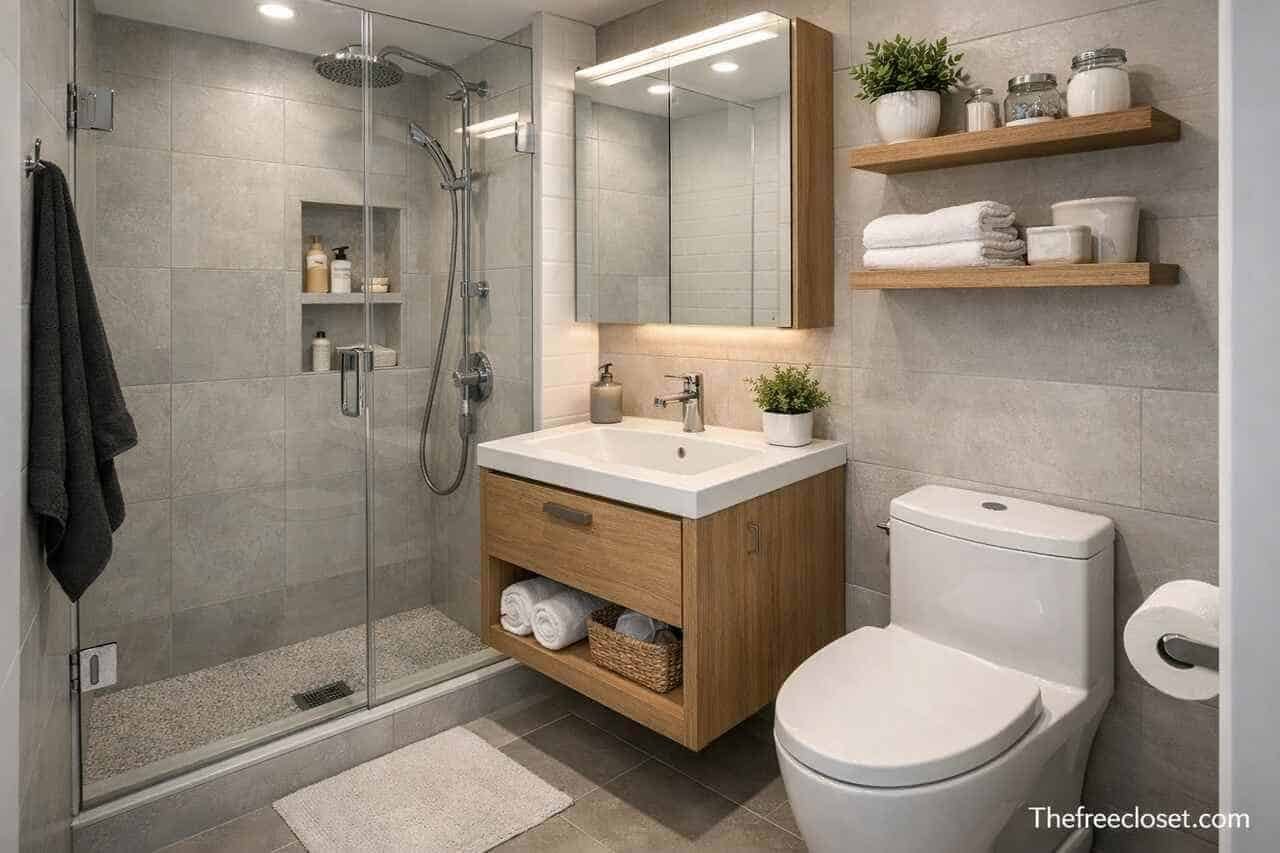
- Limited space small bathroom designs with shower focus on maximizing functionality while maintaining visual openness and daily comfort.
- Smart layout planning improves movement flow and prevents congestion between the shower, vanity, and toilet.
- Corner showers and walk-in glass enclosures increase visible floor area and enhance spatial perception.
- Floating vanities and wall-mounted fixtures create the illusion of a larger bathroom.
- Recessed shower niches eliminate clutter and integrate storage within wall cavities.
- Vertical storage solutions optimize unused wall space and maintain organization.
- Layered lighting techniques expand visual depth and eliminate dark corners.
- Light color palettes and large format tiles reduce visual fragmentation.
- Reflective surfaces amplify brightness and increase perceived room size.
- Curbless showers create seamless flooring continuity and improve accessibility.
- Compact yet functional fixtures enhance comfort without overcrowding the space.
- Thoughtful personalization adds warmth without sacrificing openness.
- Strategic design choices transform small bathrooms into stylish, practical retreats.
Introduction
Limited space small bathroom designs with shower focus on maximizing every inch while preserving comfort, style, and functionality. Small bathrooms demand strategic planning, smart storage solutions, and thoughtful material selection. When you work with compact square footage, every layout decision influences daily convenience. I have designed and remodeled several small bathrooms, and I can confidently say that limited space never means limited creativity. You can transform even the smallest bathroom into a practical and visually appealing space with the right approach.
Many homeowners struggle with cramped layouts, insufficient storage, and poor lighting in small bathrooms. A well-designed shower area often becomes the centerpiece that defines the entire space. I often tell clients that a small bathroom is not a problem but an opportunity to design smarter. Careful planning, vertical utilization, and multi-functional fixtures help create a bathroom that feels larger than its actual dimensions.
Smart Layout Planning for Limited Space Small Bathroom Designs with Shower
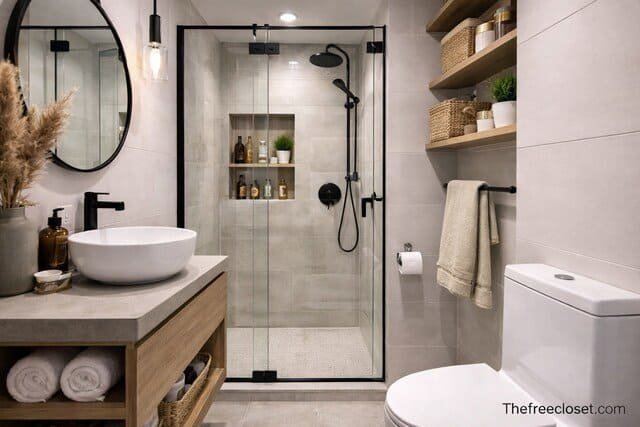
Smart layout planning creates the foundation for a successful small bathroom design. Every inch must serve a purpose. I always start by analyzing the room dimensions, door swing direction, plumbing locations, and natural light sources. A clear layout ensures that the shower, toilet, and vanity align efficiently without blocking movement.
Corner showers often provide the best solution in compact bathrooms. Corner placement frees central floor space and improves circulation. Wall-mounted vanities and floating toilets add visible floor area, which visually enlarges the room. Open floor areas create a perception of spaciousness even when square footage remains limited.
I recommend maintaining clear pathways between fixtures. A cramped layout leads to discomfort and daily frustration. Proper spacing between the shower enclosure and other fixtures enhances both safety and usability. When clients walk into a well-planned small bathroom, they immediately feel the difference in openness and flow.
Corner Shower Placement
Corner shower placement maximizes underused areas. A curved or neo-angle shower enclosure reduces sharp visual boundaries. Glass panels enhance openness by allowing uninterrupted sightlines across the room.
Door and Fixture Alignment
Door and fixture alignment improves functional flow. Sliding doors or pocket doors prevent space loss caused by traditional swinging doors. Careful alignment between the vanity and shower prevents collision zones and improves usability.
Choosing the Right Shower Type for Small Bathrooms
Selecting the right shower type determines both comfort and spatial efficiency. I usually recommend walk-in showers with frameless glass for small bathrooms. Glass maintains visual continuity and eliminates bulky visual barriers. Clear glass creates an illusion of depth and width.
Shower stalls with sliding doors also work well in extremely tight spaces. Sliding mechanisms eliminate the need for door clearance. Compact shower trays with linear drains create a sleek appearance while preserving practicality. Modern shower designs combine aesthetics with spatial intelligence.
Curbless showers enhance accessibility and openness. Removing thresholds allows continuous flooring throughout the bathroom. Continuous flooring expands visual perception. I have installed several curbless showers in small bathrooms, and homeowners often express surprise at how much larger the room feels.
Frameless Glass Enclosures
Frameless glass enclosures create transparency. Transparent barriers allow light to travel freely across the room. Reduced hardware enhances minimalist appeal and supports modern aesthetics.
Walk-In Shower Concepts
Walk-in shower concepts simplify access and reduce clutter. Open entries without bulky doors support airflow and brightness. Compact niches within walk-in showers provide integrated storage without sacrificing space.
Space-Saving Storage Solutions in Small Bathrooms
Storage plays a critical role in limited space small bathroom designs with shower. Clutter instantly shrinks visual space. I always emphasize vertical storage because walls offer untapped potential. Tall cabinets, floating shelves, and recessed niches increase storage without crowding the floor.
Recessed wall niches inside the shower store toiletries efficiently. Built-in storage eliminates the need for hanging racks or corner caddies. Integrated solutions create clean lines and organized surfaces. Organization directly affects how spacious a bathroom feels.
Multi-functional furniture improves efficiency. Vanities with deep drawers provide better organization than traditional cabinets. Mirrored medicine cabinets combine storage and reflection, enhancing brightness. When I redesigned my own small bathroom, vertical shelving and hidden compartments completely transformed usability.
Recessed Shower Niches
Recessed shower niches integrate storage within the wall cavity. Built-in compartments prevent visual clutter. Placement at eye level improves convenience and aesthetics.
Floating Vanities with Drawers
Floating vanities with drawers expose more floor area. Visible flooring increases spatial perception. Drawer dividers help categorize toiletries and maintain organization.
Lighting Techniques That Expand Visual Space
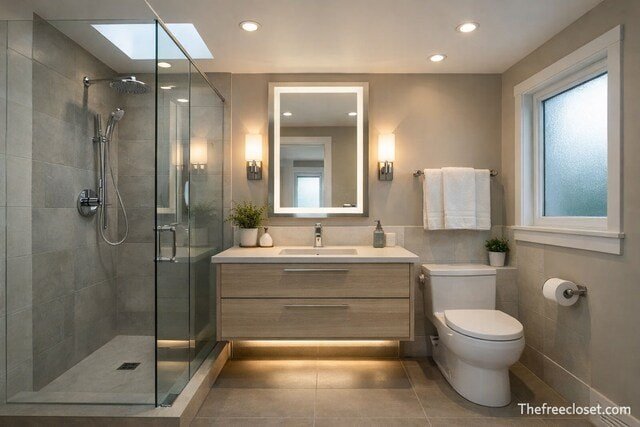
Lighting strongly influences how large or small a bathroom appears. Poor lighting compresses space. Strategic lighting expands visual boundaries. I recommend layered lighting that combines ambient, task, and accent illumination.
Recessed ceiling lights distribute even brightness. Wall-mounted sconces near the mirror eliminate facial shadows. LED strip lighting under vanities creates floating effects. Balanced lighting removes dark corners that make small bathrooms feel confined.
Natural light enhances spatial perception more than any artificial source. Frosted windows preserve privacy while allowing daylight. Skylights introduce overhead brightness in bathrooms without exterior wall access. In my experience, upgrading lighting alone can dramatically change how a small bathroom feels.
LED Mirror Lighting
LED mirror lighting improves visibility and modernizes appearance. Integrated backlighting creates soft ambient glow. Even light distribution supports grooming tasks effectively.
Under-Vanity Illumination
Under-vanity illumination highlights floor space. Subtle lighting increases depth perception. Indirect lighting enhances ambiance and comfort.
Color Schemes and Materials for Compact Bathrooms
Color selection impacts visual scale. Light color palettes reflect more light and create openness. Soft whites, light grays, and pastel tones expand perceived dimensions. I often recommend neutral bases combined with subtle texture for depth.
Large format tiles reduce grout lines. Fewer grout lines create seamless surfaces. Continuous tile patterns across floors and shower walls unify the space. Consistency between materials enhances spatial harmony.
Glossy surfaces reflect light more effectively than matte finishes. Reflective tiles and glass surfaces increase brightness. Balanced contrast between walls and fixtures prevents monotony while maintaining spaciousness. My personal projects confirm that consistent color flow prevents visual fragmentation.
Large Format Tiles
Large format tiles minimize visual interruptions. Fewer grout joints create cleaner aesthetics. Continuous surfaces enhance flow and cohesion.
Reflective Surfaces and Finishes
Reflective surfaces amplify light. Glossy ceramic tiles and polished chrome fixtures enhance brightness. Mirrors positioned strategically multiply visual depth.
Maximizing Vertical Space and Height Perception
Vertical space utilization expands small bathrooms effectively. Walls provide untapped design opportunities. Tall storage units and elongated mirrors draw the eye upward. Vertical lines create a perception of height.
Full-height shower tiles emphasize ceiling height. Continuous vertical patterns guide the gaze upward. Ceiling-mounted showerheads maintain clear wall space and create sleek profiles. I often suggest extending shower tiles to the ceiling to avoid visual breaks.
High-mounted cabinets preserve lower wall space. Ceiling-height shelving accommodates rarely used items. Visual emphasis on vertical dimensions transforms compact bathrooms into elegant, proportional environments.
Floor-to-Ceiling Tile Installation
Floor-to-ceiling tile installation enhances continuity. Vertical extension reduces segmentation. Seamless wall coverage elevates overall design sophistication.
Tall Mirrors and Vertical Lines
Tall mirrors extend visual height. Vertical decorative lines create upward movement. Elongated shapes strengthen spatial illusion.
Personal Tips for Creating Comfort in Small Shower Bathrooms
Comfort remains essential regardless of size. Limited space small bathroom designs with shower must prioritize daily experience. Soft textures, warm lighting, and thoughtful organization create inviting atmospheres. I always remind homeowners that comfort and practicality must coexist.
Quality fixtures enhance usability. Adjustable showerheads provide flexibility. Thermostatic valves maintain consistent water temperature. Small bathrooms benefit from reliable performance because space constraints magnify inconvenience.
Personalization brings character to compact bathrooms. Plants, coordinated accessories, and subtle artwork add warmth without overcrowding. I have learned through my own renovations that small bathrooms demand more intentional choices. Careful planning produces rewarding results.
Compact Yet Functional Fixtures
Compact yet functional fixtures conserve space. Slim-profile toilets and narrow vanities improve circulation. Efficient fixtures maintain performance without bulk.
Adding Personality Without Clutter
Adding personality without clutter requires balance. Coordinated towels and minimal decorative accents enhance aesthetics. Thoughtful details maintain openness while reflecting individual style.
Conclusion
Limited space small bathroom designs with shower demand intelligent planning, strategic layout decisions, and creative storage solutions. Efficient shower types, vertical storage, layered lighting, and light color palettes all contribute to a spacious atmosphere. Glass enclosures, recessed niches, floating vanities, and large format tiles transform confined areas into functional and stylish retreats.
FAQ’s
A small bathroom looks bigger when light colors, frameless glass showers, large format tiles, and layered lighting combine strategically. Vertical storage and floating fixtures increase visible floor space, which enhances spatial perception.
Walk-in showers with frameless glass often provide the best solution. Sliding door shower stalls also work well in extremely tight layouts. Curbless designs enhance openness and accessibility.
Recessed niches, floating shelves, tall cabinets, and mirrored medicine cabinets provide storage without occupying floor area. Vertical organization prevents clutter and maintains spaciousness.
Dark colors can work when balanced with strong lighting and reflective surfaces. Light palettes generally expand visual space more effectively, especially in bathrooms without natural light.
A bathtub-shower combination can fit in certain layouts, but a dedicated shower often maximizes usable space. Space availability and daily lifestyle should guide that decision.
