


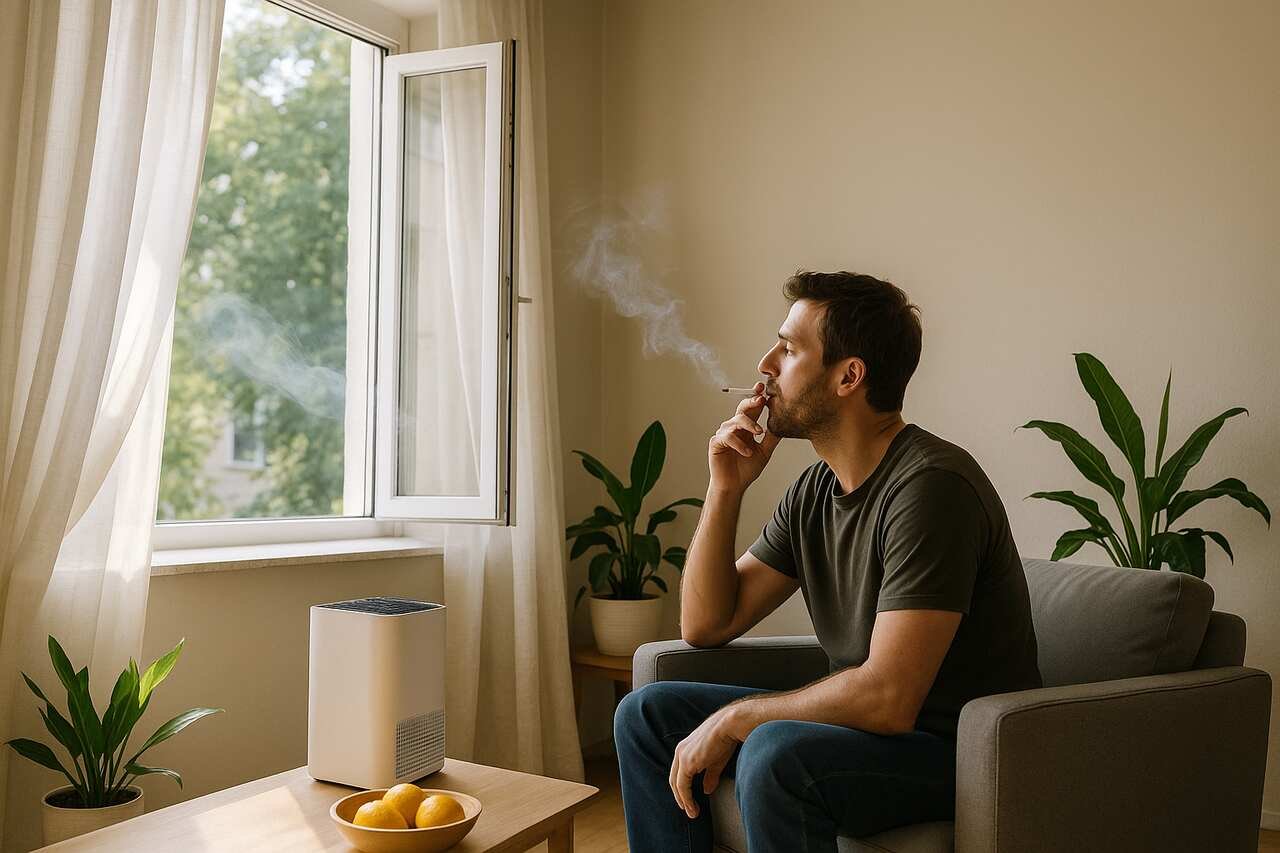
Cigarette smoke odor lingers in indoor spaces because microscopic tar particles and volatile organic compounds (VOCs) attach themselves to fabrics, walls, and air particles. Removing the smell instantly requires a combination of ventilation, odor absorption, and chemical neutralization. Quick action can restore freshness within minutes, but long-term results depend on cleaning and preventing recontamination. By understanding how smoke odor bonds to surfaces and air, and how different methods target these molecules, it becomes possible to remove the smell effectively and prevent it from returning.
What is the Fastest Way to Remove Cigarette Smell From a Room?
Instant cigarette odor removal requires rapidly replacing contaminated air and capturing airborne particles. The quickest results come from combining strong ventilation with targeted odor absorbers to address both air and surfaces at the same time.
How Can Ventilation Clear Smoke Odor Quickly?
Ventilation works by replacing polluted indoor air with fresh outdoor air, reducing odor molecule concentration. Opening windows on opposite sides of the room creates a cross-breeze that pushes out smoke-laden air. Using a box fan in exhaust mode accelerates this process, pulling the smell outside within minutes. This method works best when outdoor air is cleaner than indoor air, and when fans are placed strategically to maximize airflow paths.
Which Odor Absorbers Work Instantly?
Activated charcoal, baking soda, and zeolite minerals are effective odor absorbers because they trap VOCs and tar particles within their porous structures. Activated charcoal works almost immediately when placed in open containers around the room, as its high surface area attracts and holds odor molecules. Coffee grounds and unscented clay-based cat litter can also absorb smoke smells, though they act slower than activated charcoal.
How Can Natural Remedies Remove Cigarette Smell?
Natural odor removal methods use safe, chemical-free substances to neutralize smoke odor molecules through adsorption, absorption, or mild chemical reaction. They are ideal for households avoiding synthetic air fresheners.
Can Vinegar Neutralize Tobacco Odors?
White vinegar neutralizes smoke odor by breaking down alkaline odor molecules through mild acid-base reactions. Placing bowls of vinegar in the room allows vaporized acetic acid to interact with airborne particles, reducing the smell. Wiping surfaces with a vinegar-water solution removes tar film, which is a major source of persistent odor. The vinegar scent dissipates as it evaporates, leaving the air fresher.
How Does Baking Soda Absorb Smoke Smells?
Baking soda absorbs smoke odor through its alkaline crystalline structure, which binds acidic VOCs. Sprinkling baking soda on carpets, upholstery, and fabric curtains helps pull odor out of porous materials. After allowing it to sit for several hours, vacuuming removes the baking soda along with the trapped smell. This method is particularly effective for soft furnishings that cannot be washed immediately.
What Cleaning Steps Eliminate Smoke Particles on Surfaces?
Surface cleaning is essential because smoke particles settle on walls, ceilings, and objects, continually releasing odor back into the air even after ventilation.
Why Do Walls and Fabrics Hold Cigarette Odor?
Walls and fabrics hold cigarette odor because porous materials absorb tar particles and VOCs, which then bond to fibers or paint layers. Heat and humidity release these particles back into the air, creating a constant source of smell. Even hard surfaces can develop a thin film of residue that holds odor molecules for months.
What’s the Best Way to Wash Smoke-contaminated Fabrics?
Smoke-contaminated fabrics should be washed with hot water and detergent, combined with an odor-neutralizing additive like vinegar or oxygen bleach. Machine washing removes surface residues, while extended drying in direct sunlight further breaks down odor compounds through UV exposure. For delicate fabrics, professional cleaning services use specialized solvents to dissolve and remove smoke-related chemicals without damaging the material.
Which Devices Remove Cigarette Odor the Fastest?
Mechanical devices target airborne particles and odor molecules, filtering or chemically breaking them down for rapid results.
Are Hepa Air Purifiers Effective for Smoke Smell?
HEPA filters remove fine smoke particles down to 0.3 microns, which helps reduce lingering odor sources in the air. However, HEPA alone cannot capture gaseous VOCs responsible for most smoke smells. Air purifiers designed for smoke use both HEPA filters for particles and activated carbon filters for odor molecules, delivering faster and more complete odor removal.
How Do Ozone Generators Remove Odors?
Ozone generators release ozone gas, which oxidizes odor molecules, altering their structure so they no longer produce a smell. This process is highly effective for strong smoke odors, but ozone must be used in unoccupied spaces because of its respiratory health risks. After treatment, the room must be ventilated thoroughly before reentry.
How Can You Keep a Room Fresh After Removing a Smoke Smell?
Long-term freshness depends on preventing recontamination and maintaining good indoor air quality through proactive measures.
What Long-term Prevention Strategies Work Best?
Designating smoke-free areas ensures odor does not return to treated rooms. Regular cleaning of fabrics, vacuuming with a HEPA-equipped machine, and changing HVAC filters prevents buildup. Sealing porous surfaces with odor-blocking primers after deep cleaning can permanently trap any residual odor molecules.
Do Houseplants Improve Indoor Air Quality?
Certain houseplants, such as peace lilies and Boston ferns, can slightly improve indoor air quality by absorbing VOCs. While they cannot remove heavy smoke odor alone, they contribute to ongoing freshness when used alongside ventilation and cleaning practices.
What Myths About Removing Smoke Smell Should You Ignore?
Some common beliefs about cigarette odor removal can lead to wasted effort and ineffective results.
Does Spraying Air Freshener Actually Work?
Air fresheners mask odor with fragrance rather than eliminating it. While they can temporarily improve scent, the smoke molecules remain in the air and on surfaces, meaning the smell will return once the fragrance fades.
Is Burning Candles Effective for Odor Removal?
Burning candles may reduce mild odors through heat and fragrance release, but they do not remove smoke particles or VOCs. In some cases, candles can add soot particles to the air, further contributing to indoor air pollution.
Conclusion
Removing cigarette smell instantly requires a coordinated approach that combines ventilation, odor absorption, and targeted surface cleaning. Natural remedies like vinegar and baking soda offer safe, effective results, while mechanical devices such as HEPA-plus-carbon air purifiers and ozone machines provide rapid air treatment. Maintaining a smoke-free environment, cleaning regularly, and using preventive measures ensures long-term freshness. Understanding how smoke odor molecules behave makes it possible to eliminate them quickly and keep indoor spaces pleasant and healthy.
FAQ’s
Activated charcoal absorbs smoke odor molecules almost immediately due to its large surface area and high adsorption capacity.
Yes, vinegar vapor interacts with and neutralizes some odor molecules, especially when used alongside ventilation and surface cleaning.
Sprinkle baking soda on the fabric, let it sit for a few hours, then vacuum. Machine washing with vinegar in the rinse cycle can also help.
Ozone machines are effective but must be used in unoccupied rooms, with thorough ventilation afterward to ensure safety.
Preventing indoor smoking, cleaning fabrics regularly, and using air purifiers with activated carbon help keep the smell from returning.
Air purifiers with both HEPA and activated carbon filters can remove most airborne particles and odor molecules but cannot clean contaminated surfaces.
HEPA filters capture solid particles, while activated carbon traps gaseous VOCs and odor molecules. Both are needed for complete smoke odor removal.
Without cleaning, cigarette odor can linger for weeks or months, especially in fabrics and porous materials that absorb tar and VOCs.
