


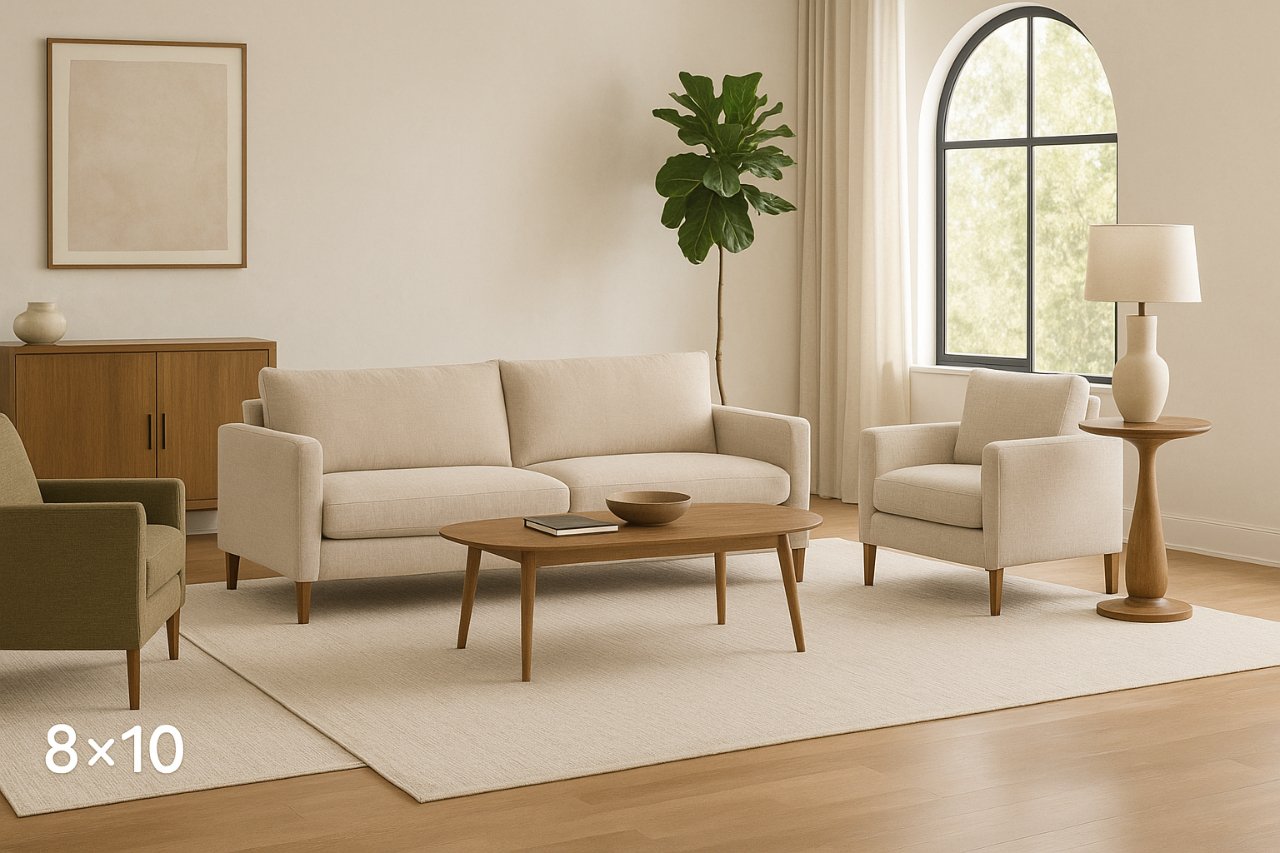
Choosing the right rug size for a living room significantly impacts spatial perception, furniture harmony, and overall design aesthetic. Selecting between standard options such as 8×10 and 9×12 requires an understanding of room dimensions, furniture placement, and proportional design principles. This guide explores best practices for picking the perfect living room rug size, backed by spatial design concepts, layout guidelines, furniture dimensions, and visual balance metrics.
What Are the Standard Rug Sizes Used in Living Rooms?
Standard living room rug sizes are defined by interior design norms and furniture scale requirements. The most common dimensions include 5×8 ft (152×244 cm), 6×9 ft (183×274 cm), 8×10 ft (244×305 cm), 9×12 ft (274×365 cm), and 10×14 ft (305×427 cm). Each serves a different layout function based on room size and furniture grouping.
5×8 ft (152×244 cm)
Primarily used in small seating arrangements or under coffee tables. Often too small to accommodate front legs of sofas or sectionals. Best suited for compact apartments or layered over larger neutral rugs.
6×9 Ft (183×274 Cm)
Suitable for small to medium rooms. Provides limited coverage and may support front legs of furniture. Best used in secondary seating areas, reading nooks, or small living rooms with minimal furnishings.
8×10 ft (244×305 Cm)
Ideal for medium-sized living rooms. Allows the front legs of all major furniture pieces to sit on the rug, creating cohesion. Considered a default size in modern interior design.
9×12 ft (274×365 Cm)
Recommended for larger living rooms or open-concept layouts. Supports entire furniture groupings, often accommodating full leg placement. Enhances visual balance in rooms over 12×16 ft.
10×14 ft (305×427 Cm) And Above
Used in expansive living areas, luxury homes, or open-plan environments. Provides generous coverage, defining zones in multifunctional spaces. Requires careful placement to avoid crowding walls.
| Room Size (ft) | Suggested Rug Size (ft) | Metric Equivalent (m) |
| 10×12 | 6×9 or 8×10 | 1.8×2.7 or 2.4×3.0 |
| 12×14 | 8×10 or 9×12 | 2.4×3.0 or 2.7×3.7 |
| 14×18 | 9×12 or 10×14 | 2.7×3.7 or 3.0×4.2 |
Standard rug sizes provide scalable solutions for a wide range of room configurations. Choosing the right fit is foundational to achieving aesthetic harmony and functional zoning.
How Do I Choose Between 8×10 vs 9×12 Rugs?
Choosing between an 8×10 and a 9×12 rug depends on the dimensions of your room and the layout of your furniture. Use an 8×10 rug in smaller rooms (typically 10×12 feet) to anchor furniture without overwhelming the space, while a 9×12 rug suits larger rooms (12×14 feet or more) where you want all major furniture pieces like a sofa, chairs, and coffee table to sit fully on the rug for a cohesive and balanced look.
Room Size Compatibility
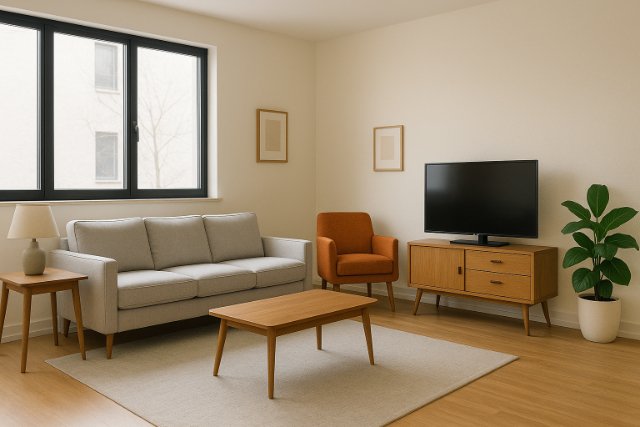
A 9×12 rug suits rooms at least 12×16 ft (3.6×4.8 m), providing full coverage under most furniture. An 8×10 rug fits best in 11×14 ft (3.3×4.2 m) rooms, offering balance without crowding.
Furniture Dimensions
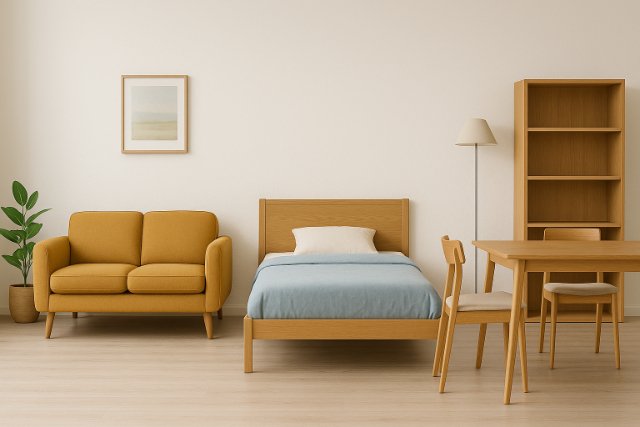
If the sofa exceeds 7 ft in length, a 9×12 rug ensures side margins remain. For sofas under 7 ft, an 8×10 rug maintains proportional coverage. Sectionals or double seating areas require the larger option.
Layout Consideration

Closed-plan rooms often benefit from 8×10 rugs, anchoring furniture without wall proximity. Open-plan or dual-function spaces demand the broader footprint of 9×12 to visually segment zones.
| Factor | 8×10 Rug | 9×12 Rug |
| Room Size | Medium (11×14 ft) | Large (12×16 ft or more) |
| Sofa Size | Up to 7 ft | 7.5 ft and above |
| Furniture Layout | Compact or single groupings | Sectional, multiple seating, open layout |
| Visual Effect | More negative space, lighter feel | Heavier grounding, expansive coverage |
Both rug sizes serve as foundational elements but deliver different psychological and spatial effects within interior compositions.
What Rug Size Works Best for Small Living Rooms vs Large Living Rooms?
For small living rooms, a rug size of 5′ x 8′ typically works best as it defines the seating area without overwhelming the space, allowing front furniture legs to rest on the rug. In contrast, large living rooms benefit from 8′ x 10′ or 9′ x 12′ rugs, which anchor the entire furniture layout, ensuring all major pieces, including sofas and coffee tables, sit comfortably on the rug to create a cohesive and proportionate visual balance.
Small Living Rooms
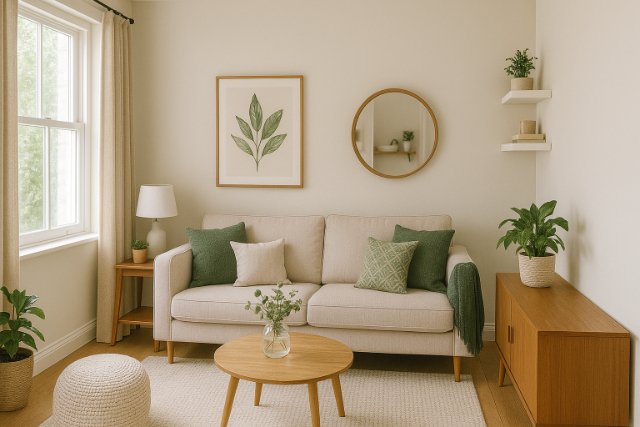
Rugs sized 5×8 ft accommodate coffee tables and allow minimal furniture overlap. Layering smaller rugs on large jute bases enhances texture while preserving scale.
Medium Living Rooms
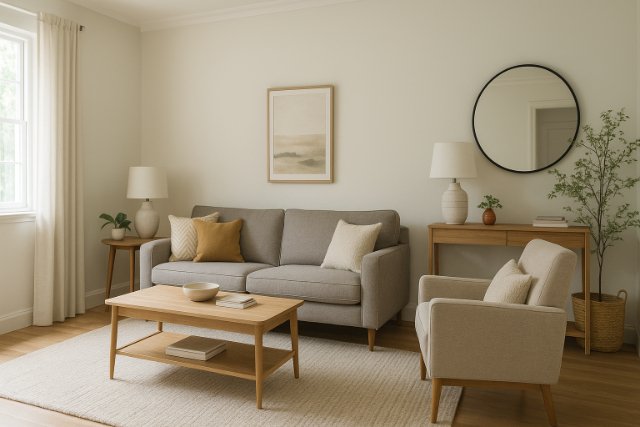
An 8×10 rug fits snugly, with front legs of sofas and chairs placed on the rug to define seating zones.
Large Living Rooms
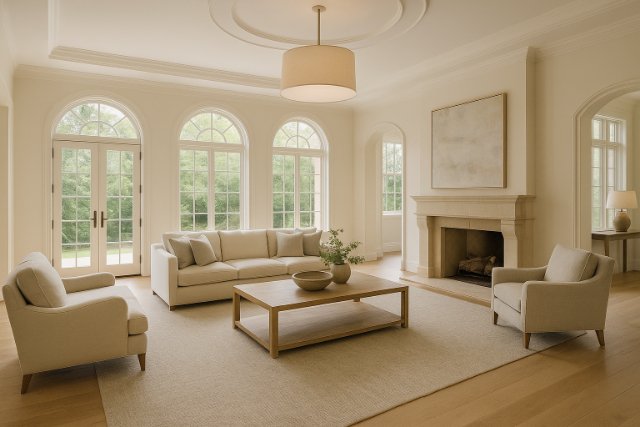
9×12 or 10×14 rugs integrate all furniture fully on the rug, avoiding floating items and reinforcing cohesion across wide floor plans.
Correct rug size selection enhances spatial flow and avoids disproportionate visual gaps.
How Much Rug Should Extend Under Furniture?
A rug should extend far enough under furniture to create a cohesive, grounded look while maintaining balance with the room’s dimensions. In living rooms, the most common guideline is for the rug to extend under at least the front legs of sofas and chairs this typically means the rug should extend 6 to 12 inches beyond the sides and front of the furniture. For larger rugs and open-plan spaces, allowing all furniture legs to sit on the rug especially with sectionals or large seating arrangements helps define zones and adds symmetry. In dining rooms, the rug should extend at least 24 inches beyond all sides of the table so chairs remain on the rug when pulled out. In bedrooms, a rug should extend at least 18–24 inches beyond the sides and foot of the bed to create a soft, comfortable step and a visually balanced look. Always ensure there is a border of exposed floor (usually 12–24 inches) around the rug to prevent a cramped appearance. The goal is to integrate the rug with furniture placement while enhancing spatial flow and proportion.
Front-Leg Placement
Common in medium-sized rooms with 8×10 rugs. Creates cohesion without overcrowding the rug space.
Full-Furniture Placement
Used in larger rooms or open concepts with 9×12 rugs or above. Increases grounding and visual structure.
Partial Extension
Tables and ottomans should sit entirely on the rug. Chairs should not straddle rug edges unless using a runner-style layout.
Under-furniture extension enhances functionality and prevents rug curl or imbalance due to uneven weight distribution.
How Far Under the Sofa Should the Rug Reach?
The rug should extend at least 6 to 12 inches under the front legs of the sofa to create a visually balanced and anchored seating area. This layout enhances spatial definition and ensures furniture feels connected rather than floating. For larger rugs, extending the rug entirely under all sofa legs can unify the space and provide a more luxurious look. Choosing the right rug size also depends on room dimensions, furniture placement, and traffic flow, but the key is maintaining proportion and alignment with the sofa to achieve functional and aesthetic harmony.
Should All Legs of Furniture Sit on the Rug, or Only Front Legs?
All legs of furniture should sit on the rug in larger, more formal spaces to create a unified and anchored look, especially in living rooms or open-plan areas. This full-placement approach helps define the zone and makes the arrangement feel intentional. However, placing only the front legs on the rug is also acceptable in smaller rooms, as it maintains cohesion while allowing for visual openness and saving on rug size. The choice depends on room scale, furniture size, and desired aesthetic balance, but both methods are considered correct based on spatial harmony and design goals.
What Margins Should Be Left Between the Rug and Walls?
Rugs should maintain a border of 12 to 24 inches (30 to 60 cm) from surrounding walls. Smaller rooms may allow 8 to 10 inches minimum. Avoid placing rugs wall-to-wall unless intended as carpet replacement.
Margins help frame the rug as a design element, distinguish its role from flooring, and prevent cramped appearances. Proximity to baseboards or vents can also interfere with airflow and dust collection.
What Shape Rug Should I Choose for Different Room Layouts?
The ideal rug shape depends on the room’s layout and furniture arrangement to ensure balance, proportion, and flow. Rectangular rugs work best in long or open-plan living rooms, aligning with sofas and coffee tables to define seating zones. Round rugs complement circular dining tables or accent areas like reading nooks, softening angular furniture or tight spaces. Square rugs suit square-shaped rooms or under square tables, maintaining symmetry. In bedrooms, runners or large rectangular rugs can be placed alongside or beneath the bed to anchor the space. Matching the rug’s shape to the room’s geometry enhances visual cohesion and functional zoning.
- Rectangular Rugs: Best for symmetrical seating and parallel arrangements.
- Round Rugs: Ideal for accent corners, under round coffee tables, or creating visual softness.
- Square Rugs: Fit square rooms or square furniture layouts.
- Runners: Effective in long narrow spaces or open-plan transitions.
Choosing the right shape reinforces flow and room definition.
How Does Furniture Type (Sofa, Sectional, Chairs) Affect Rug Size Decision?
Furniture type directly influences rug size selection by defining the spatial boundaries and anchoring points within a room. Sofas typically require rugs large enough to fit either all legs or at least the front legs on the rug, creating a cohesive visual frame. Sectionals demand even larger rugs to encompass their extended layout and ensure proportional balance, often needing the rug to extend beyond all sides. Accent chairs, when paired with sofas or used in reading corners, determine how far the rug should stretch to maintain visual symmetry and accommodate movement. Proper alignment ensures functional comfort and aesthetic harmony.
- Standard Sofa: Requires at least 8 ft rug width.
- Sectional Sofa: Demands L-shape rug accommodation, often needing 9×12 or larger.
- Accent Chairs: Should align partially or fully on rug edge.
- Loveseats + Side Chairs: Fit comfortably on smaller rug footprints but need cohesive connection.
Furniture size and grouping inform proportional rug coverage to maintain flow.
How Do Proportions and Visual Balance Influence Rug Size Choice?
Visual balance is achieved by aligning rug size with furniture scale and room geometry. A rug should be at least 6 inches wider than the sofa on both sides. For proportional flow, rug length should equal 1.5x the sofa length.
Imbalanced rugs either shrink or overwhelm visual perception. Balance reduces negative space inconsistencies and anchors design symmetry.
Conclusion
Proper rug selection involves far more than pattern choice. Users must consider size, material, shape, and room dynamics to enhance both aesthetics and functionality. Avoiding retailer pitfalls, understanding sourcing ethics, and accounting for unique layouts contribute to long-term rug satisfaction. Material, pile height, and shape influence perceived room scale, while adaptive strategies solve placement in complex architectural spaces. Thoughtful integration of rugs into a room’s design fosters harmony, comfort, and practical longevity.
FAQ’s
A minimum 8×10 feet rug provides ample coverage under a queen bed, ideally extending 18-24 inches beyond the edges for balance.
Yes, using low pile rugs in light colors with minimal patterns can expand the visual dimensions of a small room.
Choose rugs that align with furniture groupings to define separate zones. Larger rugs that host all key furniture elements maintain cohesion.
Handmade rugs offer superior craftsmanship and longevity. However, machine-made rugs may suit budgets better and come in more varied designs.
Natural fibers like wool may trigger sensitivities in some individuals. Hypoallergenic synthetic fibers are better for allergy-prone households.
Yes, especially for layering design purposes or adding structure to soft carpet. Use rug pads to prevent slipping or bunching.
Yes, they increase rug lifespan, reduce slipping, improve comfort, and protect floors underneath from abrasion.
Quality rugs last 7–10 years depending on traffic, care, and material. High-traffic areas may need earlier replacement.
