


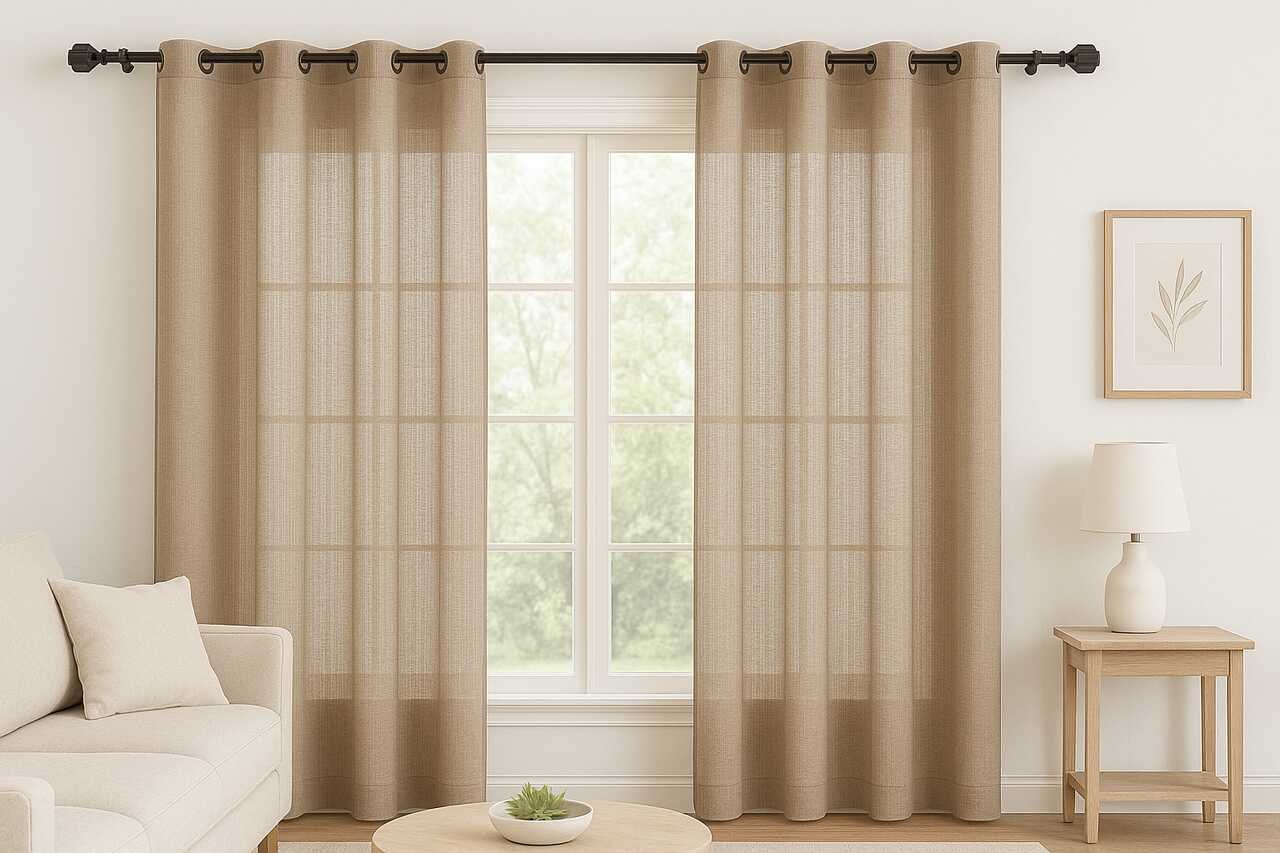
Living room curtain rods serve as both structural supports and stylistic elements, anchoring the look and functionality of window treatments. These rods define how curtains hang, move, and layer, while also adding metallic or wooden accents that frame the living space with architectural precision and visual intent.
What Types of Curtain Rods Are Available for the Living Room?
Curtain rods for living rooms come in various formats to accommodate different curtain styles, mounting needs, and interior aesthetics. These include decorative single rods, double rods for layering, traverse rods for directional control, tension rods for no-drill installations, concealed rods for minimalism, curved rods for bay windows, and motorized rods for smart homes.
What Features Define Decorative, Double, Traverse, Tension, and Motorized Rods?
● Decorative Rods: Feature ornate or styled finials and visible hardware for design enhancement.
● Double Rods: Allow two layers of curtains—such as sheers and blackout panels—for flexible light and privacy control.
● Traverse Rods: Operated with a cord or wand to open and close curtains smoothly, often used with pleated drapery.
● Tension Rods: Rely on pressure for mounting between surfaces without drilling, best for lightweight curtains.
● Motorized Rods: Integrated with remote or app-based control systems for automated curtain movement, often used in smart home setups.
Each type fits specific use cases, from functional efficiency to decorative impact.
How Do Materials and Finishes Impact the Aesthetics and Durability of Curtain Rods?
Material and finish selection affects both the visual alignment with interior styles and the structural performance of curtain rods over time. Metal rods (iron, stainless steel, aluminum) offer strength and industrial-modern appeal. Wooden rods deliver warmth and organic texture. Finishes like brushed nickel, matte black, bronze, or antique gold contribute to stylistic themes.
| Material | Aesthetic Appeal | Durability | Best Used For |
| Iron | Industrial, rustic | High | Heavy drapes, bold interiors |
| Stainless Steel | Modern, minimal | Very High | Contemporary settings |
| Aluminum | Lightweight, sleek | Medium | Smaller windows, casual designs |
| Wood | Traditional, organic | High | Transitional, boho, rustic decor |
Rod finishes should align with nearby furniture accents, lighting fixtures, and door handles to unify room cohesion.
When Should You Choose a Double Curtain Rod Over a Single Rod?
A double curtain rod enables multiple layers of window treatments and should be selected when both light filtration and nighttime privacy are priorities. The front rod holds opaque or blackout curtains, while the back rod supports sheer curtains or light voiles. Double rods also offer seasonal flexibility: thicker drapes for winter, airy sheers for summer.
Key Benefits Include:
● Improved insulation with layered curtains
● Day-to-night light control without changing fixtures
● Enhanced design through fabric pairing and texture contrast
Opt for double rods in large living rooms where layered treatments visually balance large window expanses.
How Can Ceiling-mounted or Concealed Rods Elevate Living Room Style?
Ceiling-mounted and concealed curtain rods contribute to minimalist and architectural aesthetics by eliminating visible brackets and drawing the eye vertically. These styles are ideal for floor-to-ceiling curtains, helping rooms appear taller and more structured.
● Ceiling-Mounted Rods: Support seamless curtain drops from ceiling to floor, ideal for modern interiors and loft style homes.
● Concealed Rods: Hidden behind valances or built into recesses for an ultra-clean appearance, perfect for contemporary or gallery-style decor.
Use these systems when visual clutter needs to be minimized or when architectural lines dominate the interior theme.
What Functional Benefits Do Motorized Curtain Rods Provide?
Motorized curtain rods deliver convenience, accessibility, and smart-home integration. These rods connect with remotes, apps, or voice assistants to control curtain positions automatically.
Benefits Include:
● Timed Open/Close: Set routines based on sunlight or schedules
● Accessibility: Ideal for individuals with mobility limitations
● Smart Integration: Sync with climate sensors or lighting automation
● Child-Safe: Eliminate dangling cords and manual pull chains
High-end motorized systems often use quiet motors and offer compatibility with home ecosystems such as Alexa, Google Home, or Apple HomeKit.
How Can Curtain Rods Visually Expand a Living Room?
Curtain rod placement and size influence perceived room dimensions. Installing rods several inches above the window frame elongates the wall, making ceilings appear higher. Extending rods wider than the window frame allows curtains to hang beside the window rather than over it, increasing perceived window width.
Visual Strategies:
● Mount rods 4–6 inches above the frame for height illusion
● Extend rods 6–12 inches beyond frame edges to widen perception
● Use ceiling mounts to maximize vertical emphasis
Color matching rods with wall paint can also reduce visual breaks, enhancing spatial continuity.
What Practical Measures Ensure Optimal Rod Installation and Placement?
Correct installation ensures curtain functionality, load support, and visual symmetry. Start by measuring window width and height, then add clearance for rod extensions and curtain stack-back.
Installation Checklist:
● Use anchors for drywall mounting
● Ensure level alignment using a laser level or spirit level
● Allow 2–3 inches above the window minimum for standard mounting
● Select brackets based on curtain weight and rod material
● Space brackets every 30–36 inches for long rods to prevent sagging
Measure twice and mark drill points carefully to avoid errors and ensure symmetrical curtain hang.
What Modern Trends and Expert Recommendations Should You Consider for Curtain Rods?
Curtain rod trends in 2025 emphasize minimal design, functional innovation, and personalization. Interior designers favor matte finishes, slim profiles, and integrated motorized systems.
Trending Elements:
● Matte Black & Brushed Brass: Leading finishes for modern aesthetics
● Telescoping Rods: Versatile sizing with minimal joints
● Art Deco or Scandinavian Finials: Adds style identity
● Concealed Tracks: Flush-mounted for invisible design
Experts suggest coordinating rod color with secondary fixtures (like lamp bases or cabinet pulls) and selecting hardware that complements the curtain’s weight and fabric behavior.
Conclusion
Living room curtain rods are essential for both functionality and design harmony. From decorative and double rods to concealed and motorized solutions, the right rod amplifies curtain performance and visual appeal. By understanding materials, styles, placement strategies, and 2025 trends, homeowners can make informed decisions that elevate their living spaces with precision and personality.
FAQ’s
Double curtain rods support layering by allowing separate sheers and blackout panels to hang and move independently.
Tension rods work well for lightweight sheers but are not suitable for heavy or wide curtains due to limited support.
Mount rods 4–6 inches above the window frame, or closer to the ceiling, to create the illusion of taller walls.
Many motorized rods come with DIY kits, but for recessed or hardwired options, professional installation ensures safety and precision.
Yes. Ceiling-mounted rods visually stretch the wall height and are ideal for achieving a modern, seamless drape look.
Matte black and brushed nickel are versatile choices that work across modern, industrial, and transitional styles.
Curved rods are often used for bay windows but can also soften rectangular spaces when used with corner curtain panels.
Yes. Choose rods made from recycled aluminum, FSC-certified wood, or powder-coated finishes for sustainability and low emissions.
