


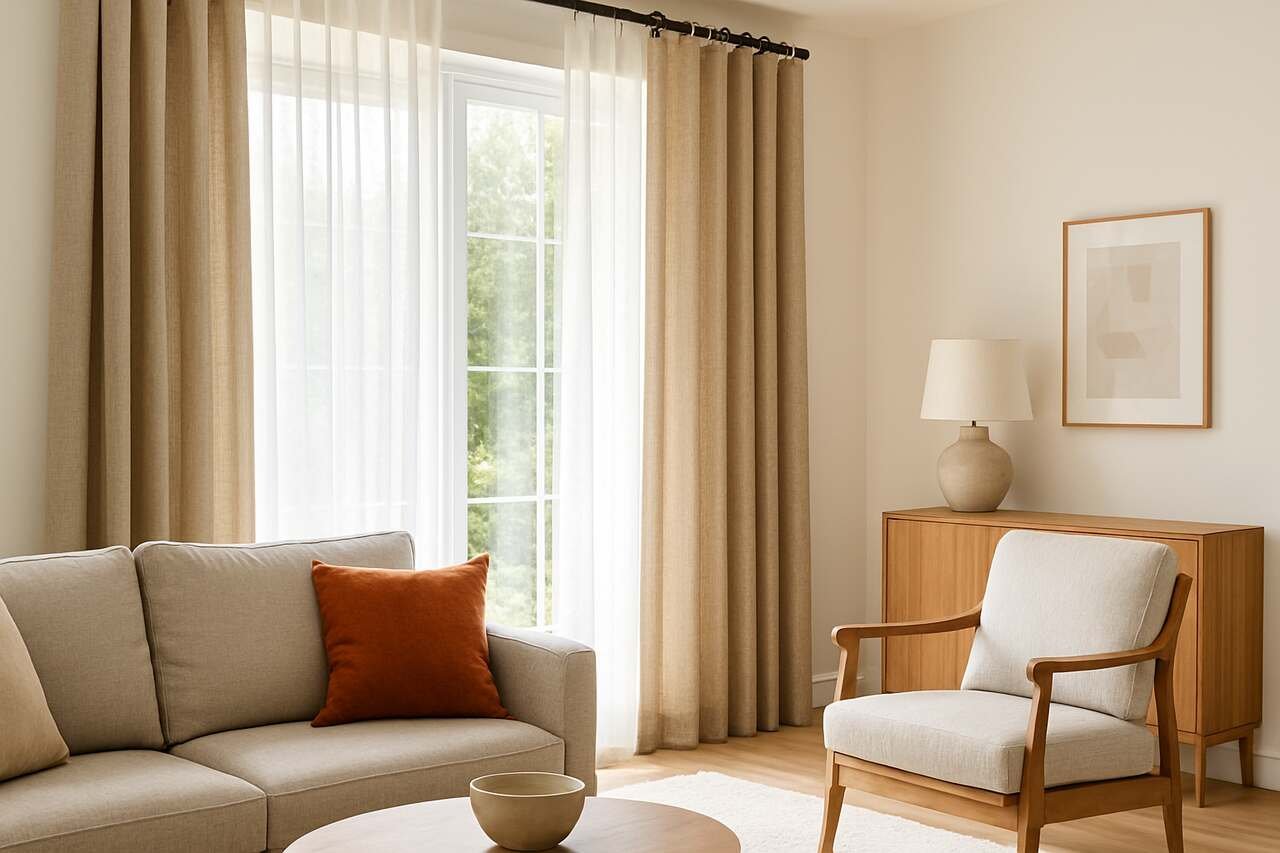
Introduction
Curtains in a living room act as functional and aesthetic elements that control light, privacy, thermal balance, and visual harmony. Choosing the right curtains requires analyzing fabric, size, lining, color, and style while considering room dimensions, décor themes, and budget. Homeowners often struggle with balancing beauty and practicality, which makes a structured approach to curtain selection essential. This guide covers step-by-step criteria including privacy needs, light control, fabric properties, measuring rules, curtain length styles, and additional features like thermal lining or motorized systems to help readers make informed choices.
What Factors Should I Consider When Choosing Living Room Curtains?
Curtain choice depends on privacy expectations, daylight levels, ceiling height, and room size. Factors like functionality, mood-setting colors, and coordination with furniture directly influence how curtains affect the scale and character of the space. A living room facing a busy street requires blackout lining for privacy, while an open-plan space benefits from layered sheers for flexibility.
How Do Privacy and Light Control Needs Affect Curtain Choice?
Privacy levels dictate opacity. Sheer curtains allow soft daylight but offer minimal privacy, making them suitable for higher floors. Blackout curtains block external views and light, ideal for ground-floor or street-facing windows. Semi-sheers balance both, ensuring daytime brightness without complete transparency.
What Role Do Room Size and Ceiling Height Play in Curtain Selection?
Small living rooms appear larger with floor-to-ceiling curtains in light colors. Tall ceilings benefit from tailored pinch pleats or puddled velvet drapes to emphasize grandeur. Rod placement above the frame creates vertical expansion, which enhances scale perception.
How Do I Pick the Right Curtain Fabric for My Living Room?
Fabric defines curtain behavior, including drape flow, insulation, and maintenance. Lighter fabrics like cotton and linen promote airiness, while heavier fabrics like velvet and brocade add warmth and luxury. Choosing fabric requires balancing durability, care, and mood-setting qualities.
Which Fabrics Are Best for Airy vs Cozy Aesthetics?
For airy aesthetics, cotton sheers, linen blends, and bamboo fabrics allow daylight while softening harsh edges. For cozy aesthetics, velvet, jacquard, and thermal-backed polyester insulate against drafts, reduce noise, and add tactile richness.
What’s the Difference Between Sheer, Velvet, and Linen Curtains?
● Sheer: lightweight, translucent, daylight-friendly, requires layering for privacy.
● Velvet: dense, luxurious, insulating, best for formal or cold-climate rooms.
● Linen: breathable, textured, versatile, offers casual elegance but wrinkles easily.
How Should Curtain Color and Pattern Be Chosen for a Living Room?
Curtain color influences mood and spatial perception. Neutral curtains harmonize easily, while bold contrasts add drama. Patterns act as focal points but must align with furniture and wall tones to avoid visual conflict.
Should Curtains Match or Contrast With Walls and Furniture?
Matching curtains with walls creates seamless harmony and expands space. Contrasting colors provide definition and focal interest, especially in minimalist rooms. For example, beige walls with navy curtains emphasize depth, while gray walls with white sheers maintain openness.
What Colors Make a Living Room Feel Bigger or Brighter?
Light neutrals such as ivory, soft gray, and beige expand space by reflecting light. Vertical stripes elongate walls, making ceilings appear taller. Dark jewel tones reduce scale but add intimacy, making them ideal for larger living rooms.
How Do I Measure Living Room Curtains Correctly?
Correct measurement ensures balanced draping and proper coverage. Curtains should extend beyond the window frame to avoid light leakage and should be proportioned to maintain symmetry with room height and width.
How Much Wider Should Curtains Be Than the Window?
Curtains should measure two to two and a half times the width of the window. This fullness ratio ensures smooth pleats and avoids a flat appearance. Wider panels also allow stack-back space, ensuring unobstructed daylight when open.
How High Above the Window Should I Hang the Curtain Rod?
Rod height should be four to six inches above the frame or closer to the ceiling to create height illusion. Higher placement elongates the wall and enhances grandeur, particularly in modern interiors with minimal decoration.
Which Curtain Length Looks Best in Living Rooms?
Curtain length directly changes how a room feels. Floor-length curtains create continuity and polish, while puddled drapes add luxury. Hovering lengths work for casual settings where practicality is prioritized.
Should Curtains Touch the Floor, Hover, or Puddle?
Floor-touching curtains project elegance and balance. Hovering curtains, half an inch above the floor, suit high-traffic areas. Puddled curtains extend several inches beyond the floor, creating softness and drama for formal living rooms.
How Does Curtain Length Change Room Perception?
Short curtains shorten vertical lines, making ceilings appear lower. Floor-to-ceiling curtains lengthen walls and add sophistication. Extra-long puddled curtains introduce romantic softness but require spacious layouts to avoid clutter.
What Special Features Can Improve Living Room Curtains?
Curtains with added functionality enhance both comfort and energy efficiency. Blackout lining, thermal insulation, and motorized operation transform curtains from decorative pieces into performance-driven elements.
Do Blackouts or Thermal Curtains Save Energy?
Yes, blackout curtains block light and reduce heat gain during summer. Thermal curtains add insulated linings that cut heat loss by up to 25 percent, reducing energy bills in winter. Both options enhance comfort and sustainability.
Are Motorized Curtains Worth It for Convenience?
Motorized curtains integrate with smart systems like Alexa or Google Home. They are valuable for tall windows, hard-to-reach spaces, or energy scheduling. Timed opening and closing also enhance security when homeowners are away.
How Do I Choose the Best Curtain Style for My Décor Theme?
Curtain style should reinforce the living room’s design language. Pleat types, header choices, and fabric textures act as extensions of the overall theme, creating cohesion between windows, furniture, and lighting.
Which Curtain Types Work Best for Modern, Classic, or Bohemian Rooms?
● Modern: wave pleats, grommet panels, minimal solids.
● Classic: pinch pleats, damask fabrics, tassel tiebacks.
● Bohemian: layered sheers, bold prints, textured cottons.
How Do Pleat Types (Pinch, Wave, Grommet) Influence the Look?
Pinch pleats add formality with structured folds. Wave pleats create fluid drape lines, ideal for modern spaces. Grommets produce casual symmetry and are easy to slide, suiting family homes
Conclusion
Choosing curtains for a living room requires evaluating privacy needs, light control, fabric qualities, and stylistic alignment with décor. Correct measurements, appropriate lengths, and energy-efficient features ensure functionality, while color psychology and pleat styles define ambiance. By balancing fabric type, drape style, and smart features, homeowners can achieve curtains that enhance beauty, comfort, and efficiency. The right choice transforms a living room into a space that feels larger, brighter, and more welcoming.
FAQ’s
Curtains should be at least twice the width of the window and long enough to touch the floor.
Not always. Matching creates harmony, while contrasting colors add focal interest.
Linen and cotton for airy aesthetics, velvet and thermal fabrics for cozy insulation.
Light colors expand perceived space, while darker tones add warmth and intimacy.
Yes, they are especially useful in media-friendly or street-facing living rooms.
Yes, but choose small prints or vertical stripes to elongate the space visually.
Measure window width and multiply by 2 to 2.5 for fullness. Mount rods 4 to 6 inches above the frame.
Yes, particularly for smart homes, tall windows, or homeowners seeking automation convenience.
