
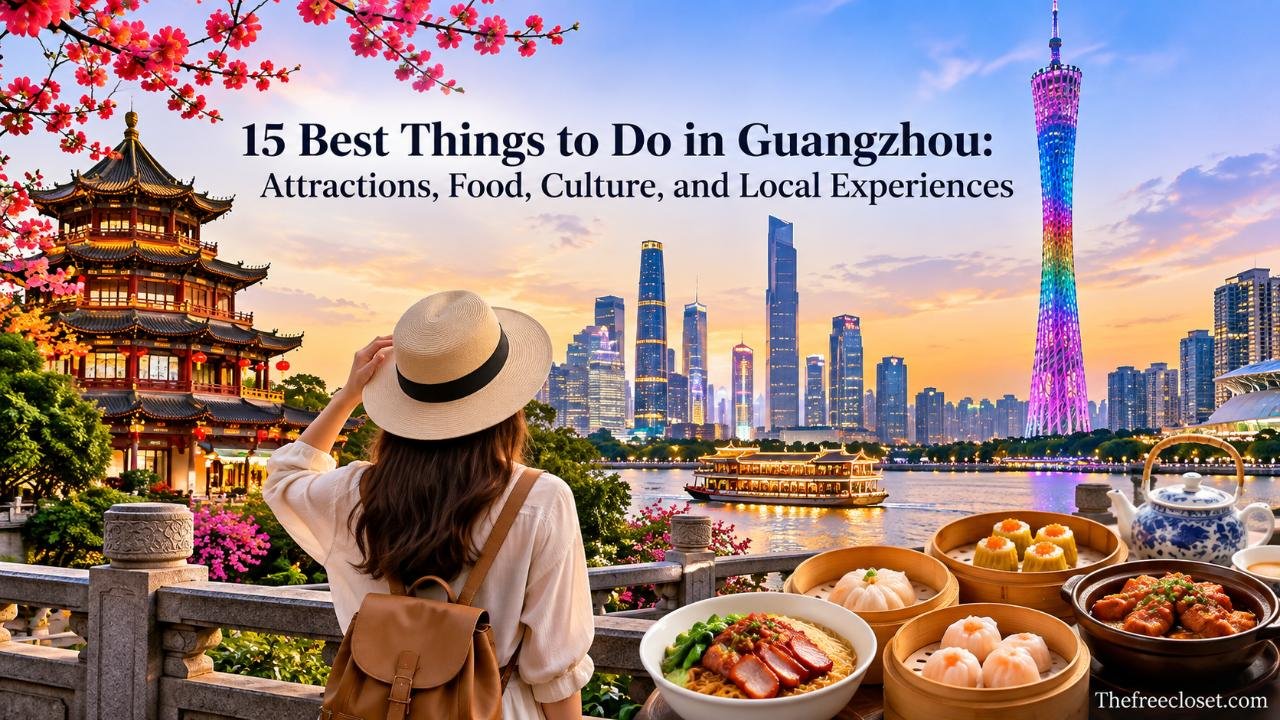
15 Best Things to Do in Guangzhou: Attractions, Food, Culture, and Local Experiences
Guangzhou offers a mix of Cantonese food, history, traditional architecture, shopping, and modern city attractions. It recommends experiencing both sides of the city, from historic Liwan neighborhoods and Chen Clan Ancestral Hall to Canton Tower and the Pearl River skyline, rather than focusing on a single landmark.
Best Things to Do in Guangzhou at a Glance
If this is your first trip, prioritize a mixture of historic Guangzhou and the modern Pearl River area rather than spending the entire visit moving between isolated attractions.
| Experience | Best for | Suggested time |
| Canton Tower | Skyline views | 1.5–2.5 hours |
| Chen Clan Ancestral Hall | Architecture and folk art | 1.5–2 hours |
| Shamian Island | Walking and photography | 1–2 hours |
| Pearl River at night | City views | 1–2 hours |
| Beijing Road | Shopping, food and history | 2–3 hours |
| Yongqing Fang and Enning Road | Old Guangzhou atmosphere | 2–3 hours |
| Baiyun Mountain | Hiking and nature | Half day |
| Yuexiu Park | Parks and local history | 2–3 hours |
| Huacheng Square | Modern architecture | 1–2 hours |
| Cantonese food tour | Local cuisine | 2–4 hours |
| Chimelong | Families and theme parks | Full day |
| Shawan Ancient Town | Traditional Lingnan culture | Half/full day |
For a short stay, Chen Clan Ancestral Hall, the Liwan neighborhoods, Canton Tower and the Pearl River provide a particularly good introduction because they show dramatically different periods of Guangzhou’s development.
1. See Guangzhou from Canton Tower
Canton Tower is Guangzhou’s most recognizable modern landmark and one of the easiest places to appreciate the enormous scale of the city.
The tower stands beside the Pearl River opposite the city’s modern central axis. Guangzhou’s official international portal describes it as 600 meters tall when its main structure and antenna are counted together.
The main reason to visit is the panoramic view. On a clear day, the observation areas reveal the dense neighborhoods stretching far beyond the river and the skyscrapers around Zhujiang New Town.
Timing makes a significant difference. Arriving before sunset lets you see Guangzhou in daylight and then watch the skyline illuminate after dark. If visibility is poor, however, the experience can be less impressive, so check weather conditions before paying for an observation-deck ticket.
2. Explore the Chen Clan Ancestral Hall
The Chen Clan Ancestral Hall is one of the best places in Guangzhou to see traditional Lingnan architecture and decorative craftsmanship.
Built by Chen clans from Guangdong during the late Qing period, the complex once served educational and clan functions. Today it houses the Guangdong Folk Arts Museum. The rooflines, courtyards, ceramic figures, woodcarvings, stonework, and other decorative details are as important as the exhibitions themselves.
Do not treat it as a quick photo stop. Look closely at the roofs, doors, beams, and carved panels. Much of what makes the complex remarkable is contained in small architectural details that are easy to miss.
The attraction also fits naturally into a larger Liwan itinerary. Afterward, continue toward Enning Road, Yongqing Fang, Lychee Bay, and the older Xiguan neighborhoods instead of immediately crossing the city.
3. Walk Through Shamian Island
Shamian Island offers a striking contrast to Guangzhou’s traditional Cantonese neighborhoods and modern skyscrapers.
The small island became a British and French concession area during the 19th century. Today, its tree-lined avenues contain well-preserved buildings displaying Gothic, Baroque, Neoclassical, and other European architectural influences. Guangzhou’s Liwan government identifies more than 40 notable buildings among the island’s historic architecture.
Shamian works best as a leisurely walk rather than an attraction with a fixed itinerary. Explore the quieter side streets, gardens, former consular buildings, and riverfront.
Early morning is particularly pleasant if you want fewer people and softer light for photography.
4. Experience the Pearl River After Dark
The Pearl River is central to Guangzhou’s identity, and nighttime is when the modern riverfront becomes particularly impressive.
Illuminated skyscrapers, bridges, Canton Tower, and waterfront buildings create a completely different atmosphere from the historic neighborhoods of Liwan and Yuexiu.
One option is simply to walk along the river. Another is to take an evening sightseeing cruise, which gives you changing views of both banks without having to navigate between multiple viewpoints.
If you are already visiting Canton Tower or Huacheng Square late in the afternoon, combining that visit with the river at night minimizes unnecessary travel.
5. Eat Your Way Through Guangzhou
Food is not an activity to squeeze between Guangzhou attractions. For many visitors, it becomes one of the main reasons to remember the city.
Guangzhou is a major center of Cantonese cuisine, and the range extends far beyond the Cantonese dishes commonly encountered overseas.
Look for experiences such as:
- Morning dim sum and tea
- Char siu and other Cantonese roast meats
- Wonton noodles
- Rice noodle rolls, or cheung fun
- Clay-pot rice
- Double-skin milk
- Cantonese soups
- Fresh seafood
- Traditional bakeries and dessert shops
Dim sum is particularly worth experiencing as a proper meal rather than ordering one or two familiar dishes. Go with several people if possible, order tea, and share multiple baskets and plates.
Food also provides a useful way to structure sightseeing. Historic districts such as Liwan can be explored through alternating stops for architecture, neighborhood streets, tea, noodles, snacks, and desserts.
6. Wander Through Yongqing Fang and Enning Road
Yongqing Fang is one of the most accessible places to experience Guangzhou’s Xiguan heritage while still having cafés, shops, cultural spaces, and restaurants nearby.
Enning Road and the surrounding area combine traditional arcade architecture with restored historic buildings and newer businesses. Guangzhou’s official tourism coverage highlights Yongqing Fang for its stone-paved lanes, Xiguan mansions, shops, exhibitions, and traditional cultural atmosphere.
This area is more interesting when you wander beyond the most polished commercial streets. The surrounding lanes help put the restored heritage district into the context of a living neighborhood.
It pairs especially well with Chen Clan Ancestral Hall and Lychee Bay for a half-day exploration of western Guangzhou.
7. Visit Beijing Road Pedestrian Street
Beijing Road Pedestrian Street combines shopping, restaurants, street activity, temples, and visible layers of Guangzhou’s long urban history.
One unusual feature is the preserved remains of historic road surfaces beneath sections of the modern pedestrian street. This gives Beijing Road more historical interest than a typical shopping district.
The surrounding area is equally important. Dafo Temple creates a particularly striking scene after dark, when its illuminated architecture contrasts with the commercial streets around it.
Plan to visit in the late afternoon or evening if you want to combine sightseeing with dinner and shopping.
8. Hike Baiyun Mountain
Baiyun Mountain is a useful escape when Guangzhou’s traffic, shopping districts, and dense urban environment start to feel overwhelming.
The scenic area encompasses more than 30 hills across roughly 21.8 square kilometers, according to Guangzhou’s international government portal. Its network of paths and viewpoints makes it one of the city’s major outdoor recreation areas.
How long you need depends on what you want from the visit. A short excursion can focus on viewpoints, while hikers can devote much of a morning or afternoon to exploring the trails.
Guangzhou can be hot and humid, so an early start is preferable during warmer months. Carry water and expect the experience to be more physically demanding than visiting the central-city attractions.
9. Discover Yuexiu Park and Guangzhou’s Historic Symbols
Yuexiu Park combines greenery with landmarks connected to Guangzhou’s history and civic identity.
Its best-known sight is the Five Rams Sculpture. The five-rams legend is closely associated with Guangzhou, which is why references to rams appear repeatedly in the city’s cultural identity.
The park also contains historic structures and connects naturally with other Yuexiu attractions. Rather than crossing Guangzhou solely to photograph the sculpture, use the park as part of a wider exploration of the historic center.
This is also a good place to see a less tourist-oriented side of city life. Large Chinese parks often function as social spaces where residents exercise, walk, practice music, and spend time outdoors.
10. Explore Huacheng Square and Zhujiang New Town
Huacheng Square shows Guangzhou at its most futuristic.
The large civic space sits among major modern landmarks, including Guangzhou Opera House, Guangzhou Library, Guangdong Museum, and some of the city’s tallest commercial towers. Official city information describes the square as a centerpiece of Guangzhou’s newer central axis.
Walk through the area toward the Pearl River for views across to Canton Tower.
The district is particularly effective after visiting Liwan or Yuexiu. Seeing centuries-old clan halls and traditional streets in the morning followed by Zhujiang New Town at night makes Guangzhou’s rapid transformation much easier to appreciate.
11. Learn About the Nanyue Kingdom
Travelers interested in archaeology should make time for Guangzhou’s Nanyue history.
The Nanyue Kingdom dates back more than 2,000 years and provides a much deeper historical perspective than Guangzhou’s better-known Qing-era and colonial-period attractions. Guangzhou’s official guide for foreign visitors identifies the Mausoleum of the Nanyue King among the city’s major ancient cultural sites.
Museum collections associated with the Nanyue archaeological sites contain burial objects and other discoveries that help explain the political and cultural importance of ancient Guangzhou.
This is a particularly good choice on a rainy or extremely hot day because much of the experience is indoors.
12. Visit Sun Yat-sen Memorial Hall
The Sun Yat-sen Memorial Hall is one of Guangzhou’s major historic civic landmarks.
Its large blue-roofed building and surrounding grounds commemorate Sun Yat-sen, a central figure in China’s revolutionary history. The site works best for travelers who want to understand Guangzhou beyond its commercial and culinary reputation.
Because the memorial hall is in Yuexiu, combine it with Yuexiu Park and nearby historical attractions rather than making a separate trip across the city.
13. Spend a Day at Chimelong
Families traveling with children may want to reserve an entire day for the large Chimelong resort area in Panyu.
Its attractions make it fundamentally different from sightseeing in central Guangzhou. Rather than temples, museums, and historic streets, this is a full-scale leisure destination.
The wildlife park is particularly prominent. Guangzhou’s government tourism coverage describes the wider attraction as spanning 133 hectares and housing thousands of animals, including giant pandas.
Because Panyu is south of central Guangzhou and the attractions themselves require considerable time, avoid trying to combine Chimelong with several major downtown sights on the same day.
14. Explore Shawan Ancient Town
Shawan Ancient Town provides another perspective on Lingnan culture and architecture away from central Guangzhou.
The settlement dates to the Southern Song period and has more than 800 years of history. Guangzhou’s municipal culture and tourism authority highlights its stone lanes, historic ancestral halls, traditional buildings, sculptures, murals, Cantonese music, lion dancing, and other forms of cultural heritage.
Shawan makes more sense for travelers with three or more days than for someone rushing through Guangzhou in 24 hours.
Try the area’s traditional ginger milk dessert if you visit. Shawan is particularly associated with dairy-based Cantonese sweets.
15. Leave Time for Guangzhou’s Markets and Shopping Streets
Guangzhou has been a trading city for centuries, and commerce remains part of its character.
Modern malls dominate Tianhe and Zhujiang New Town, while older commercial neighborhoods offer a very different experience. Depending on your interests, shopping can range from fashion and electronics to tea, traditional foods, wholesale markets, and souvenirs.
Do not assume that every wholesale market is designed for casual tourists. Some primarily serve professional buyers and can be enormous. If shopping is a major purpose of your trip, choose markets based on the products you actually want rather than simply visiting the largest ones.
For general sightseeing and casual shopping, Beijing Road and the central commercial areas are easier to navigate.
How to Spend 3 Days in Guangzhou
A good Guangzhou itinerary minimizes cross-city journeys. The city is large, so grouping attractions geographically usually saves more time than following a simple ranking of the “top” sights.
Day 1: Historic Guangzhou. Start at Chen Clan Ancestral Hall, continue through Liwan toward Yongqing Fang and Enning Road, explore the Xiguan area, and finish around Shamian Island. Use the day to sample Cantonese snacks and traditional desserts rather than scheduling a separate food tour.
Day 2: Central Guangzhou and the Pearl River. Explore Yuexiu Park and one or two historical sites before heading toward Zhujiang New Town. Walk through Huacheng Square, see Canton Tower around sunset, and spend the evening beside or on the Pearl River.
Day 3: Choose according to your interests. Hikers can visit Baiyun Mountain, families can spend the day at Chimelong, history-focused travelers can explore museums and Shawan, while serious food lovers may prefer another day exploring neighborhood restaurants and markets.
This geographic approach reduces the common mistake of spending too much of a short Guangzhou trip traveling back and forth between distant districts.
Best Things to Do in Guangzhou by Travel Style
| If you enjoy… | Prioritize… |
| History | Chen Clan Ancestral Hall, Nanyue sites, Yuexiu, Sun Yat-sen Memorial Hall |
| Architecture | Chen Clan Ancestral Hall, Shamian, Xiguan, Zhujiang New Town |
| Food | Dim sum, roast meats, wonton noodles, cheung fun, local desserts |
| Photography | Shamian, Canton Tower, Huacheng Square, Yongqing Fang |
| Nature | Baiyun Mountain, city parks, botanical attractions |
| Families | Chimelong and Guangzhou Zoo |
| Nightlife and evening views | Pearl River, Canton Tower, Zhujiang New Town, Beijing Road |
| Traditional culture | Liwan, Shawan Ancient Town, Cantonese opera and folk-art attractions |
Practical Tips for Visiting Guangzhou
Guangzhou’s metro is usually the most practical transportation option for tourists because many major attractions have stations nearby. The city has also expanded payment options for international visitors. Guangzhou authorities reported in 2026 that foreign Visa and Mastercard holders could use tap-and-go access on the metro, while previous transport initiatives expanded mobile and physical-card payment options for overseas visitors.
Mobile payment is widely used throughout Guangzhou. Official guidance for overseas visitors covers UnionPay, Alipay, Weixin Pay, cash, foreign cards, and currency exchange. Setting up a suitable payment method before a busy sightseeing day can make small restaurant and shop purchases easier.
Weather deserves consideration when building your itinerary. Guangzhou’s subtropical climate can bring significant heat, humidity, and rain. Put outdoor activities such as Baiyun Mountain earlier in the day during hot periods and save museums, malls, and indoor attractions for the hottest or wettest hours.
Also check current opening days, ticket rules, reservation requirements, and holiday schedules directly with attractions before visiting. These details can change. For example, current visitor information for Chen Clan Ancestral Hall lists specific opening and last-entry times, so relying on an old itinerary can cause problems.
How Many Days Do You Need in Guangzhou?
Two days are enough for the highlights if you plan efficiently. Spend one day around historic Liwan and Yuexiu and another around the Pearl River, Canton Tower, and modern Guangzhou.
Three days provide a better first visit because you can add Baiyun Mountain, museums, a dedicated food exploration, or another district without rushing.
Four or five days make sense if Guangzhou is your main destination rather than a stopover. That gives you enough time for places farther from the center, such as Chimelong or Shawan Ancient Town, while still leaving room for unstructured neighborhood exploration.
Conclusion
The best things to do in Guangzhou are those that reveal the city’s contrasts. Spend time among the intricate carvings of Chen Clan Ancestral Hall and the old streets of Liwan, then cross into the dramatically modern world of Canton Tower, Huacheng Square, and the Pearl River skyline.
Just as importantly, leave room for eating. Dim sum, noodles, roast meats, desserts, tea, and neighborhood restaurants are part of experiencing Guangzhou rather than extras between tourist attractions.
With two days, concentrate on historic Guangzhou and the Pearl River. With three or more, add Baiyun Mountain, museums, Shawan, Chimelong, or deeper neighborhood exploration. Grouping sights by district will give you more time to experience the city and less time crossing it.
Discover the latest fashion trends, home ideas, travel tips, and lifestyle inspiration at thefreecloset.com.
FAQ’s
Guangzhou is particularly known for Cantonese cuisine, its long history as an international trading center, Lingnan culture and architecture, the Pearl River, and modern landmarks such as Canton Tower. Its historical sites range from remains connected to the ancient Nanyue Kingdom to Qing-era architecture and 19th-century concession buildings.
Yes, particularly for travelers interested in food, Chinese history, architecture, and large modern cities. Guangzhou may have fewer internationally famous monuments than Beijing, but its combination of Cantonese culture, historic neighborhoods, cuisine, and contemporary city life gives it a distinct identity.
Walk around Huacheng Square and the Pearl River, see Canton Tower illuminated, consider a Pearl River cruise, or visit Beijing Road and the surrounding food and shopping streets. Nighttime is particularly good for experiencing Guangzhou’s modern skyline.
Shamian Island, many neighborhood streets, Beijing Road, Huacheng Square, and walks along sections of the Pearl River can be enjoyed without buying an attraction ticket. Parks, museums, and special attractions may have separate admission or reservation policies, so verify current conditions before visiting.
Start with dim sum, wonton noodles, cheung fun, Cantonese roast meats, clay-pot rice, slow-cooked soups, and traditional desserts such as double-skin milk. Rather than concentrating only on famous restaurants, try smaller neighborhood establishments as part of your sightseeing route.
There is no single district that represents all of Guangzhou. Liwan is particularly useful for traditional architecture and older neighborhoods, Yuexiu contains important historic attractions, and the Tianhe and Pearl River areas showcase modern Guangzhou. Visiting all three gives a first-time traveler a much more complete picture of the city.