


Introduction
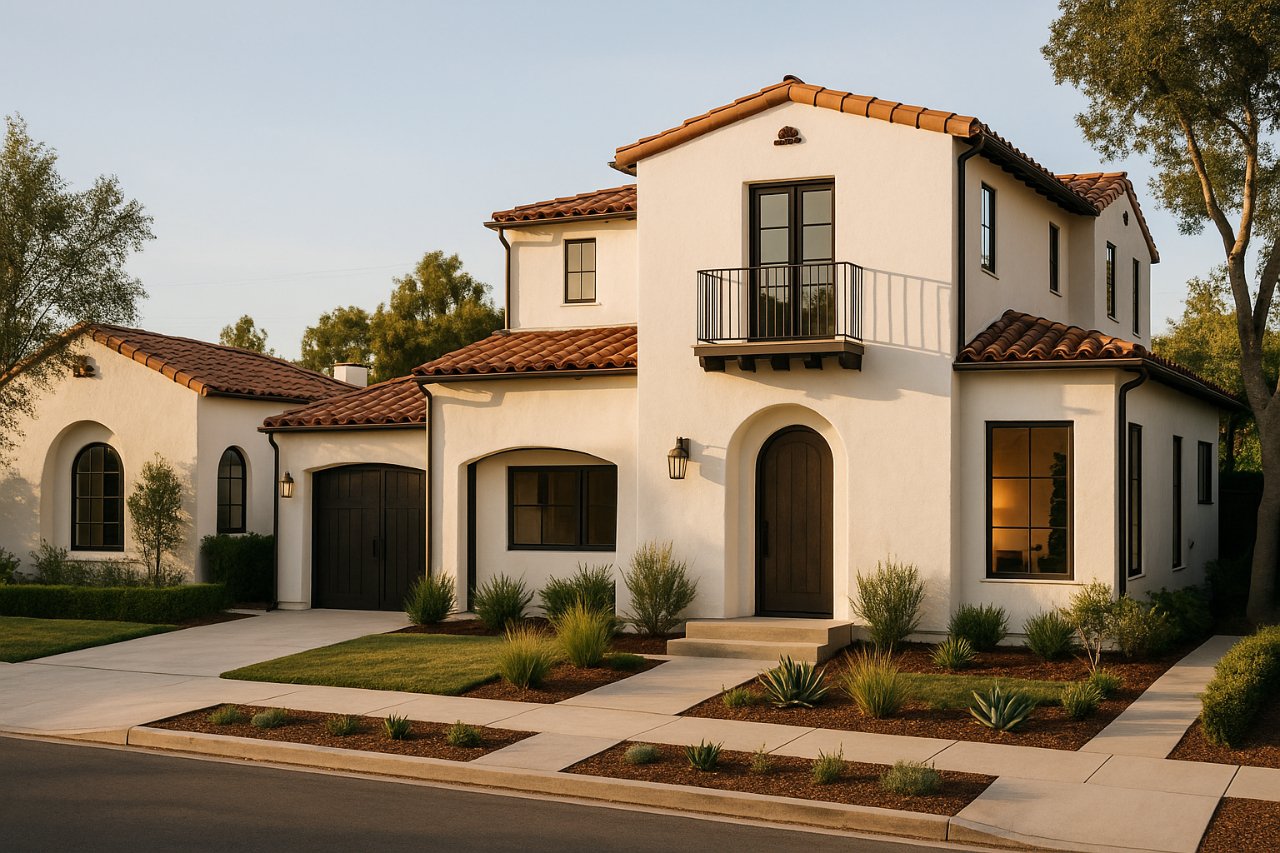
Spanish style homes represent one of the most enduring traditions in residential architecture, blending history, artistry, and climatic responsiveness. Originating from Spanish Colonial influences and later evolving through revivals in the U.S. and beyond, these homes feature stucco walls, terracotta roofs, wrought iron details, and layouts that celebrate indoor–outdoor living. Today, architects and homeowners continue to adapt Spanish style design, merging its timeless aesthetics with modern sustainability, minimalist interiors, and regional adaptations for diverse climates.
This guide explores the defining features, sub-styles, historical evolution, practical building considerations, cost factors, and modern reinterpretations of Spanish style homes providing a complete reference for anyone considering, designing, or appreciating this architectural tradition.
What Are the Defining Features of Spanish Style Homes?
Spanish style homes are easily recognized by their distinctive combination of stucco walls, red clay tile roofs, arches, and courtyards. These elements provide both visual character and functional performance, especially in warm or arid climates.
The architecture typically incorporates thick plaster walls, small or arched windows, and deep roof overhangs. Wooden beams, known as vigas, often extend through exterior walls, while decorative ironwork enhances balconies, railings, and gates. Courtyards and loggias create seamless transitions between indoor and outdoor spaces, making the home well-suited for social gatherings and climate adaptation.
Beyond aesthetics, these features serve practical purposes: stucco acts as thermal mass, clay tile roofs resist heat, and arcaded walkways offer shaded protection. Over centuries, Spanish architects developed these solutions in response to Mediterranean and desert climates, and their relevance continues in contemporary sustainable design.
What Roof Types and Materials Are Typical?
Red clay barrel tiles, known as mission tiles, remain the most iconic roofing material for Spanish style homes. These curved tiles not only shed water effectively but also allow air circulation that cools the roof structure. Modern adaptations sometimes use concrete tiles or synthetic alternatives to reduce cost while preserving the look.
Roofs usually feature low-pitched gables or hipped configurations, with extended eaves to create shaded porches and covered walkways. Some variations, like Monterey Spanish homes, incorporate a second floor with balconies, blending Spanish features with American timber framing traditions.
How Are Walls, Windows, and Openings Designed?

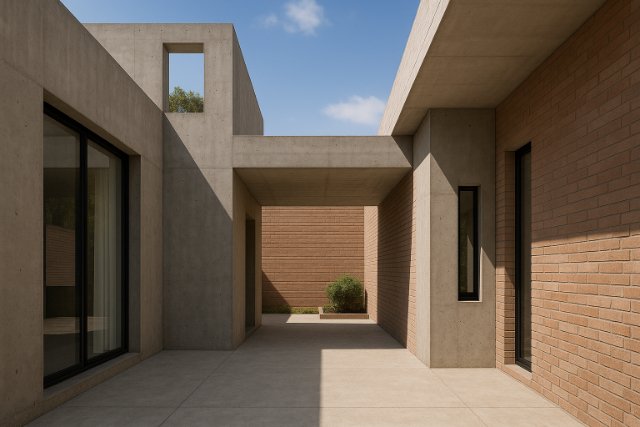
Exterior walls are traditionally finished with lime plaster or stucco over masonry or adobe. This produces a textured, whitewashed appearance that reflects heat and creates a sense of permanence. Windows are generally small, often arched, and fitted with wooden shutters or wrought iron grilles.
Openings emphasize rhythm and repetition: colonnades, arcades, and interior courtyards define circulation and light patterns. In hacienda-style layouts, central patios serve as the heart of the home, surrounded by covered corridors with stone or terracotta flooring.
How Did Spanish Style Homes Evolve Historically?
The origins of Spanish style homes trace back to the 16th century, when Spanish colonists brought Iberian building traditions to the Americas. Blending European techniques with local materials and indigenous influences, early Spanish Colonial houses established the foundation for the style.
These homes emphasized functionality, thick walls for insulation, and open courtyards for ventilation. Over centuries, regional adaptations emerged: adobe in the Southwest, coquina stone in Florida, and wood-framed versions in California’s missions.
By the late 19th and early 20th centuries, architects revived and romanticized Spanish Colonial design during the Spanish Colonial Revival movement, especially after the 1915 Panama-California Exposition in San Diego. This revival popularized decorative detailing, Churrigueresque ornamentation, and eclectic blends with Moorish and Mediterranean motifs.
What Is the Origin of Spanish Colonial Architecture?
Spanish Colonial homes were typically modest, single-story dwellings with simple floor plans. They often included a rectangular shape with a central patio or cloister. Building materials depended on local resources: adobe in the Southwest, tabby concrete in coastal regions, or thick stone masonry in areas with abundant quarries.
How Have Modern Interpretations Evolved?
Modern Spanish style homes reinterpret traditional features with cleaner lines, larger windows, and integration of contemporary interiors. Architects use reinforced concrete instead of adobe, incorporate energy-efficient glazing, and design flexible spaces while maintaining terracotta roofs and courtyards.
The Spanish Modern movement merges minimalism with traditional motifs think white stucco, flat roofs, geometric arches, and open floor plans. These homes appeal to homeowners seeking both authenticity and modern comfort.
Which Types or Sub-Styles Exist Under Spanish Style Homes?
Spanish style architecture includes a wide family of sub-styles, each reflecting geography, cultural influences, or later reinterpretations. Understanding these categories helps homeowners and designers choose the version that best fits their context.
Spanish Colonial homes emphasize simplicity and climate response, with whitewashed walls, small windows, and central courtyards. Mission Revival, inspired by California’s Franciscan missions, adds curved parapets and towers. Spanish Colonial Revival brings ornamentation and eclectic blends, while Hacienda homes use expansive patios suited for rural estates. Monterey Spanish combines wood-framed second stories with traditional stucco bases.
This taxonomy shows the style’s richness. Rather than being a single formula, Spanish architecture is a spectrum that shifts depending on history and environment. From the minimalism of colonial forms to the exuberance of Revival mansions, homeowners can embrace the version that resonates with their aesthetic and functional needs.
What Is Spanish Colonial?
The purest form of Spanish architecture in the Americas, Spanish Colonial homes emphasize simplicity and climate responsiveness. Whitewashed stucco, small windows, low roofs, and courtyards define this type.]
What Defines Mission Revival?
Inspired by California’s Franciscan missions, Mission Revival homes (1890–1920) feature curved parapets, bell towers, and decorative tilework. These became popular in the American Southwest and still influence modern residential design.
Additional Sub-Styles
- Spanish Colonial Revival (1920s–1930s): Ornamental, eclectic, often blending Moorish, Baroque, and Mediterranean elements.
- Hacienda Style: Large rural estates with expansive courtyards and arcades, suited to ranch settings.
- Monterey Spanish: Combines Spanish Colonial ground floors with Anglo-American wood-framed second stories and balconies.
- Spanish Eclectic: A mix of Spanish features with global Mediterranean influences, common in California suburbs.
| Sub-Style | Key Features | Popular Era | Regions |
| Spanish Colonial | Stucco, small windows, courtyards | 1500s–1800s | Mexico, U.S. Southwest, Florida |
| Mission Revival | Bell towers, curved gables | 1890–1920 | California, Arizona |
| Spanish Colonial Revival | Ornamentation, eclectic mix | 1915–1940 | California, Florida |
| Hacienda | Large patios, ranch estates | 1800s–present | Mexico, Texas |
| Monterey Spanish | Two-story, wood balconies | 1830s–1900s | California |
How Do You Design or Build a Spanish Style Home Today?
Building a Spanish style home today requires balancing traditional authenticity with modern construction standards and sustainability.
Key considerations include site orientation for natural cooling, courtyard placement for airflow, and material choices that echo traditional aesthetics while meeting energy codes. For example, cement stucco systems with insulation outperform older lime plasters while preserving appearance.
What Should You Consider in Site, Orientation, and Climate?
Spanish homes are designed around climate responsiveness. In warm climates, courtyards act as passive cooling systems, while deep overhangs shade windows. Orientation toward breezes enhances comfort, and thick walls store heat during the day while releasing it at night.
What Building Materials Work Best?
Stucco, adobe, terracotta tiles, wrought iron, and timber remain the core materials. Modern versions use insulated concrete forms, fiber cement tiles, and powder-coated steel to replicate the look with greater durability. Incorporating Talavera tiles, stone paving, and wooden vigas preserves authenticity.
What Are the Pros and Cons of Spanish Style Homes?
Spanish style homes are beloved for their character and practicality, but they also come with specific advantages and drawbacks. For many, their charm lies in the blend of rustic simplicity and refined detailing. Thick walls and tile roofs naturally moderate indoor temperatures, making them well-suited for sunny climates. Courtyards and verandas expand living space and foster outdoor lifestyles.
However, authenticity comes with costs. Stucco surfaces require regular upkeep to prevent cracking. Clay roof tiles, while durable, may need replacement or reinforcement after decades. Custom ironwork and tile patterns can also increase construction expenses. In humid or cold climates, additional insulation and waterproofing may be necessary.
The trade-off is between heritage aesthetics and maintenance responsibilities. For homeowners willing to invest in care and upkeep, Spanish homes offer unmatched atmosphere and long-term durability.
What Are the Strengths?
- Aesthetic appeal: timeless, romantic character
- Climate performance: suited for hot, dry, or temperate zones
- Durability: stucco and tile are long-lasting when maintained
- Indoor–outdoor living: courtyards and patios encourage natural living
What Maintenance Issues to Watch?
Stucco can crack if not maintained, clay tiles may need replacement after decades, and wrought iron requires rust prevention. Homes in humid climates may need additional waterproofing and mold management.
Which Regions or Climates Suit Spanish Style Homes Best?
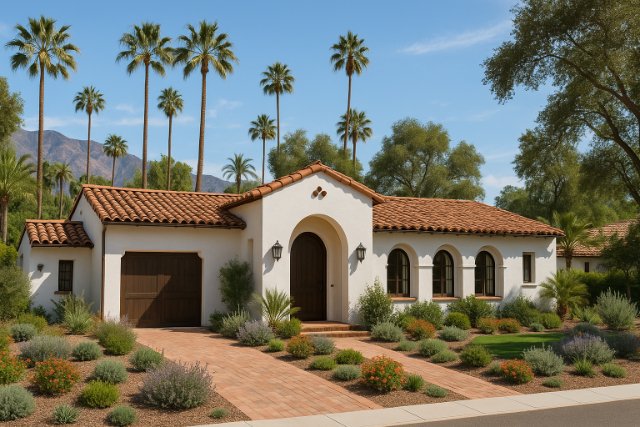
Spanish style homes thrive in warm, dry, or Mediterranean climates, where stucco, tile, and courtyards function as intended. This explains their popularity in California, Arizona, New Mexico, Texas, and Florida, as well as Mediterranean regions worldwide.
In humid zones, adaptations are required. Waterproof stucco, breathable wall systems, and advanced drainage help manage moisture. In colder climates, insulation layers and steep roof variations improve performance. These adjustments allow Spanish style to succeed outside its original environment.
The global spread of the style shows its flexibility. Whether in Mexico, the U.S. Southwest, or even tropical Asia, Spanish architecture adapts by mixing climate-smart features with timeless visual character.
Can Spanish Style Homes Work in Humid or Cold Climates?
Yes, with adaptations. In humid climates, breathable stucco and moisture-resistant underlayment prevent water damage. In cold climates, thicker insulation, double-glazed windows, and steep roof pitches may be required.
How to Adapt Design to Local Constraints?
Architects can adapt Spanish design by using composite tiles in snow regions, adding radiant heating in courtyards, and integrating hurricane-rated roofs in coastal zones.
What Are Cost, Planning, and Regulatory Aspects of Building a Spanish Style Home?
Spanish homes often carry a cost premium due to specialized craftsmanship and materials. Curved arches, terracotta roofing, iron railings, and artisanal tiles demand more labor than conventional construction. Homeowners typically pay 10–20% more for authenticity.
Planning must also account for regulations. In historic districts, building codes may require preservation of style integrity. In wildfire-prone zones, roofing and wood details need fire-resistance upgrades. Coastal regions enforce hurricane standards for clay tile roofs and structural anchoring.
Thus, building a Spanish style home requires foresight: aligning design with codes, budgeting for craftsmanship, and balancing authenticity with compliance. For many, the investment pays off with timeless curb appeal and long-term property value.
What Is the Typical Cost Premium vs Standard Home Styles?
Expect a 10–20% cost premium, largely due to tile roofs, custom ironwork, arches, and masonry.
What Permits or Local Codes May Affect Design?
In historic districts, Spanish Colonial or Revival homes may require compliance with preservation codes. In wildfire zones, tile roofs are advantageous, but wood beams may need fire treatment. Coastal areas require hurricane compliance for clay roofs.
How Do Modern and Minimalist Versions of Spanish Style Homes Differ?
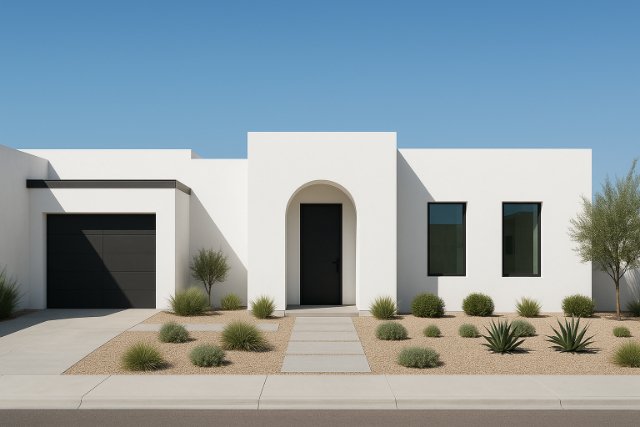
Modern Spanish homes reinterpret the style for contemporary living. Instead of ornate detailing, these houses emphasize clean stucco walls, large openings, and minimalist lines. The essence clay tiles, arches, courtyards remains, but expressed in simplified, geometric forms.
Spanish Modern often uses white plaster, steel-framed windows, and open-plan interiors. Instead of rustic beams, ceilings may feature smooth expanses. Courtyards become outdoor living rooms with sleek furniture and integrated lighting. Sustainability, too, plays a central role, with solar panels and passive cooling systems layered into the design.
This evolution shows how Spanish style remains relevant. Rather than freezing in history, it adapts, creating homes that satisfy modern lifestyles while honoring centuries-old tradition.
What’s Modern Spanish Style (or Spanish Modern)?
It emphasizes open floor plans, white plaster, flat or low-slope roofs, and geometric arches. Materials remain authentic stucco, tile, and wood but are applied in sleek, contemporary ways.
Examples of Striking Modern Spanish Homes
- A Miami residence combining floor-to-ceiling glass with terracotta flooring.
- A California villa with flat-roof courtyards and minimalist wrought iron.
- A Mexican hacienda adapted with solar panels and rainwater harvesting.
Conclusion
Spanish style homes embody a fusion of heritage, climate-responsive design, and timeless aesthetics. From their origins in Spanish Colonial settlements to Mission Revival landmarks and contemporary Spanish Modern reinterpretations, these homes offer both cultural depth and functional performance. While they thrive in warm climates, thoughtful adaptation makes them suitable worldwide. For homeowners, architects, and enthusiasts, Spanish style remains one of the most versatile and enduring traditions in residential design.
FAQ”s
Spanish Colonial homes are original historic dwellings built during colonization (16th–19th centuries), while Spanish Revival homes are 20th-century reinterpretations with more decorative details.
Yes, but moisture-resistant stucco, proper drainage, and mold control are essential.
Expect a 10–20% premium compared to standard construction, depending on detailing.
White, beige, terracotta, cobalt blue, and earth tones are most traditional.
Inspect stucco for cracks, apply breathable sealants, and replace or reseal roof tiles every 20–30 years.
Glass walls, minimalist interiors, open floor plans, and sustainable systems can integrate seamlessly without losing character.


