


Introduction
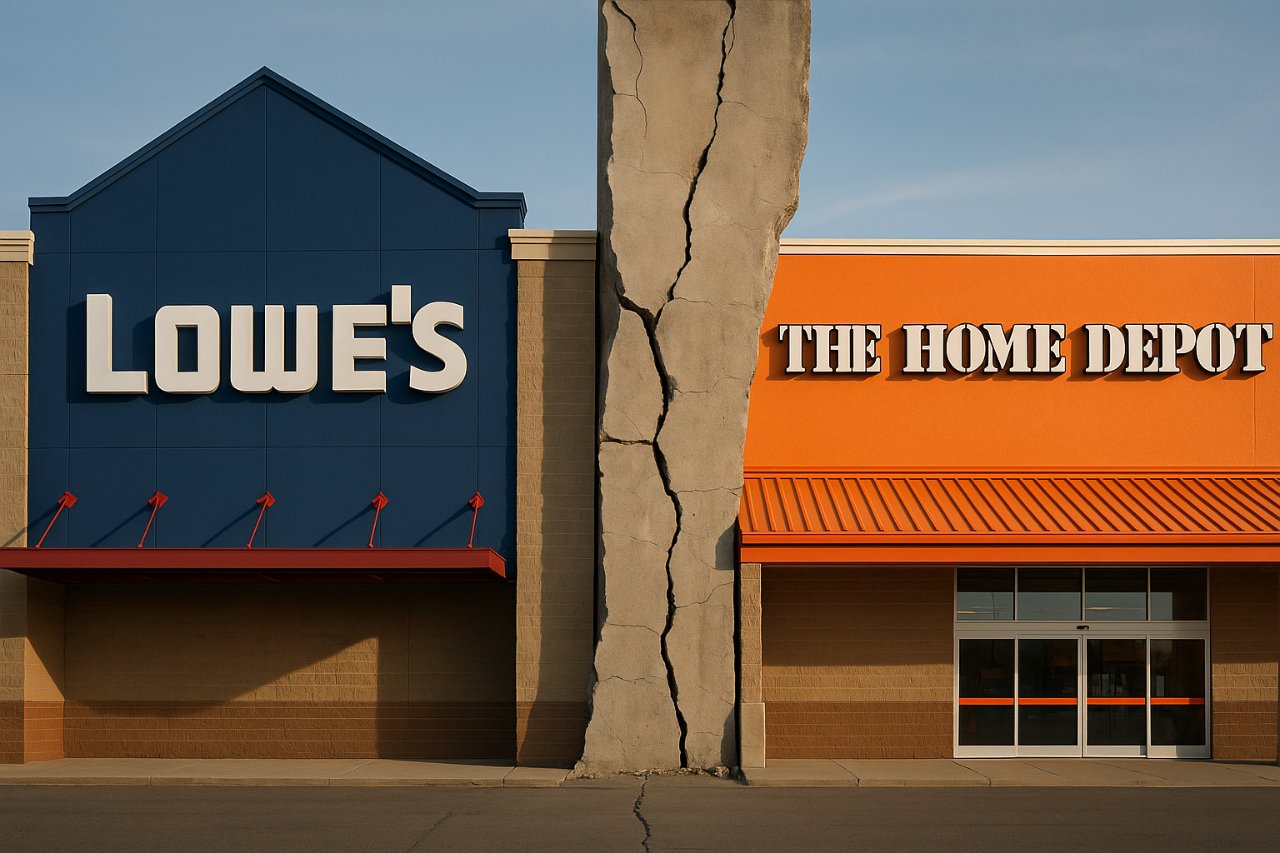
The idea of a Lowe’s acquisition of Home Depot surfaces frequently in investor chatter and online searches. Both companies dominate the home improvement retail space, and speculation about a mega-merger often arises when one seems to pull ahead of the other. However, no such acquisition has taken place, and regulatory barriers make it highly improbable. Instead, Lowe’s has pursued targeted acquisitions such as Artisan Design Group and Foundation Building Materials that strengthen its contractor and installation capabilities. Meanwhile, Home Depot has countered with transformative deals like its SRS Distribution acquisition, further entrenching its lead in the professional contractor channel.
This article explores whether such a merger is possible, the deals Lowe’s and Home Depot have actually executed, and the strategic alternatives shaping the future of home improvement retail.
Is it true that Lowe’s is acquiring Home Depot?
The short answer is no: Lowe’s has not acquired Home Depot. While the idea sparks interest due to their rivalry, there has been no official announcement or even credible reporting suggesting such a deal is underway.
Any transaction of this scale would immediately be disclosed through SEC filings, press releases, and regulatory reviews. Since Home Depot is the larger retailer by revenue and market capitalization, such a deal would not only be extraordinary in scale but also heavily scrutinized.
The speculation persists because both companies are constantly compared, and investors often look at consolidation as a way to increase efficiency and reduce competition. However, consolidation of two dominant players in the same sector faces significant antitrust hurdles, especially in the U.S. retail environment.
Has Lowe’s Formally Announced Any Plan to Acquire Home Depot?
No. Lowe’s has never formally announced an intention to acquire Home Depot. In fact, both companies’ strategic communications emphasize organic growth and targeted acquisitions rather than attempting an all-encompassing merger.
Public companies are required by law to disclose material merger activity, and neither Lowe’s nor Home Depot has included any such indication in their quarterly earnings, shareholder letters, or investor presentations.
The persistent rumor is better understood as market speculation rather than a reflection of corporate strategy.
What Would Legal and Regulatory Hurdles Look Like for Such a Merger?
A merger between Lowe’s and Home Depot would face overwhelming regulatory obstacles. Together, the two companies control over 50% of the U.S. home improvement market, with massive regional dominance in many states.
The Federal Trade Commission (FTC) and the Department of Justice (DOJ) would almost certainly challenge the deal under antitrust law. The agencies evaluate market concentration using the Herfindahl–Hirschman Index (HHI), and combining Lowe’s and Home Depot would push scores far beyond acceptable thresholds.
Historical precedent shows that large retail mergers such as attempted consolidations in grocery, telecom, or airlines have been blocked or forced to divest. A Lowe’s–Home Depot deal would dwarf those examples in terms of market overlap.
What Acquisitions Has Lowe’s Actually Made Recently to Challenge Home Depot?

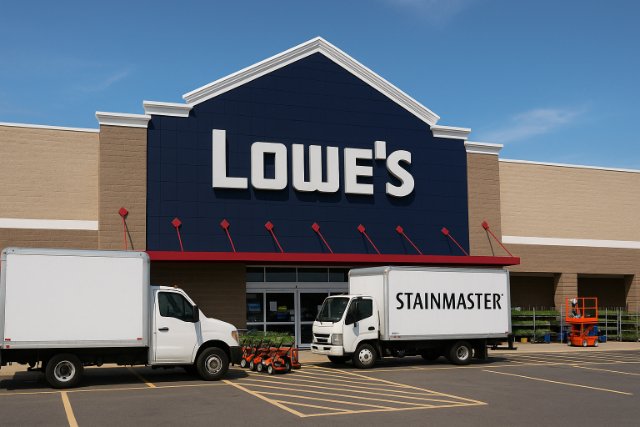
Instead of pursuing its rival directly, Lowe’s has focused on strategic bolt-on acquisitions that build capacity in critical growth areas. The retailer’s priority has been strengthening its pro contractor channel, design-to-installation services, and distribution footprint.
These acquisitions allow Lowe’s to narrow competitive gaps without attracting the regulatory scrutiny that a mega-merger would bring. They also diversify Lowe’s revenue streams beyond DIY customers.
By targeting companies with specialized expertise, Lowe’s gains access to new customer segments and regional markets that directly support its long-term growth strategy.
What is the Artisan Design Group Deal and Why Did Lowe’s Pursue It?
In 2021, Lowe’s acquired Artisan Design Group (ADG), a network of companies focused on flooring design, distribution, and installation. This deal gave Lowe’s stronger integration between product sales and installation services, especially in flooring a category that requires professional expertise and drives higher-ticket transactions.
The ADG acquisition supports Lowe’s push to serve not only DIY homeowners but also professional contractors, builders, and property managers. By controlling more of the design-to-installation value chain, Lowe’s can offer bundled services that improve contractor retention.
This move positions Lowe’s against Home Depot’s established contractor ecosystem, where installation and pro services are already deeply integrated.
How Are These Moves Closing the Gap With Home Depot’s Strategy?
Lowe’s acquisitions are carefully aligned with Home Depot’s competitive strengths. Home Depot has long dominated the contractor and professional trade segment, while Lowe’s historically relied more on DIY traffic.
By acquiring companies like Artisan Design Group and Foundation Building Materials, Lowe’s is working to close that gap. These deals expand Lowe’s distribution footprint, supply chain resilience, and professional service offerings, all of which reduce Home Depot’s relative advantage.
While Lowe’s still trails in the pro market, its recent M&A activity shows a clear strategic intent: build capacity in areas where Home Depot has scale and brand loyalty.
How is Home Depot Responding With Its Own Acquisitions?
Home Depot has not remained passive. To defend and extend its lead in the pro contractor market, it has invested in large-scale acquisitions that reshape the distribution landscape.
These acquisitions focus less on retail storefronts and more on wholesale distribution networks that serve roofing, drywall, and specialty building materials contractors.
By acquiring supply chain players directly, Home Depot integrates deeper into the contractor procurement process, ensuring exclusive relationships and improved margins.
What Was Home Depot’s Acquisition of Srs Distribution?
In 2024, Home Depot announced its acquisition of SRS Distribution, one of the largest distributors of roofing and building materials in North America. This deal, valued at more than $18 billion, marked one of the biggest retail acquisitions in recent history.
SRS serves specialty contractors with products like roofing, siding, and landscaping supplies segments traditionally outside the big-box retail model. By absorbing SRS, Home Depot gained immediate access to a network of 760+ distribution branches across the U.S.
This move is widely seen as Home Depot’s most aggressive push into the pro market, creating a level of vertical integration that Lowe’s will find challenging to replicate quickly.
Could a Lowe’s–home Depot Merger Ever Be Feasible?
Theoretically, a merger could produce enormous efficiencies. Combining two of the largest retailers in the sector would create a dominant supply chain, purchasing power, and cost advantages. However, feasibility must account for both synergies and barriers.
On the synergy side, a merger could unlock billions in cost savings through logistics integration, procurement leverage, and store consolidation. On the barrier side, antitrust concerns alone make it practically unworkable.
Thus, while investors sometimes model the merger for hypothetical value creation, in reality the regulatory obstacles outweigh potential benefits.
What Synergies Might Exist if Lowe’s Acquired Home Depot?
- Purchasing power: Consolidated orders from suppliers could reduce costs by double-digit percentages.
- Supply chain integration: Shared distribution centers and logistics fleets would lower overhead.
- Omnichannel expansion: Unified e-commerce platforms would create a single dominant marketplace
- Labor optimization: Streamlined staffing across overlapping store footprints would reduce redundancy
These synergies explain why some investors continue to speculate. However, they are outweighed by legal and reputational risks.
What Antitrust and Regulatory Obstacles Would Block It?
The FTC and DOJ would immediately flag a Lowe’s–Home Depot merger as anti-competitive. Such a deal would eliminate the only large-scale national competitor in the home improvement sector, leaving smaller regional players unable to counterbalance.
Regulators would argue that the merger reduces consumer choice, raises prices, and creates a monopoly-like structure in many regional markets. Even partial divestitures would not be sufficient to restore balance.
Therefore, while theoretically possible, the merger is practically impossible under current U.S. antitrust enforcement standards.
What Are the Strategic Alternatives to Full Merger?
Instead of pursuing an impossible merger, Lowe’s can continue to strengthen its position through targeted acquisitions, partnerships, and alliances.
These alternatives avoid regulatory roadblocks while still providing access to new customer segments and distribution capabilities.
They also align better with the current trend in retail M&A, which favors complementary acquisitions over direct consolidation of giants.
Joint Ventures, Alliances, or Distribution Partnerships
Lowe’s could explore joint ventures with suppliers, creating exclusive product lines or shared distribution hubs. Strategic alliances with regional contractors could deepen loyalty without requiring ownership stakes.
Distribution partnerships, particularly in niche categories like roofing or kitchen installation, could also expand Lowe’s footprint without attracting the scrutiny of a full acquisition.
Acquiring Complementary Niche or Regional Chains Instead
Another path forward is acquiring regional or niche players, such as specialty building material suppliers or design service providers.
These deals would give Lowe’s additional depth in select markets while avoiding the antitrust red flags of absorbing Home Depot. Such acquisitions are easier to finance, integrate, and justify to regulators.
This strategy mirrors Home Depot’s approach with SRS Distribution but on a smaller scale, allowing Lowe’s to chip away at competitive disadvantages.
What Lessons Do These Acquisition Moves Teach About the Home Improvement Retail Landscape?
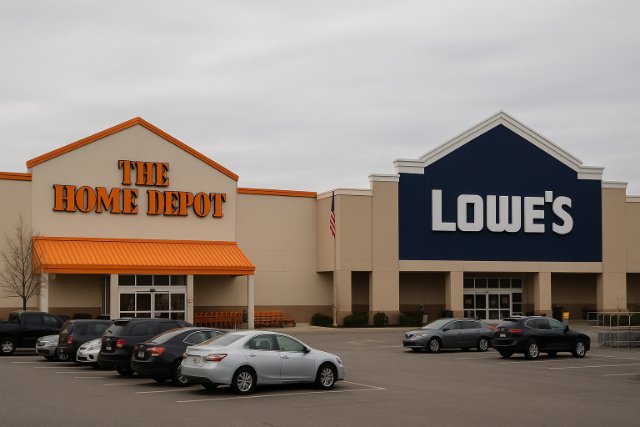
The acquisition activity of both Lowe’s and Home Depot reveals much about where the home improvement industry is heading. The battleground has shifted from consumer-facing retail to contractor and trade distribution channels.
Retailers are increasingly seeking vertical integration, owning not just the store shelves but the supply chain and service layers that contractors rely on.
The industry is also consolidating around players that can deliver end-to-end solutions from raw materials to final installation.
Is the Pro/contractor Segment the Future Battleground?
Yes. The professional contractor segment has emerged as the most critical growth driver in home improvement retail. Contractors purchase in bulk, return frequently, and require specialized services making them a high-value customer base.
Home Depot’s dominance in this segment explains its higher revenue per square foot compared to Lowe’s. Lowe’s recent acquisitions aim to rebalance the customer mix by increasing its pro penetration.
Future acquisitions will likely focus on companies that provide specialized contractor support, such as roofing distributors, drywall suppliers, and flooring installation networks.
What Role Does Supply Chain Consolidation Play?
Supply chain consolidation ensures control over product flow, pricing, and service speed. By owning distributors and logistics networks, retailers can guarantee contractors faster delivery and more reliable stock availability.
This explains why Home Depot acquired SRS Distribution and why Lowe’s targeted Artisan Design Group. Both companies recognize that supply chain control equals competitive advantage in a market increasingly driven by professionals.
Consolidation also allows better last-mile delivery capabilities, which are crucial for large, heavy materials that contractors need on job sites.
What Should Investors and Industry Watchers Watch Going Forward?
Investors should pay attention to signals that indicate further M&A activity in the home improvement space. Both Lowe’s and Home Depot have war chests for acquisitions, and competitive dynamics suggest more deals are coming.
They should also monitor regulatory environments, as the FTC has increased scrutiny of large-scale retail mergers. Any relaxation or tightening of antitrust enforcement could significantly shift the outlook.
Finally, shifts in contractor demand, housing starts, and supply chain resilience will dictate which acquisition targets become most attractive.
Signals That Could Hint at Larger M&a Activity
- Unusual capital allocations in quarterly reports
- Leadership statements about “strategic flexibility”
- Increased debt capacity or bond issuance
- Reports of exploratory talks with distributors or niche chains
These signals often precede official announcements and help industry watchers anticipate the next move.
Regulatory or Legal Developments in Antitrust
Recent moves by the FTC suggest a stricter stance on horizontal mergers in retail. However, vertical acquisitions where a retailer buys a distributor or service provider are viewed more favorably.
Investors should track how the political and regulatory climate evolves, since it will directly influence whether companies like Lowe’s and Home Depot pursue more aggressive consolidation.
Conclusion
The idea of a Lowe’s acquisition of Home Depot is more fantasy than reality. Regulatory hurdles and market concentration issues make it highly improbable. Instead, Lowe’s is pursuing strategic, targeted acquisitions that strengthen its professional contractor services and supply chain capabilities. Home Depot, meanwhile, has doubled down with transformative deals like the SRS Distribution acquisition, cementing its leadership in the pro market.
For investors, contractors, and industry observers, the real story lies not in a mythical mega-merger but in the measured, strategic acquisitions that are quietly reshaping the home improvement retail landscape.
FAQ’s
No. This is a misconception. Lowe’s has never acquired Home Depot and likely never will due to antitrust barriers.
Lowe’s acquired Artisan Design Group to expand its flooring design and installation services, strengthening its contractor-focused offerings.
The SRS Distribution acquisition was valued at more than $18 billion, making it one of the largest retail deals in recent years.
Home Depot has pursued relationships with GMS Inc., a specialty building materials supplier, to extend its reach in drywall and ceilings.
Yes. It would almost certainly be blocked by regulators due to extreme market concentration.
Lowe’s can pursue niche acquisitions, joint ventures, or strategic partnerships that expand capacity without triggering regulatory intervention.


